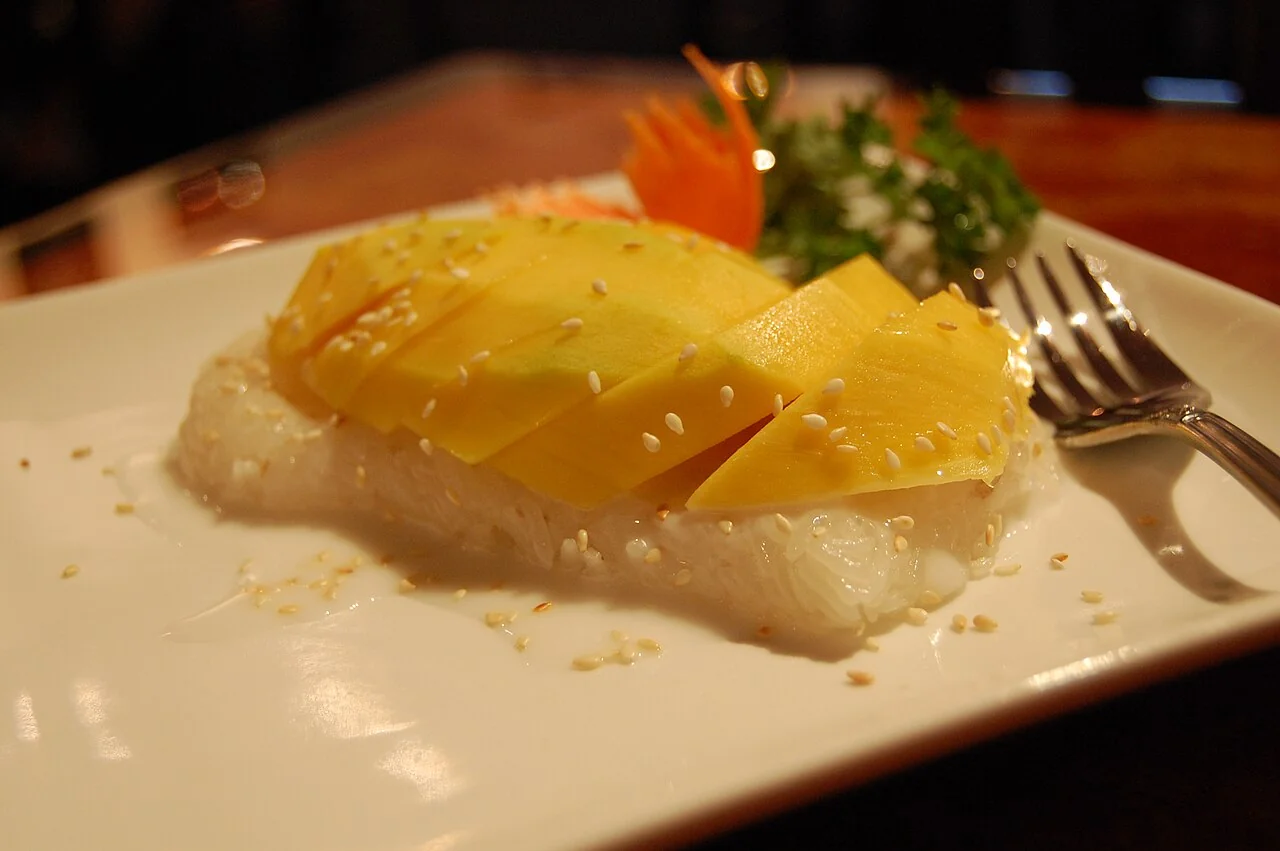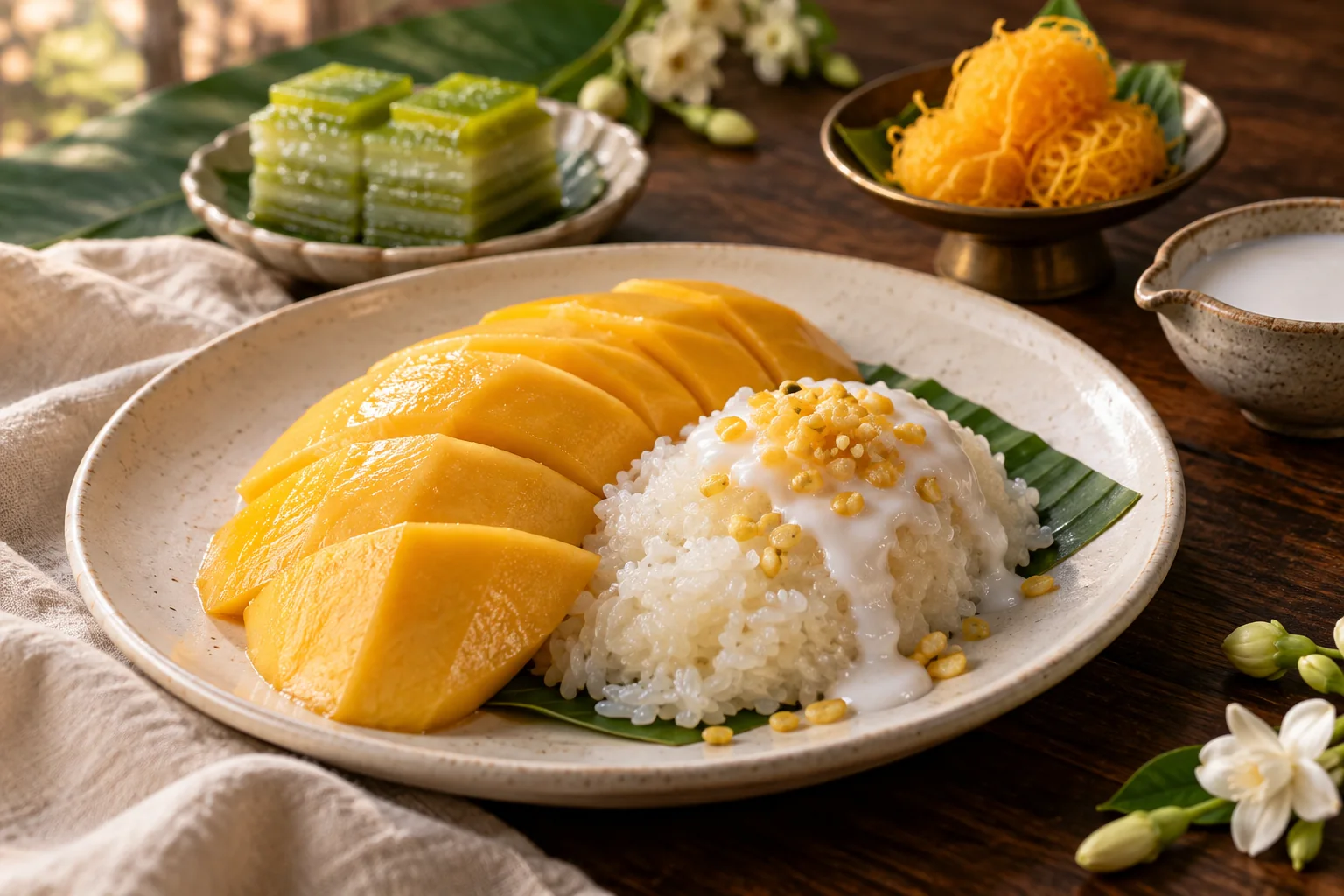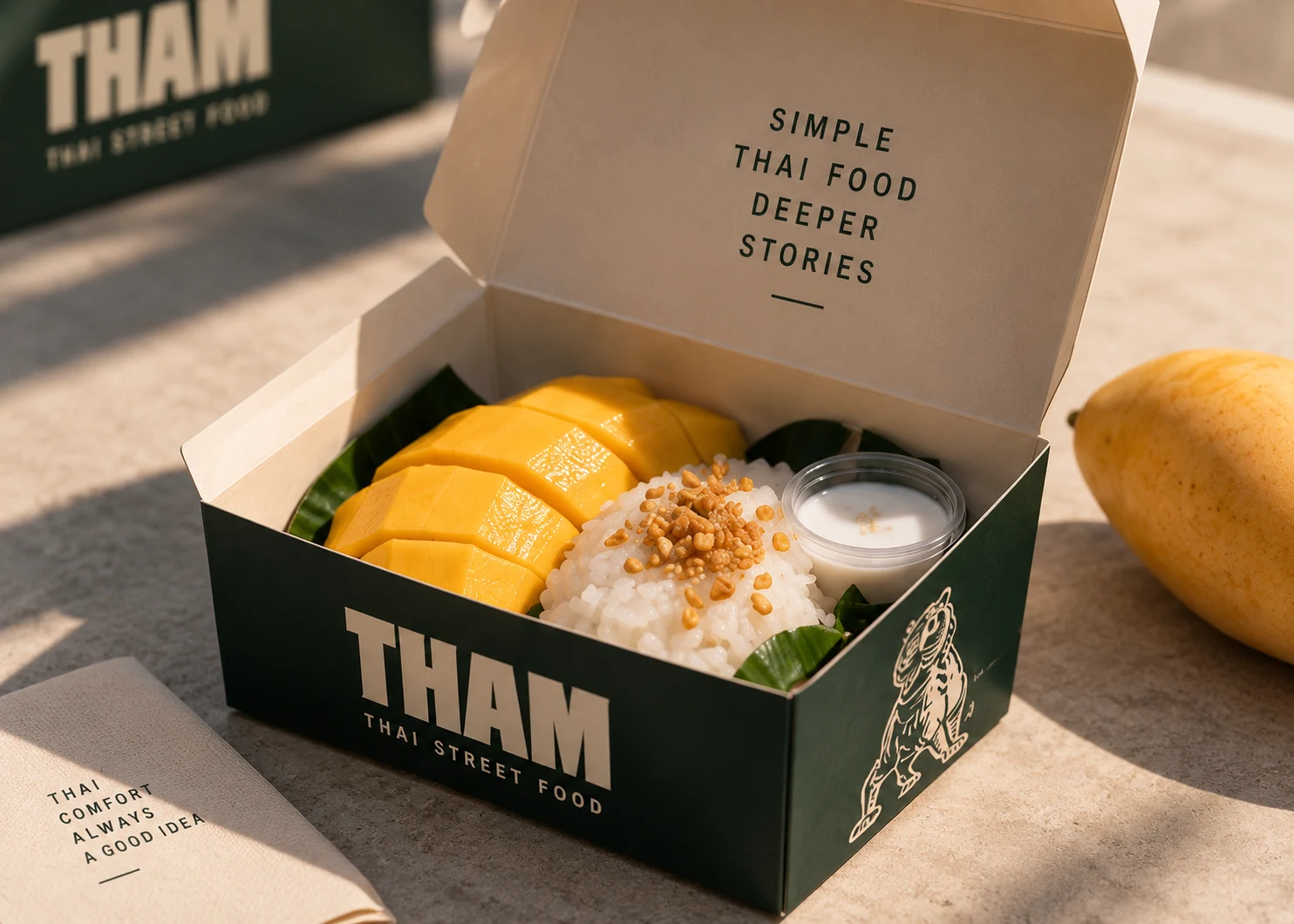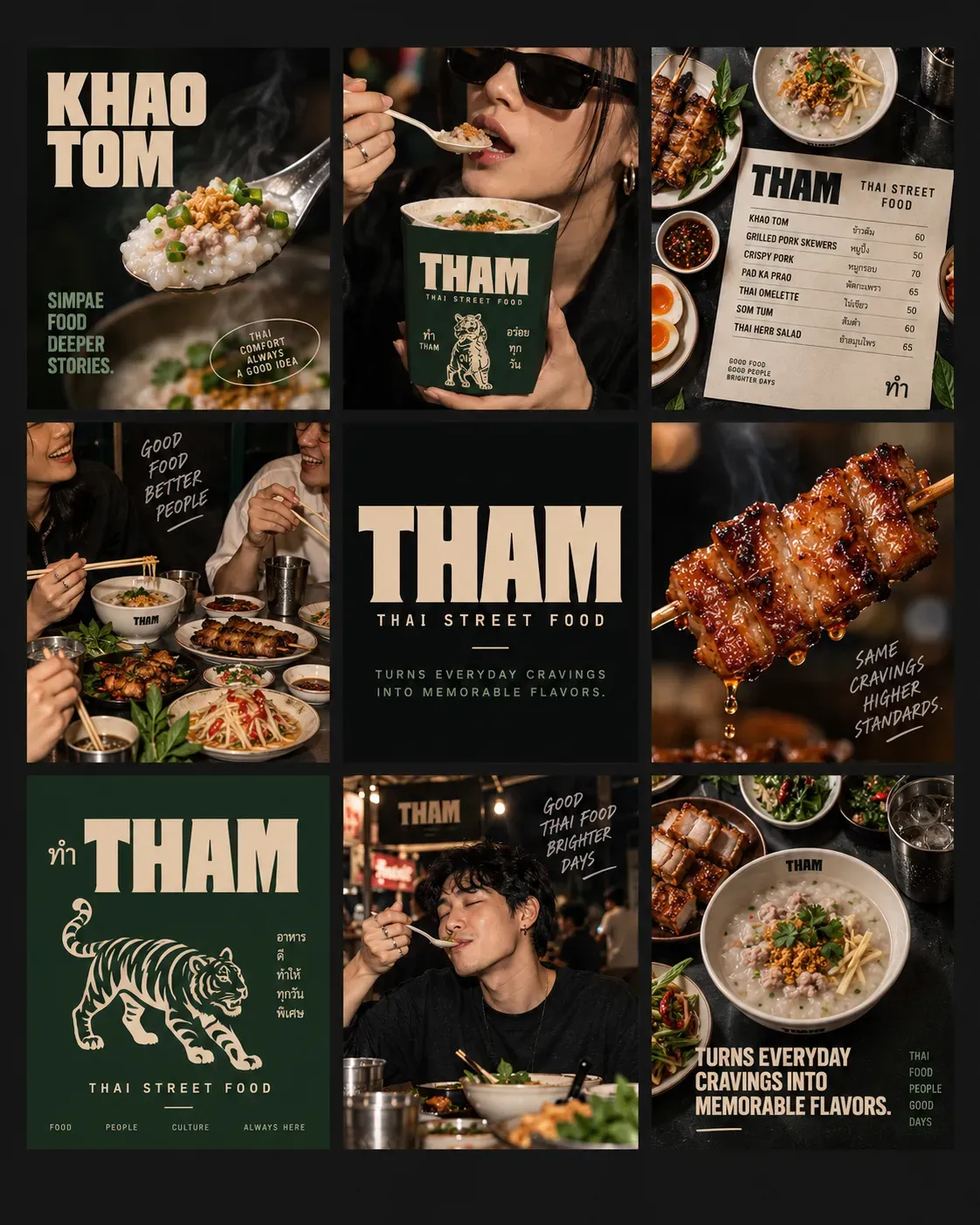
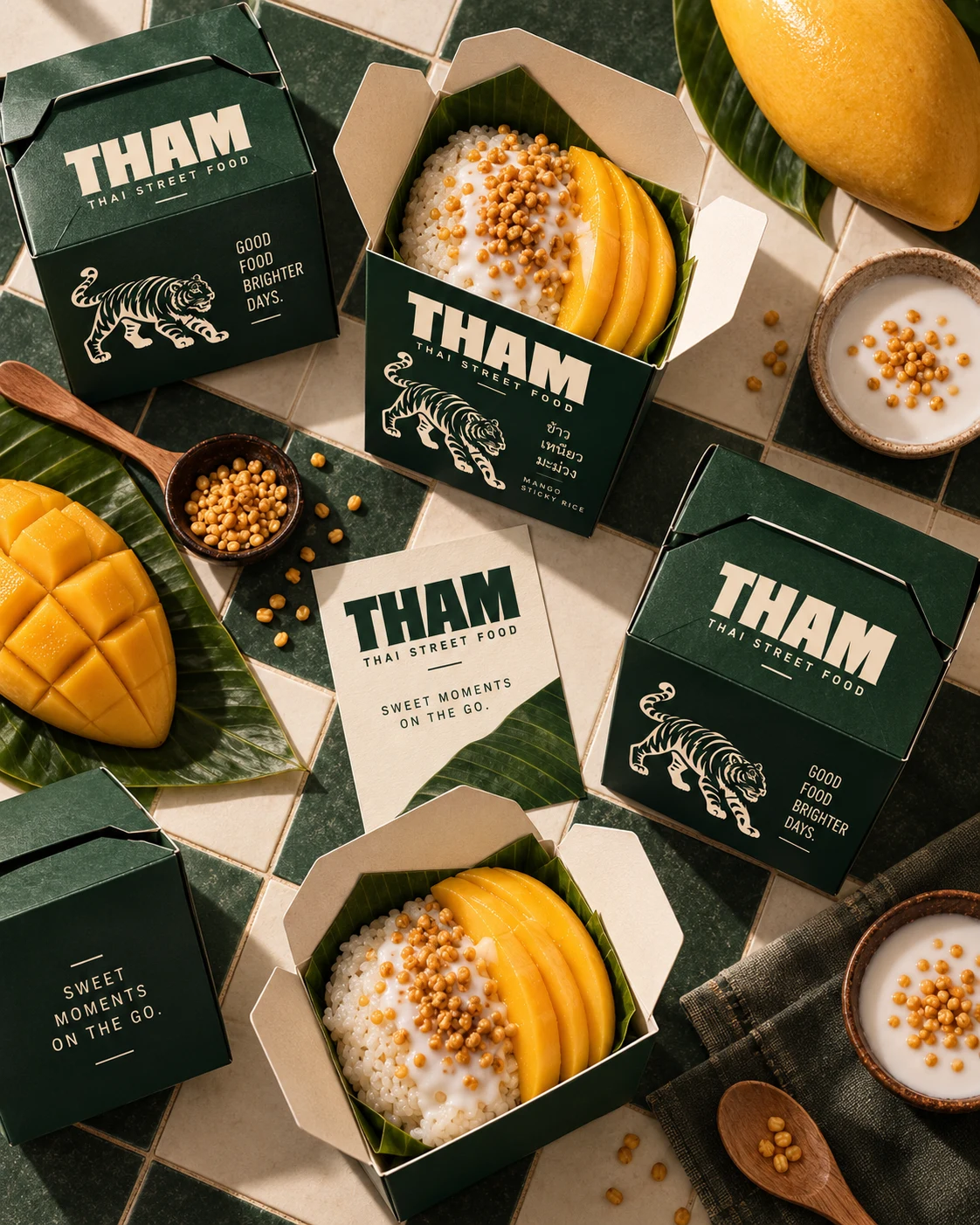
If Mango Sticky Rice is already on your mind, choosing the main dish becomes a different kind of decision. You are planning towards a sweet finish rather than hoping there will still be room. At THAM, our best-selling mango dessert costs 120 THB. The five ideas below begin with distinct savoury flavours—broth, tamarind, holy basil, garlic and warm curry spice—then show the food subtotal when one Mango Sticky Rice is added. They are examples made from individual menu items, not sets, discounts or delivery quotes. There is no official rule about what must come before mango and coconut. A useful pairing simply gives each course its own character. Decide whether you want the first dish to echo the dessert through rice or coconut, or to create contrast through herbs, tang or pepper. That approach makes the choice personal while keeping the practical details clear.
1. Khao Tom and mango: rice in two different roles
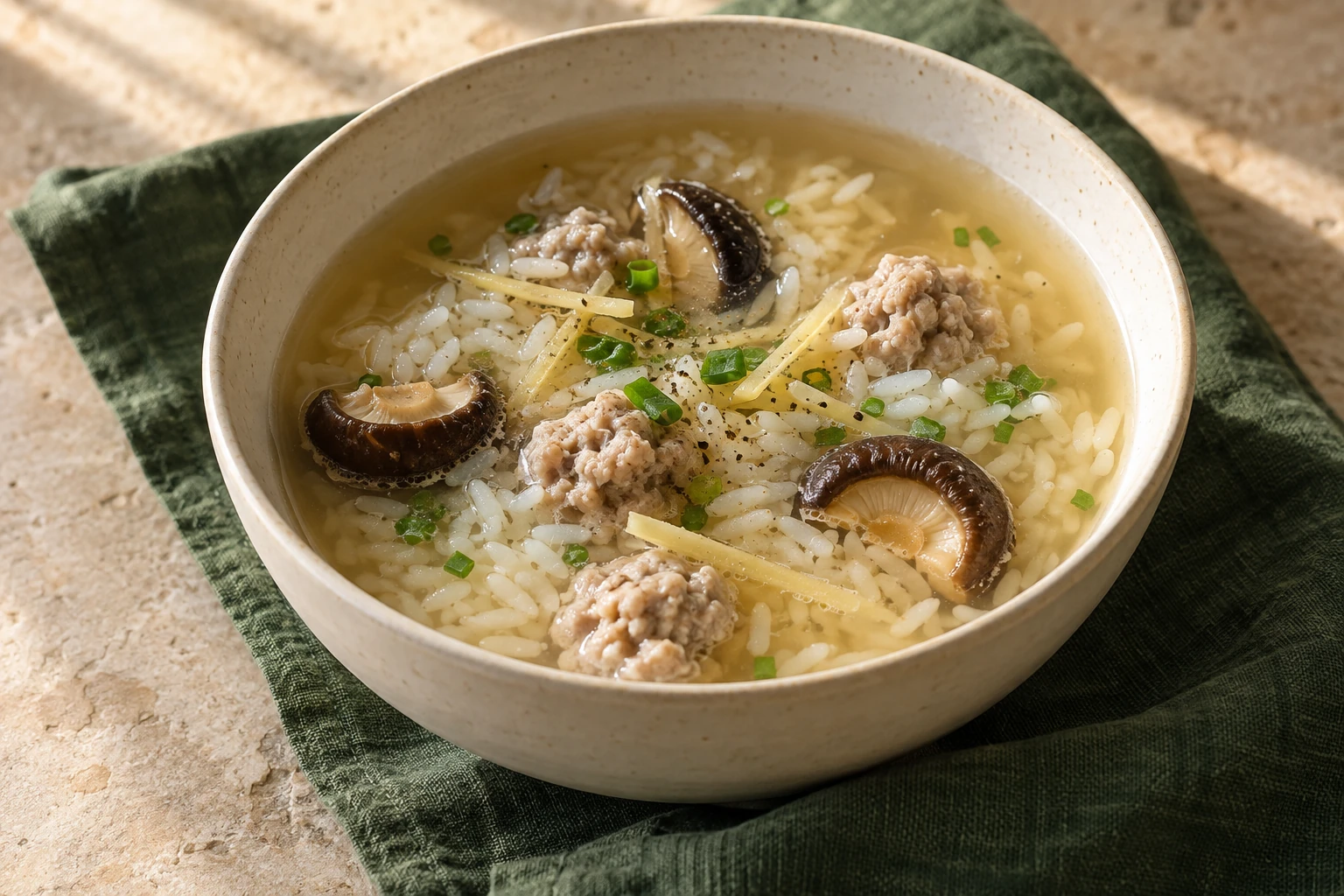
THAM’s Khao Tom Signature costs 140 THB and contains pork, rice, chicken broth, shiitake and ginger. Add Mango Sticky Rice at 120 THB and the two dishes total 260 THB. The sequence moves from a warm savoury soup to ripe fruit, sticky rice and coconut. It suits a diner who likes to begin the meal with a spoon and finish with a plate that can be enjoyed one component at a time.
Both courses contain rice, but the grain does very different work. In Khao Tom it sits in broth alongside pork and mushrooms; in dessert it has a tender, substantial texture beside fresh mango. Ginger adds aromatic warmth to the soup, while coconut gives the dessert richness. Repetition becomes part of the interest: one staple ingredient can support a savoury bowl and a sweet Bangkok favourite without making the courses feel identical.
For a closer look at the soup’s format and its relationship to jok, read our guide to Khao Tom and Thai rice porridge. The main point for this meal is simple: take time with the broth, then let dessert begin as a separate course rather than treating it as a rushed final spoonful.
2. Chicken Pad Thai and mango: tamarind before ripe fruit
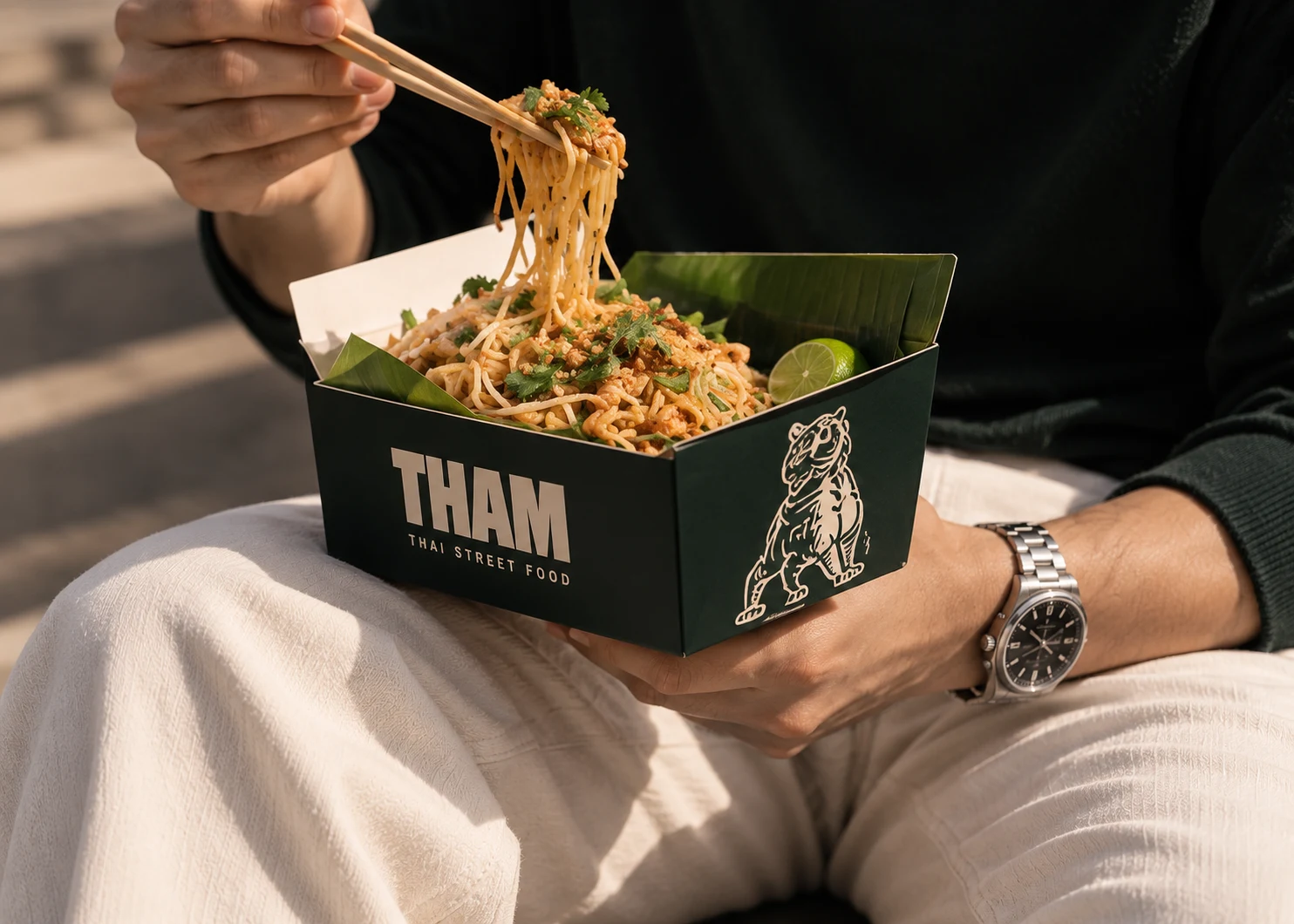
Chicken Pad Thai is 160 THB, so the noodles followed by Mango Sticky Rice make a 280 THB food subtotal. The dish combines rice noodles, chicken, egg, tofu and tamarind. If you prefer prawns, Prawn Pad Thai costs 170 THB and changes the subtotal to 290 THB. That is an optional variation on the same pairing, not a sixth recommendation.
Tamarind is the detail to notice here. It gives Pad Thai a fruity sour note within a savoury-sweet noodle dish. Mango then offers a different kind of fruit character: ripe, soft and naturally sweet beside coconut and sticky rice. The two courses do not need to match. Their appeal is in the change from tangled noodles and tamarind to distinct pieces of mango and spoonfuls of rice.
Our tamarind and Pad Thai guide explains why the ingredient matters. At the table, there is no tasting ritual to follow. Finish the noodles at your own pace, pause if you want to, and start dessert when its cooler fruit-and-coconut profile sounds inviting. Choose chicken or prawns according to preference, and name the version clearly when ordering.
3. Pork Pad Kra Pao and mango: basil, garlic and coconut
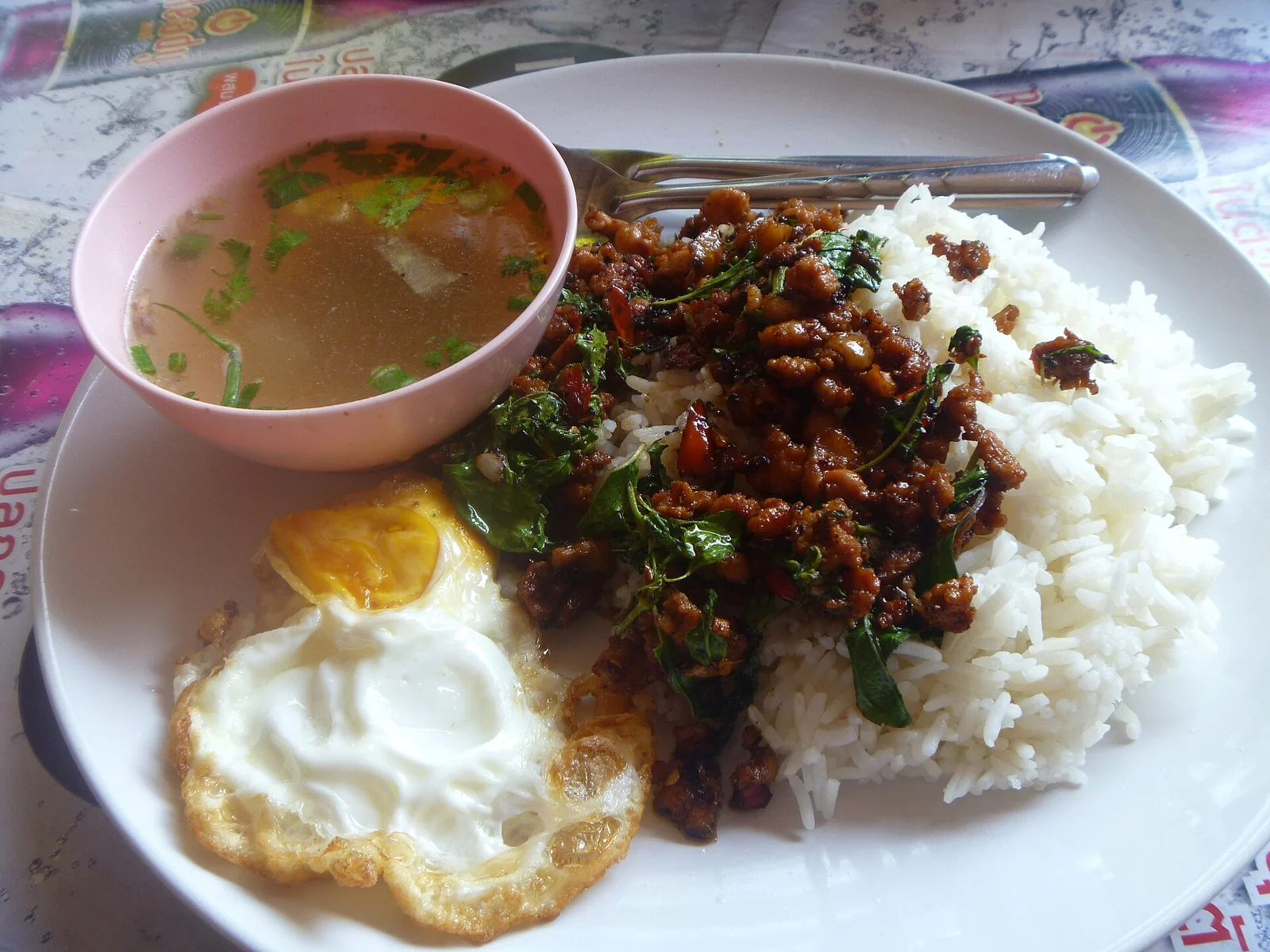
Pork Pad Kra Pao costs 150 THB with rice included. Add the 120 THB mango dessert and the subtotal is 270 THB. The main dish brings minced pork, holy basil, garlic and oyster sauce together. THAM serves dishes non-spicy by default, and chilli can be added on request, so heat does not have to determine whether this pairing works for you.
Holy basil supplies fragrance and a peppery herbal quality that is different from the sweet, anise-like character often associated with Thai basil. Garlic and the savoury sauce give the plate depth, while the included jasmine rice keeps it grounded. Mango and coconut then turn the meal in a clearly sweeter direction. Dessert is not there to rescue an overly hot main; it should simply be the next course you wanted all along.
Read more about the herb and the dish in our guide to holy basil and Pad Kra Pao. If you ask for chilli, choose the level because you enjoy it, not because you think a Thai meal must be fiery. Pepper, ginger, garlic and curry spices can all create aromatic warmth even when fresh chilli is absent.
Choose your next bite with curiosity. Make the meal your own.
4. Garlic Pepper Chicken and mango: crisp and fragrant, then soft
Garlic Pepper Chicken is 150 THB with rice included. With Mango Sticky Rice, the two-item subtotal is 270 THB. THAM lists chicken, minced garlic, ground pepper, oyster sauce and frying flour in the dish. Compared with the softer textures of mango and sticky rice, the chicken’s crisp coating creates an immediate contrast.
Pepper matters as much as garlic here. “Non-spicy by default” refers to chilli; it does not mean a dish without seasoning or aromatic warmth. If you are sensitive to pepper or garlic, say so before ordering rather than relying on the general non-spicy description. The dessert changes both texture and flavour, moving from a savoury rice plate to soft fruit, tender sticky rice and coconut.
The full Garlic Pepper Chicken story looks more closely at this familiar Thai rice-plate style. For the pairing, the pleasure is easy to understand: a focused savoury main followed by a dessert with three recognisable elements. You can alternate mango and sticky rice in the proportions you like instead of searching for one “correct” final bite.
5. Chicken Massaman and mango: coconut across two courses
Chicken Massaman costs 190 THB and includes rice. Add Mango Sticky Rice and the subtotal becomes 310 THB, the highest of these five examples. The curry contains chicken, Massaman curry paste, coconut milk, potatoes and peanuts. Its warm dry-spice character and substantial ingredients make this the pairing for someone who wants the main course to feel rich and unhurried.
Here coconut provides a thread between courses. In Massaman it forms part of a savoury curry with spice, potatoes and peanuts; in dessert it accompanies mango and sticky rice. Shared ingredients do not guarantee identical flavours. Instead, they let you notice how coconut behaves around salt and spice before meeting fruit and sweetness.
Because peanuts are a listed ingredient, this is also the pairing where an allergy conversation is especially important. Ingredient lists are guides, and sauces or preparation may introduce other allergens. Tell the team about a specific allergy or dietary requirement before choosing any dish. Do not infer suitability from the absence of an ingredient in a short description.
How to choose among the five pairings
Begin with the format you want. Khao Tom gives you broth and a spoon; Pad Thai gives you noodles and tamarind; Pad Kra Pao focuses on holy basil and pork; Garlic Pepper Chicken offers a drier, crisp-edged rice plate; Massaman gives you coconut curry with potatoes and peanuts. Then consider whether you prefer contrast or continuity before mango. There is no universal ranking.
The subtotals—260, 280, 270, 270 and 310 THB—cover one named main and one Mango Sticky Rice at the current listed prices. Prawn Pad Thai changes its example to 290 THB. Drinks, fried eggs, extra protein, extra rice, additional desserts and delivery charges are separate. Prices and availability can change, so use the current THAM menu and ask the team to confirm the complete total when you order.
For two people, you can choose two different mains and decide whether one dessert is enough to share or whether each person wants a full portion. Do not assume a shared plate will suit every appetite. If dessert is the purpose of the visit, reserving one Mango Sticky Rice per person keeps the plan straightforward; if it is a final taste after a larger meal, sharing may be more comfortable.
Make dessert part of a Yen Akat evening
THAM is at 15/1 Yen Akat Road in Bangkok and opens Monday through Saturday from 8:00 PM to 1:00 AM; Sunday evening is closed. Late hours make it possible to plan mango sticky rice as a deliberate final course rather than an afterthought. The dedicated Mango Sticky Rice in Bangkok guide brings the dessert’s ingredients, current price and visit details together.
Whichever main you choose, order for your own appetite and tell the team about allergies or dietary needs. Let the savoury dish have its moment, then approach mango, sticky rice and coconut as a new course. The best pairing is not the one that follows the strictest rule. It is the one that makes you look forward to the first dish while still leaving attention—and room—for dessert.
KEEP YOUR CURIOSITY HUNGRY
Explore the current menu and plan your next visit to THAM on Yen Akat Road.
Explore the THAM menuPhotography & credits
Editorial photographs illustrate Thai food and culture. THAM lifestyle images are creative brand imagery, including AI-generated scenes; they do not document the restaurant, its location or exact servings.
- Sweet moments, the THAM lifestyle collection — THAM — supplied creative brand imagery.
- Khao Tom Pork — THAM — AI-generated food illustration.
- Pad Thai, the THAM lifestyle collection — THAM — supplied creative brand imagery.
- Pad kra pao moo — Ryan Snyder. CC BY 2.0. Resized and compressed for the web.