When people search for the best mango sticky rice in Bangkok, they are often looking for a famous name or an address. The more interesting question comes after the dessert arrives: what makes this particular serving good to you? A few unhurried spoonfuls can reveal the fruit, the rice, the coconut and the balance between them. This guide offers a simple tasting sequence rather than a scorecard. It is designed for a first encounter, a late-night dessert stop on Yen Akat Road or a familiar favourite you want to notice more closely. Mango sticky rice is called khao niao mamuang in Thai. The name sounds straightforward, yet the pleasure of the dish comes from contrasts: juicy fruit against chewy grains, cool or room-temperature mango beside richer rice, and sweetness lifted by a lightly salty coconut note. Taste each part, then bring them together. You do not need specialist vocabulary or a perfect palate. Curiosity and a spoon are enough.
Begin with the mango on its own
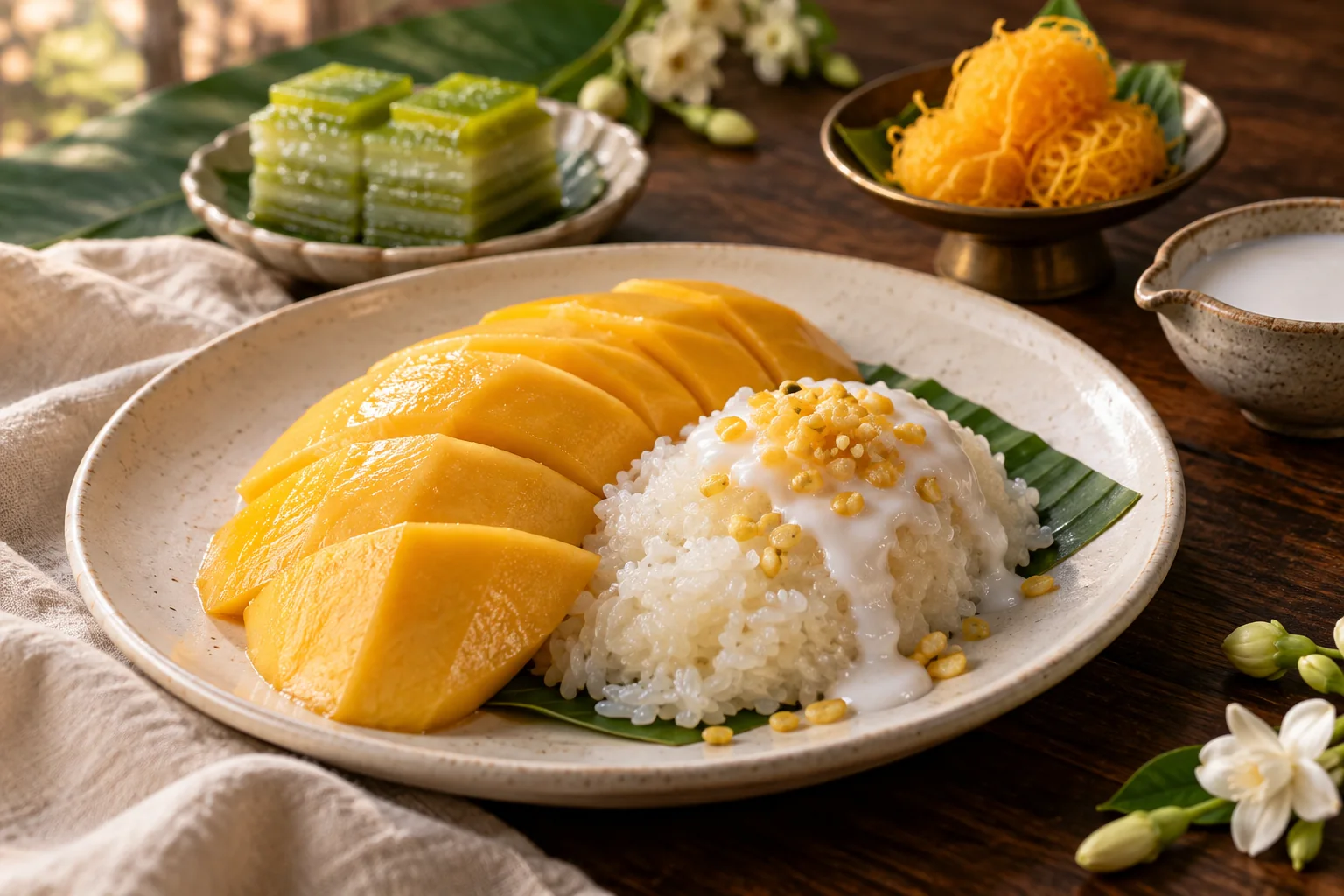
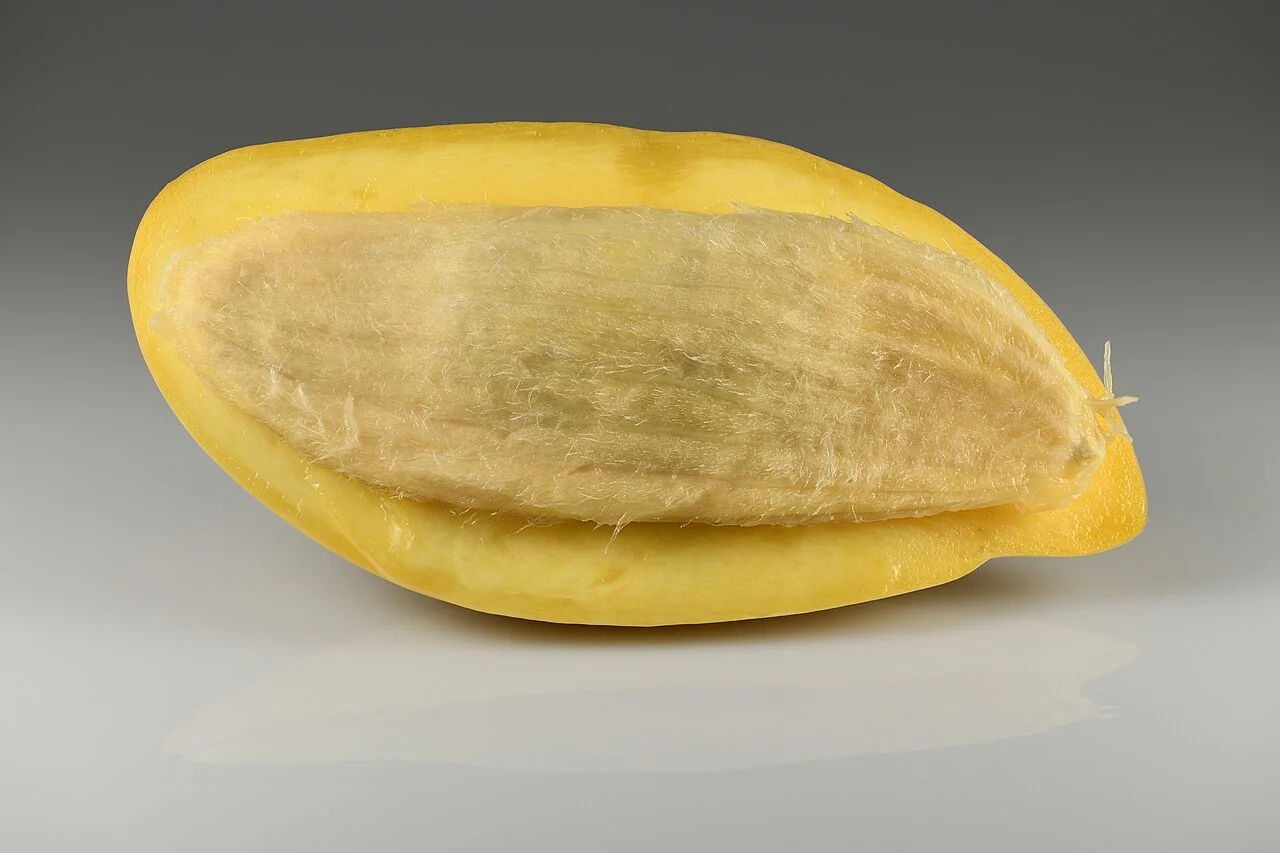
Start with a small piece of mango before mixing the plate. Bring it close enough to notice the aroma, then see how easily it yields to the spoon. The flesh may feel silky, softly fibrous or firm enough to keep a clean edge. Flavour can move from fresh and bright to deeply honeyed. None of those impressions is automatically better; ripeness is most useful when the texture and sweetness work for the person eating it.
Colour is only a clue. A golden photograph cannot tell you how the fruit smells, how juicy it is or whether its sweetness is lively or flat. Lighting, camera processing and presentation can make two mangoes look similar even when they taste different. If a cultivar interests you, ask what is being served rather than identifying it from colour alone. Kitchens may adapt to the fruit available that day, and the actual piece in front of you matters more than a label.
Try another piece after the first. The section nearer the stone may feel more fibrous than an outer slice, and thickness changes the way a bite releases juice. This is not a fault-finding exercise. It is a reminder that fruit is agricultural, variable and alive with small differences. A good tasting begins by letting the mango be fruit rather than treating it as decoration for the rice.
Give the sticky rice a spoonful of attention
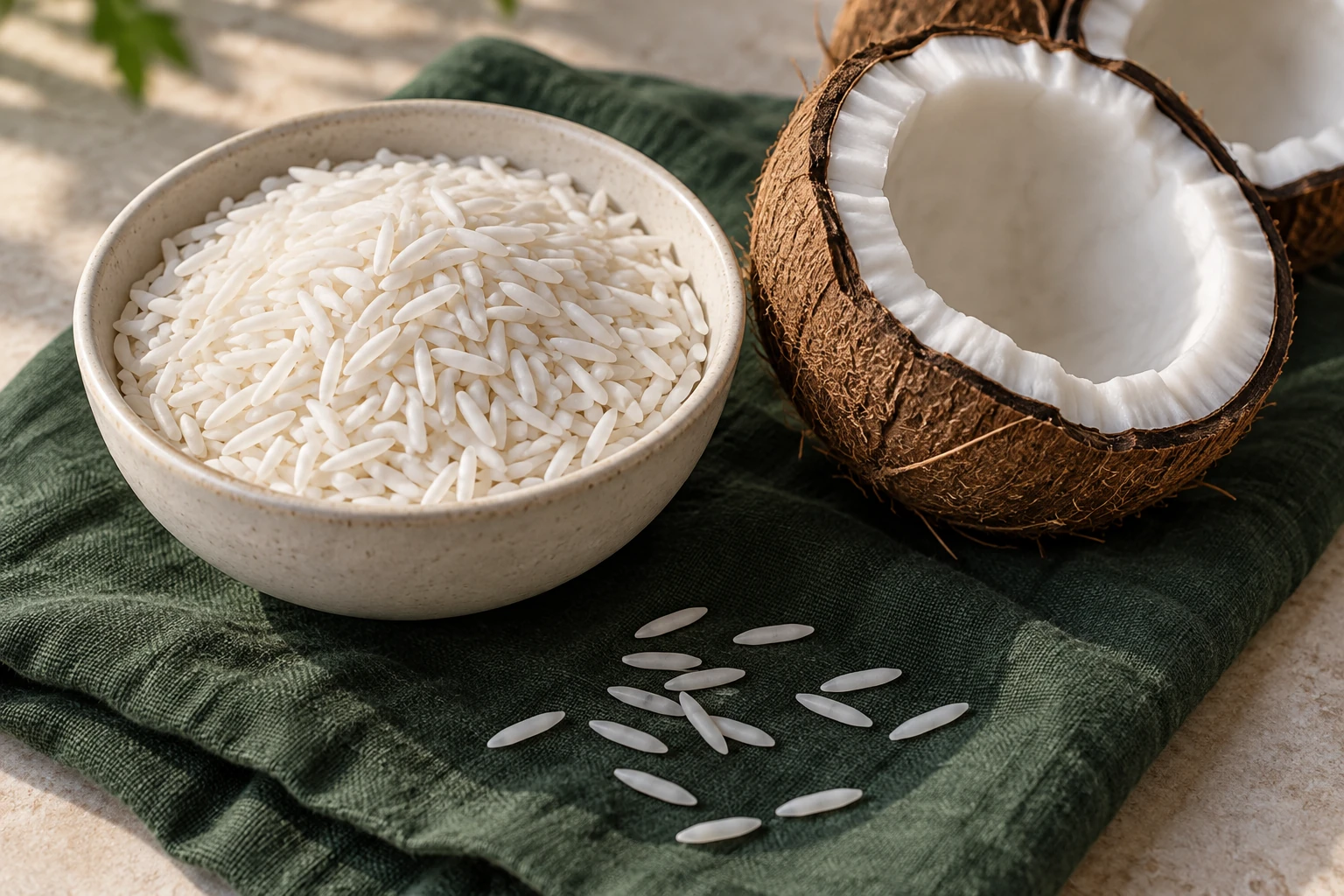
Next, taste a little rice without mango. Notice whether the grains remain recognisable while holding together, and whether the chew feels soft, dense or pleasantly springy. Sticky rice is not simply ordinary steamed rice made wet. The grain and method have a different purpose. Our guide to jasmine rice in Thai cooking explains why aromatic jasmine rice and glutinous rice should not be treated as interchangeable.
In this dessert, rice provides structure as well as flavour. It absorbs coconut while keeping enough body to meet the juicy fruit. Ask whether you would want a second spoonful even without mango. If the answer is yes, the rice is doing more than filling space. Its chew slows the tasting and gives each combination enough substance to feel like a composed dessert rather than fruit with sauce.
Temperature affects perception too. Very cold rice can feel firmer and less aromatic, while rice held too warm may dominate delicate fruit. There is no universal serving temperature that every kitchen must follow, but noticing the contrast helps explain your preference. The longer mango sticky rice story and home adaptation explores the ingredients and preparation if tasting makes you curious about how that texture is created.
Bring coconut and a little salt into the picture
Now take a spoonful that includes rice and its coconut element. Coconut contributes aroma, richness and a coating sensation that lasts longer than fresh mango juice. Look for integration rather than maximum intensity. If coconut overwhelms everything, the fruit can disappear; if it is barely present, the rice may seem separate from the mango. The most satisfying point is personal, but the relationship should keep the next bite interesting.
The Tourism Authority of Thailand describes mango sticky rice through sweet fruit and sweet, slightly salty coconut milk. That small salty edge is worth noticing. Salt does not turn the dessert savoury; in a measured amount, it gives the sweetness definition and keeps coconut richness from feeling one-dimensional. A diner expecting only sugar may mistake that contrast for inconsistency, even though it is part of the dish's appeal.
Do not assume every coconut component is identical. Kitchens can vary in concentration, sweetness, saltiness, thickness and the amount added to the rice or served alongside it. A topping may change the texture again. Ask the team about the current preparation if an ingredient matters to you, especially for an allergy or dietary requirement. A general description of mango sticky rice cannot confirm that a particular serving is suitable for everyone.
Choose your next bite with curiosity. Make the meal your own.
Build three different spoonfuls
With the components understood, try three combinations. First, let mango lead: a generous piece of fruit with just enough rice to add chew. Second, reverse the proportion so coconut rice leads and mango acts as a bright accent. Third, aim for an even spoonful. Pause briefly between them. You may discover that your favourite is not the most balanced-looking bite, but the one that emphasises the texture or aroma you enjoy most.
This little sequence also prevents the plate from becoming uniform too quickly. Mixing everything at once can be delicious, but it removes the chance to notice how the components change one another. The fruit can make the rice seem lighter; the rice can soften an intensely sweet mango; coconut can lengthen both flavours. Choosing each bite is part of the pleasure.
If you are sharing, compare impressions without racing to agree. One person may focus on fragrance while another remembers chew. “Best” can mean the ripest fruit, the most satisfying rice, the clearest sweet-salty contrast or simply the dessert attached to a good evening. Thailand's sweet repertoire offers many other textures, and our Bangkok guide to Thai desserts is a useful next step after this focused tasting.
Use the spoon, but keep the ritual relaxed
A spoon is practical for collecting fruit, rice and coconut together. Cut large mango slices with its edge instead of chasing them around the plate. If a fork is provided, use it to steady the fruit and guide food onto the spoon. The broader Thai spoon-and-fork etiquette guide explains the everyday logic without turning dinner into a list of rigid rules.
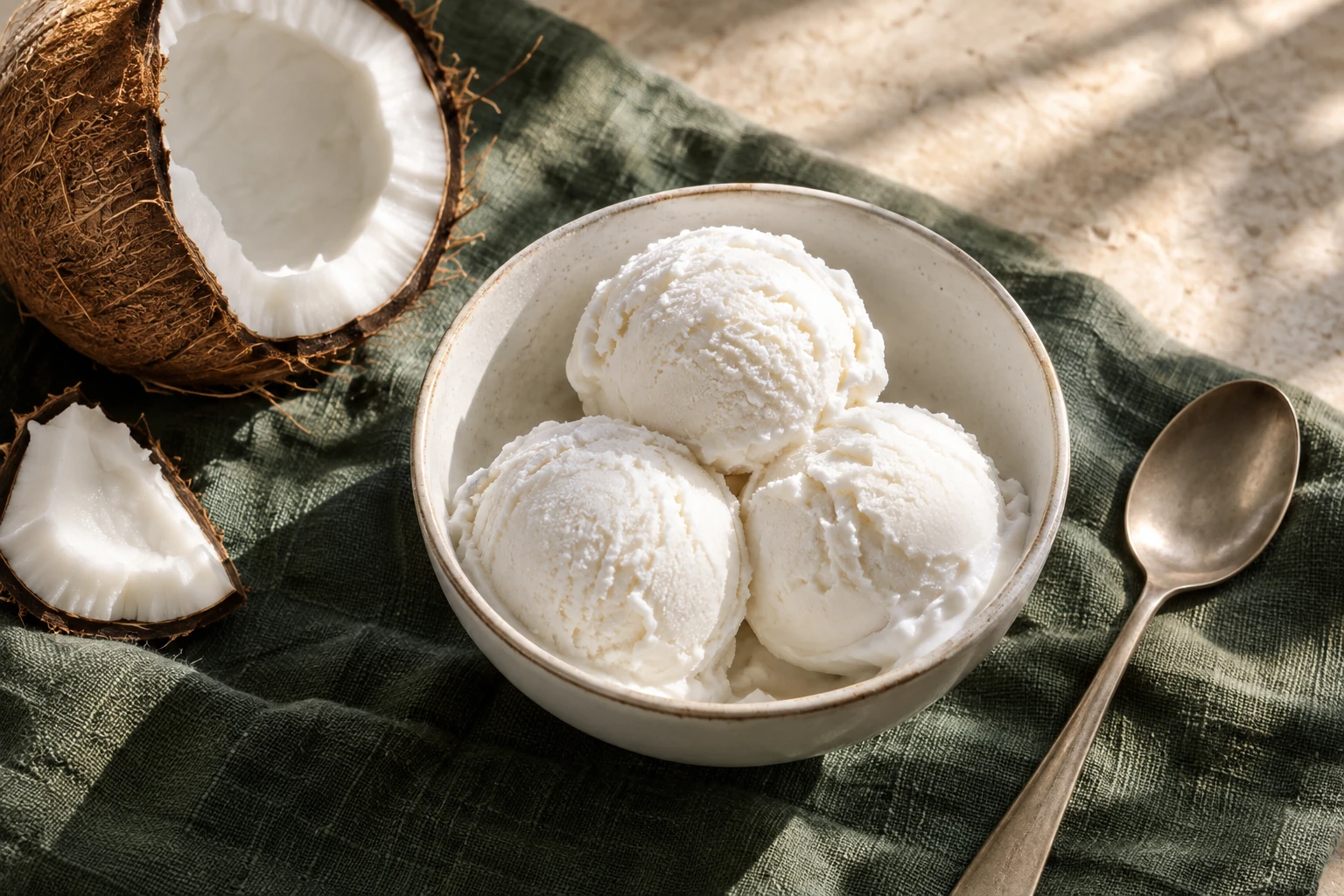
Taste at your own pace. Mango sticky rice is rich enough to share, yet there is no obligation to divide every component perfectly. If several people want to compare it with coconut ice cream or khanom tuay, order clearly and use separate spoons when that is more comfortable. For allergy safety, tell the team about the specific requirement before ordering rather than relying on how a dessert is traditionally described.
Make your own mango moment at THAM
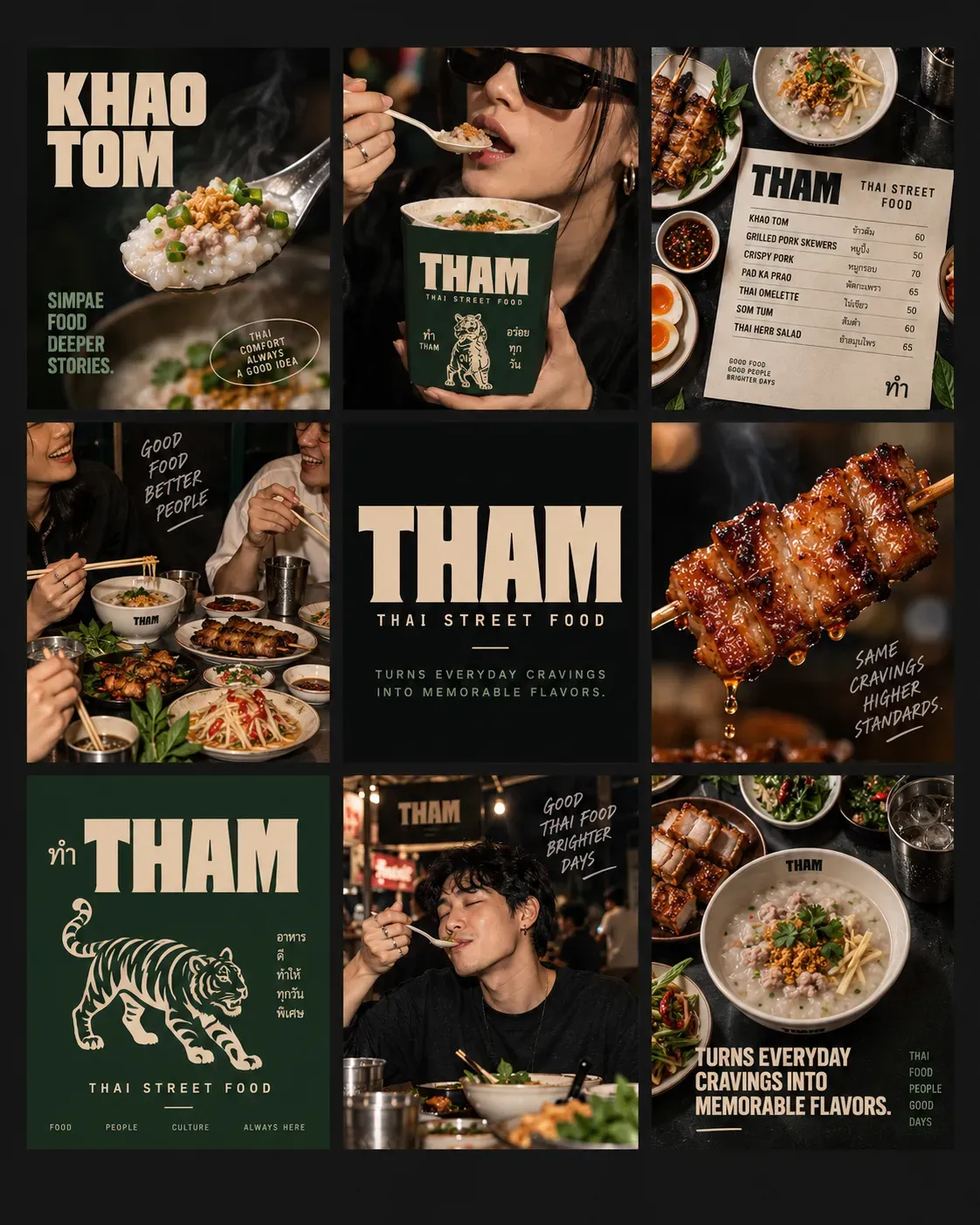
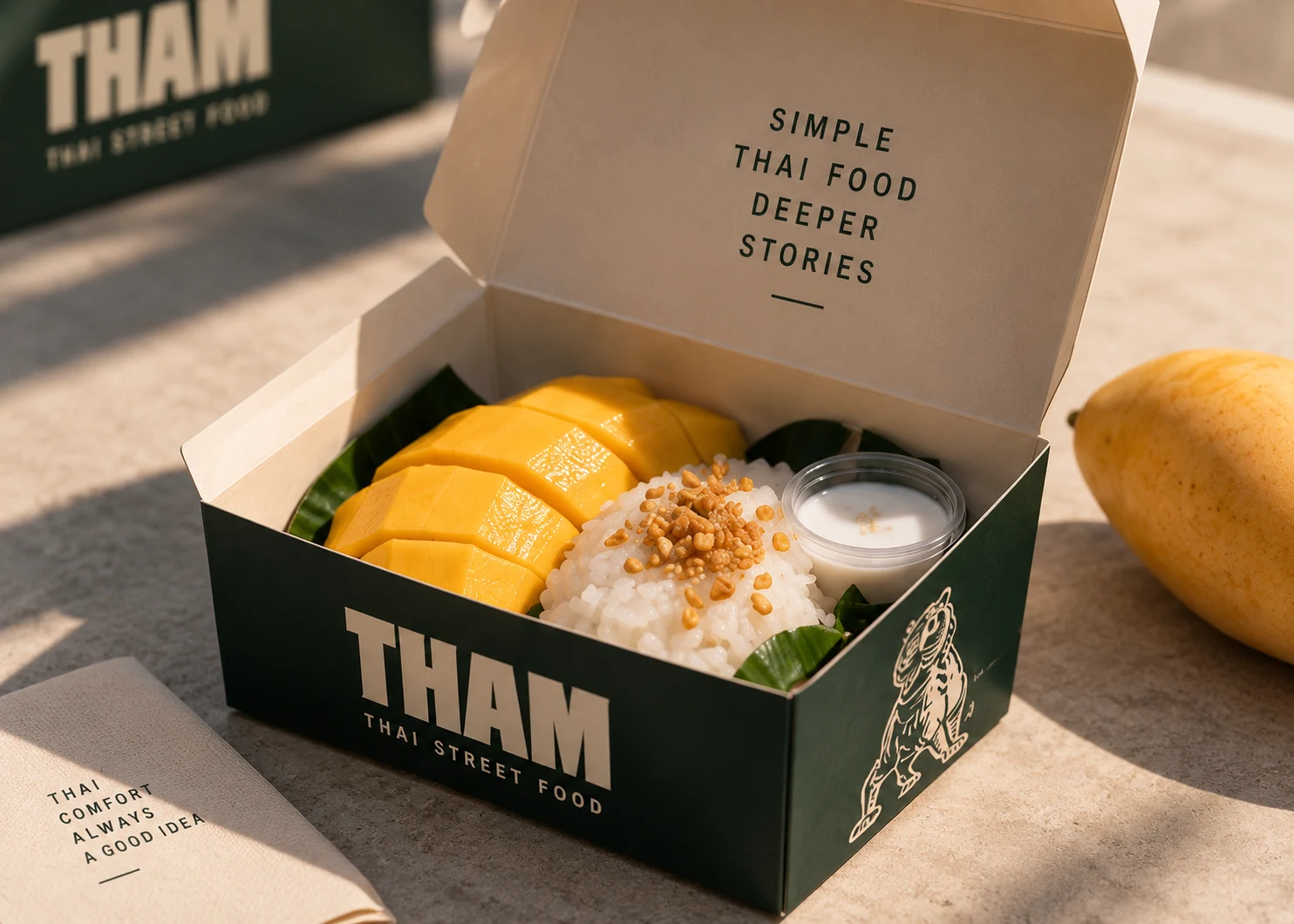
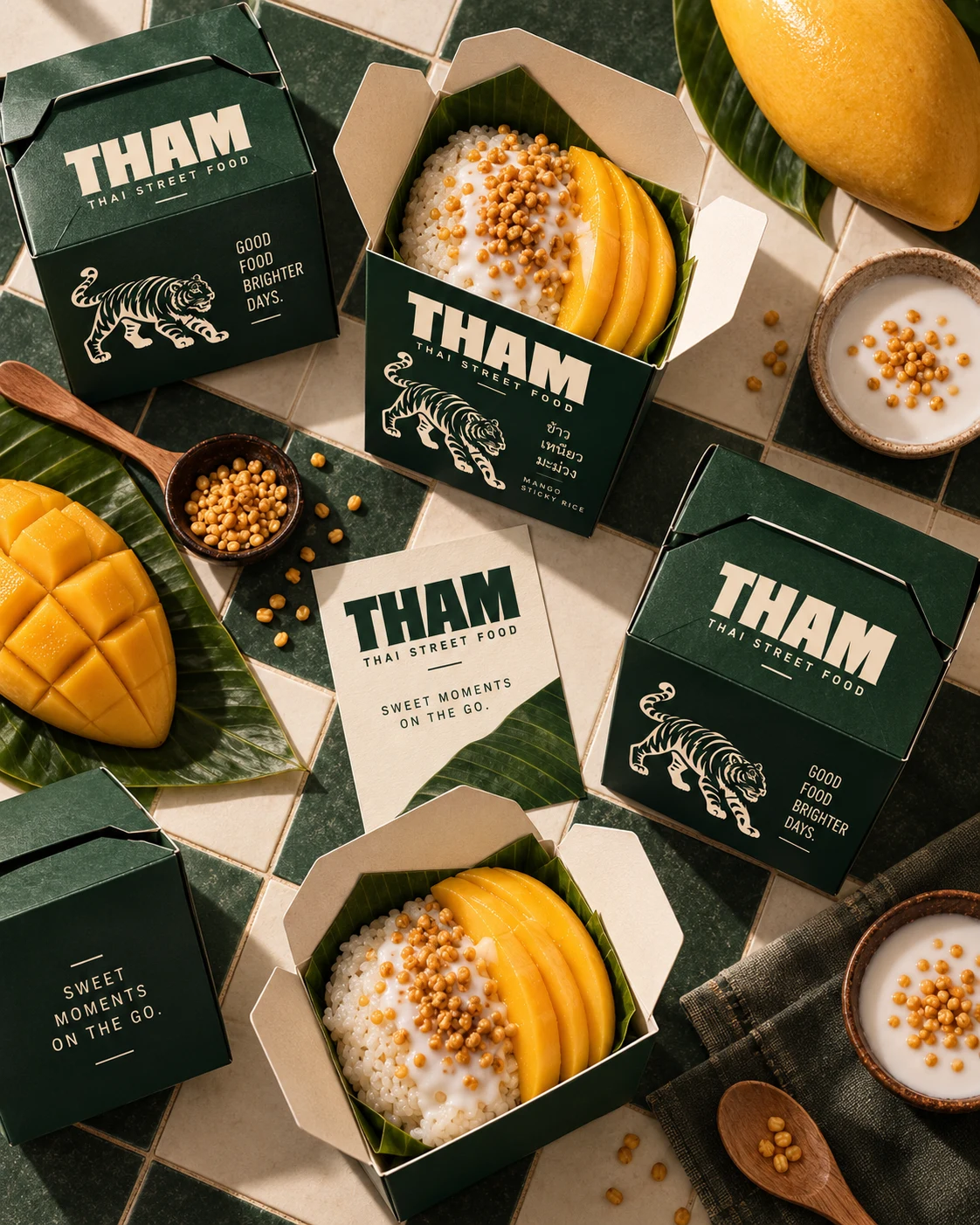
THAM's Mango Sticky Rice is the current best-seller, listed at 120 THB. The menu describes ripe mango, sticky rice and coconut. This tasting guide does not reveal a proprietary restaurant recipe and the editorial images are illustrative; presentation can vary. For the confirmed price, ingredients and practical ordering details, use the dedicated mango sticky rice in Bangkok page.
THAM is at 15, 1 Yen Akat Road, Chong Nonsi, Yan Nawa, Bangkok 10120. Opening hours are Monday–Saturday, 8:00 PM–1:00 AM, with Sunday evening closed; the 1:00 AM closing time falls the following morning. No reservation is required. Takeaway and Grab are available, and hotel delivery can be arranged with the team. Check the current visit, payment and ordering information before travelling close to closing time.
You can finish a savoury meal with mango sticky rice or make dessert the reason for a late Bangkok stop. Begin with the mango, give the rice its own moment, notice the coconut's sweet-salty contrast, then choose the proportion that makes you reach for another spoonful. The goal is not to declare a universal winner. It is to understand why this simple-looking dessert can become the part of an evening you remember.
KEEP YOUR CURIOSITY HUNGRY
Explore the current menu and plan your next visit to THAM on Yen Akat Road.
Explore the THAM menuRead further
Photography & credits
Editorial photographs illustrate Thai food and culture. THAM lifestyle images are creative brand imagery, including AI-generated scenes; they do not document the restaurant, its location or exact servings.
- Mango sticky rice, the THAM lifestyle collection — THAM — supplied creative brand imagery.
- Mango fruit Nam Dok Mai - cross section.jpg — Ivar Leidus. CC BY-SA 4.0. Resized and compressed for the web.
- Glutinous rice and coconut — THAM — AI-generated food illustration.
- Sweet moments, the THAM lifestyle collection — THAM — supplied creative brand imagery.