Say it: khao hom mali Approximate English sounds
Thai jasmine rice can look like the simplest part of a Bangkok meal, yet it changes how every spoonful works. Soft, fragrant grains can catch the sauce from a curry, soften a peppery stir-fry and give basil pork a calm foundation. Cooking it well at home is less about finding one magical ratio than learning to read the rice, the package and your own pot. This guide is a home adaptation, not THAM’s proprietary method. It explains a repeatable way to cook steamed jasmine rice and how that rice fits the dishes served at THAM on Yen Akat Road.
Jasmine rice is a family, not one identical bag
“Jasmine rice” is a familiar English label, but bags can differ in variety, age, milling and moisture. Thai Hom Mali is also a regulated export designation with its own standards; the words should not be treated as a guarantee that every fragrant-rice product behaves exactly alike. Read the country of origin and cooking directions rather than choosing by the front photograph alone.
Thailand’s Rice Department explains that rice chemistry affects cooked texture. Low-amylose varieties, including Khao Dawk Mali 105, tend to cook softer and more cohesive than higher-amylose rice, which is usually firmer and more separate. You do not need a laboratory number to make dinner, but the principle explains why copying the water level from a different rice can disappoint. Learn what your chosen grain does before trying to control it.
Start with the packet, then create your own record
Use the rice and water guidance printed on your bag or supplied with your rice cooker as the first test. Measure both with the same cup, note the brand and write down what happened. If the result is too firm at the centre, the next batch needs a little more water or cooking time. If it is wet and heavy, reduce the water slightly. Change one variable at a time.
There is no honest universal ratio that covers every jasmine rice, cooker, saucepan and batch size. Rice Department research notes that the ideal cooking water changes with rice properties, quantity and the age of the grain. A large batch can also lose a different proportion of water to evaporation than a small one. Treat a ratio as a starting instruction, not a law.
For two to three modest portions, 300 g of dry jasmine rice is a useful home batch. It gives you enough to understand the method without filling the pot so deeply that the lower and upper layers behave differently. Use a pot with a close-fitting lid or a rice cooker whose capacity comfortably exceeds the batch.
Rinse gently and deliberately
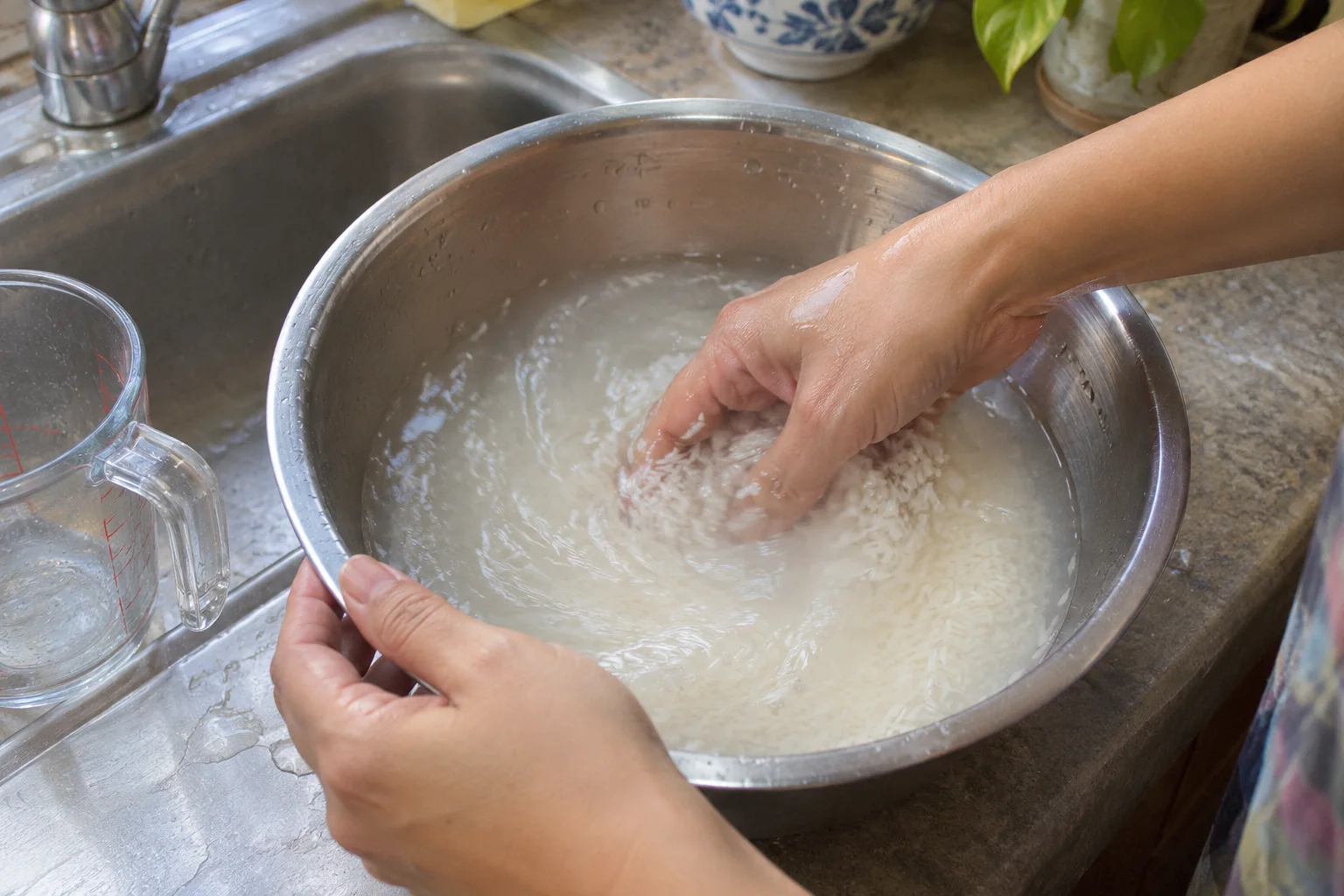
Packaged milled rice may be clean enough that the producer recommends little or no rinsing. If the packet tells you to rinse, put the grains in a bowl, cover with cool water and move them gently with your fingers. Drain without grinding the rice against itself. Repeat only as needed according to the product and the clarity you want.
Rinsing removes surface material and some loose starch, but it is not a competition to make the water perfectly transparent. FAO guidance notes that washing milled rice can also remove water-soluble nutrients, especially when it is repeated aggressively. The practical lesson is moderation: follow the product, use clean water and avoid long, forceful washing that breaks the grains.
Drain consistently. If one batch sits in a sieve for ten minutes and another goes straight into the cooker dripping wet, your recorded water amount no longer means the same thing. A minute or two of draining is enough for a simple repeatable routine.
A ratio is a starting instruction; the useful skill is learning what your rice, pot and batch are telling you.
Use absorption, then let the rice rest
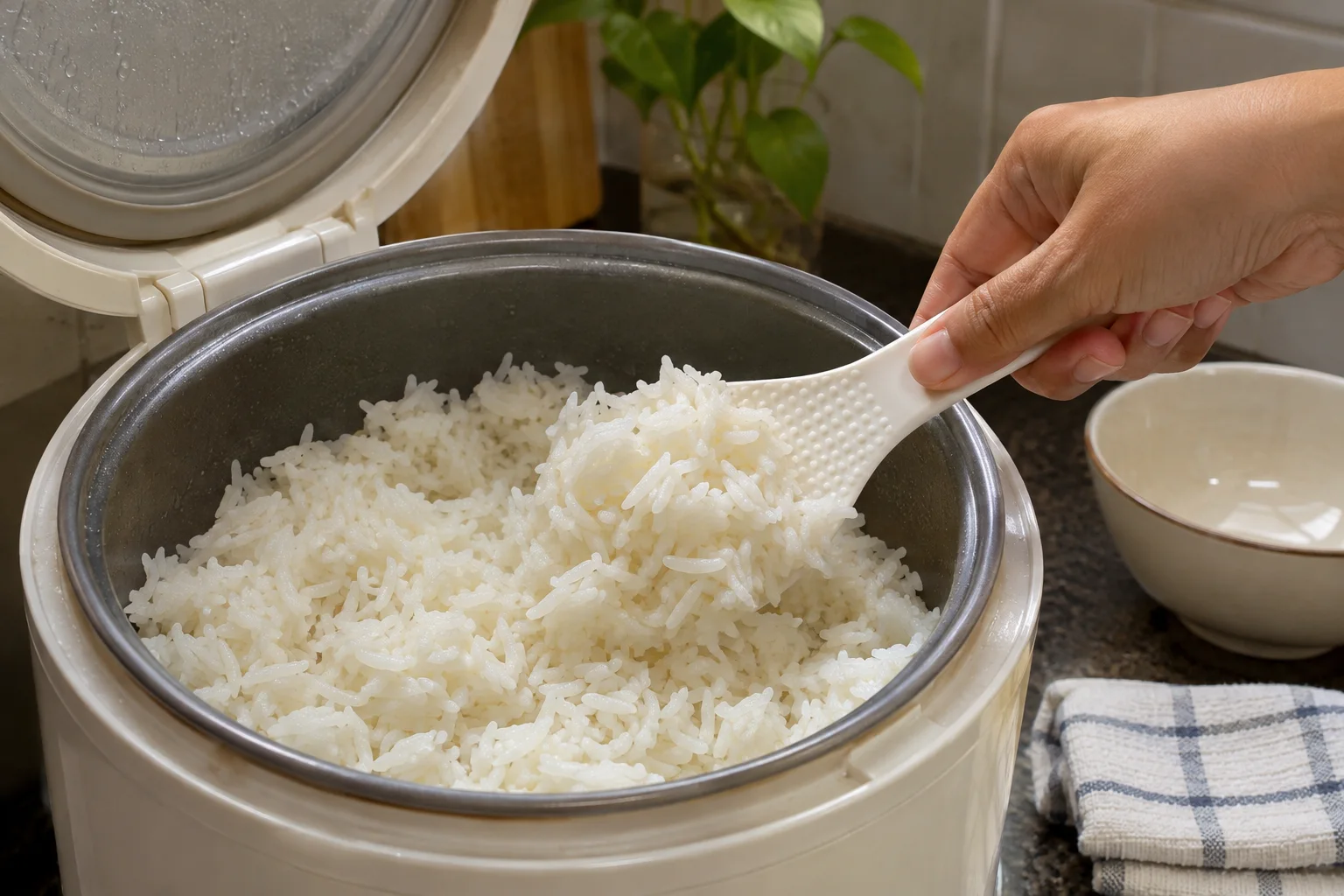
The absorption method keeps the measured cooking water with the rice. In a rice cooker, add the drained rice and the water determined by the packet or your previous batch, close the lid and start the normal white-rice cycle. Resist opening repeatedly: every lift releases heat and steam that the cooker expects to retain.
For a saucepan, bring the measured rice and water to a gentle boil, cover tightly, reduce to the lowest steady heat and cook without stirring until the water has been absorbed. Your pot and hob decide the exact time, so use the packet as the first reference. If the base scorches before the top is tender, the heat is too high or the pot too thin.
When the cooker changes to warm, or the saucepan has absorbed its water, leave the lid closed for about ten minutes. Resting allows moisture to move more evenly through the batch. Then open and fluff with a rice paddle or fork, lifting from the bottom and turning gently rather than pressing. The grains should be tender, moist and distinct enough to carry sauce without becoming paste.
Steam is not the same as sticky rice
Cooked jasmine rice can cling lightly, especially when it is a low-amylose variety, but it is not the glutinous rice used for mango sticky rice. The two grains have different culinary jobs and methods. Jasmine rice is commonly eaten with savoury dishes; Thai glutinous rice is soaked and steamed for preparations where its chewy cohesion is the point.
That distinction matters when shopping in Bangkok or abroad. A bag marked “glutinous,” “sweet” or “sticky” rice should not be substituted automatically in this method. If dessert is your goal, follow a method designed for that grain. Our mango sticky rice guide explains the soaking, steaming and coconut stage separately.
Match the rice to the sauce on the table
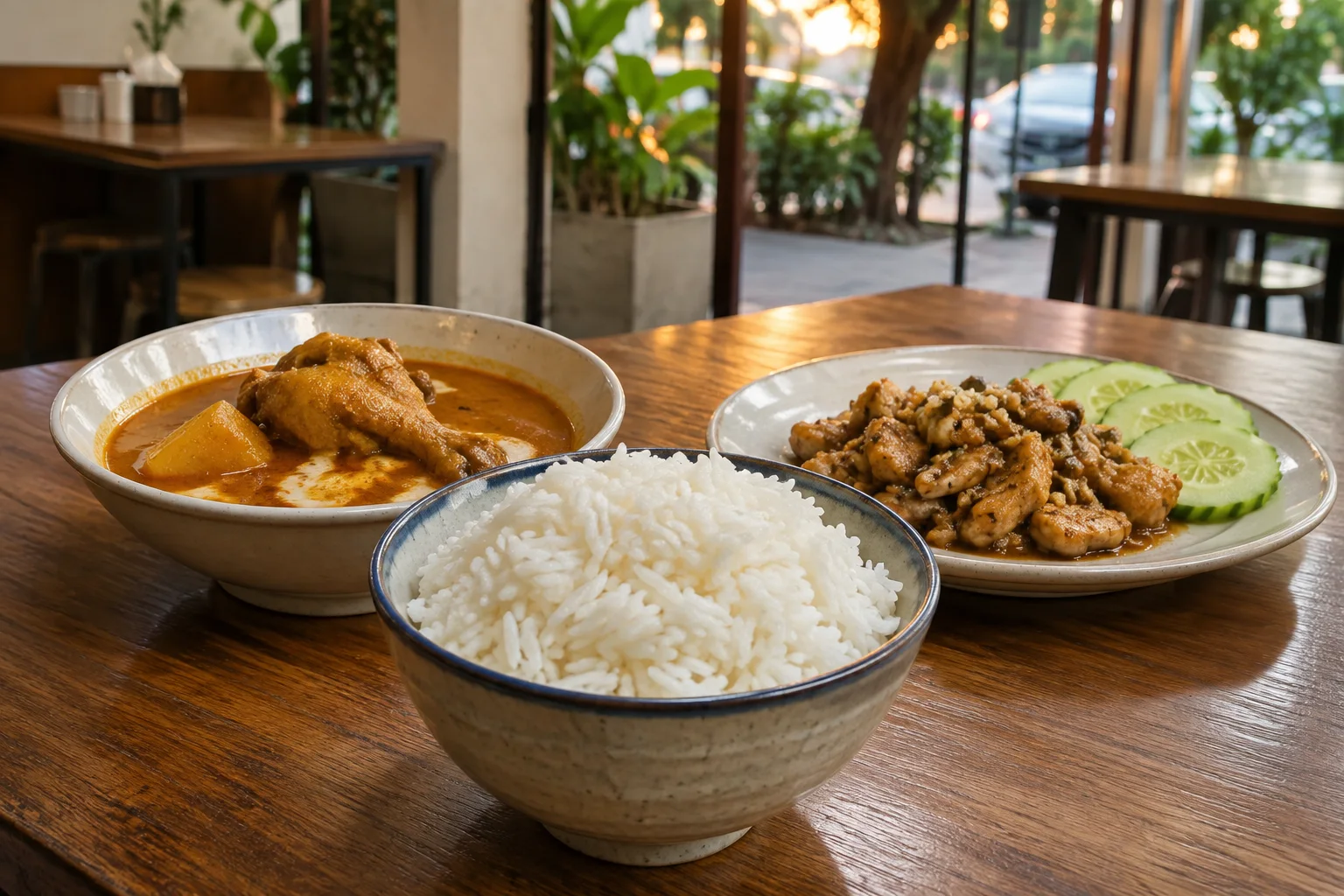
At THAM, rice is included with Pork Pad Kra Pao, Garlic Pepper Chicken and Chicken Massaman. Each pairing asks something slightly different from the grain. Basil pork brings savoury sauce, garlic and herbs, so rice helps spread those strong flavours across a complete spoonful. The Pad Kra Pao guide shows how the herb, pork and optional egg work together.
Garlic Pepper Chicken benefits from rice that is soft but not waterlogged. Individual grains pick up the savoury coating while cucumber can reset the palate between bites. Read the garlic pepper chicken story for the roles of garlic, pepper and seasoning.
Chicken Massaman is richer and more fluid. Rice gives the coconut-based curry somewhere to settle and makes it easier to combine potato, chicken, peanut and sauce in different proportions. Our Massaman curry guide explores that composition without claiming there is one fixed recipe everywhere.
Steamed rice and fried rice need different planning
Freshly cooked jasmine rice is ideal when you want a soft, fragrant side. Fried rice needs another texture: the grains should be cool, dry enough to separate and handled safely. Do not cook an extra-wet batch and expect the wok to remove the problem. Start with correctly cooked rice, cool any portion intended for later use promptly and refrigerate it.
The Chicken Khao Pad guide explains how safely chilled rice behaves in the pan and why day-old rice is a convenience rather than the true objective. Follow current food-safety guidance for cooling, refrigeration and reheating. Rice should not sit warm on the counter while the rest of dinner is postponed.
Taste the batch before changing it
Good rice is not judged only by appearance. Taste from the top and bottom of the pot. Is the centre tender? Do the grains feel moist without leaving water on the plate? Does the aroma remain clean and pleasant? If the answer is almost right, make a small adjustment next time rather than rewriting the method.
In Bangkok, steamed rice often plays a supporting role, but support is not the same as invisibility. It controls the pace of a curry, the strength of a stir-fry and the balance of a shared meal. Check the current THAM menu for which dishes include rice and when jasmine rice is listed as an extra. At home, one careful batch and one written note are enough to begin improving every dinner that follows.
MAKE IT AT HOME
A repeatable pot of jasmine rice.
An original home-kitchen adaptation, not THAM’s restaurant recipe.
Gather
- 300 g Thai jasmine rice
- Clean water, measured according to the rice packet or cooker instructions
Cook
- Read the packet. Measure the rice and its recommended water with consistent cups.
- Rinse gently if directed, then drain for one to two minutes.
- Add rice and measured water to a rice cooker; use its normal white-rice cycle. For a saucepan, follow the packet’s covered low-heat timing.
- When cooking ends, keep the lid closed for ten minutes.
- Fluff from the bottom without pressing. Taste before changing the next batch’s water slightly.
This home adaptation is not THAM’s proprietary method and has not been kitchen-tested. Rice variety, age, batch size and equipment change water needs. Cool leftovers promptly, refrigerate and reheat only once until steaming.
KEEP YOUR CURIOSITY HUNGRY
Measure, record, rest and taste: one careful batch is the beginning of better rice.
Explore the THAM menuRead further
- Thailand Rice Department — chemical quality and amylose in rice
- Thailand Rice Department — Thai jasmine rice cooking-water research
- Thai Rice Exporters Association — Thailand rice standards
- FAO — rice home preparation and cooking
- UK Food Standards Agency — safe handling of cooked rice
- THAM — current menu and listed prices
Photography & credits
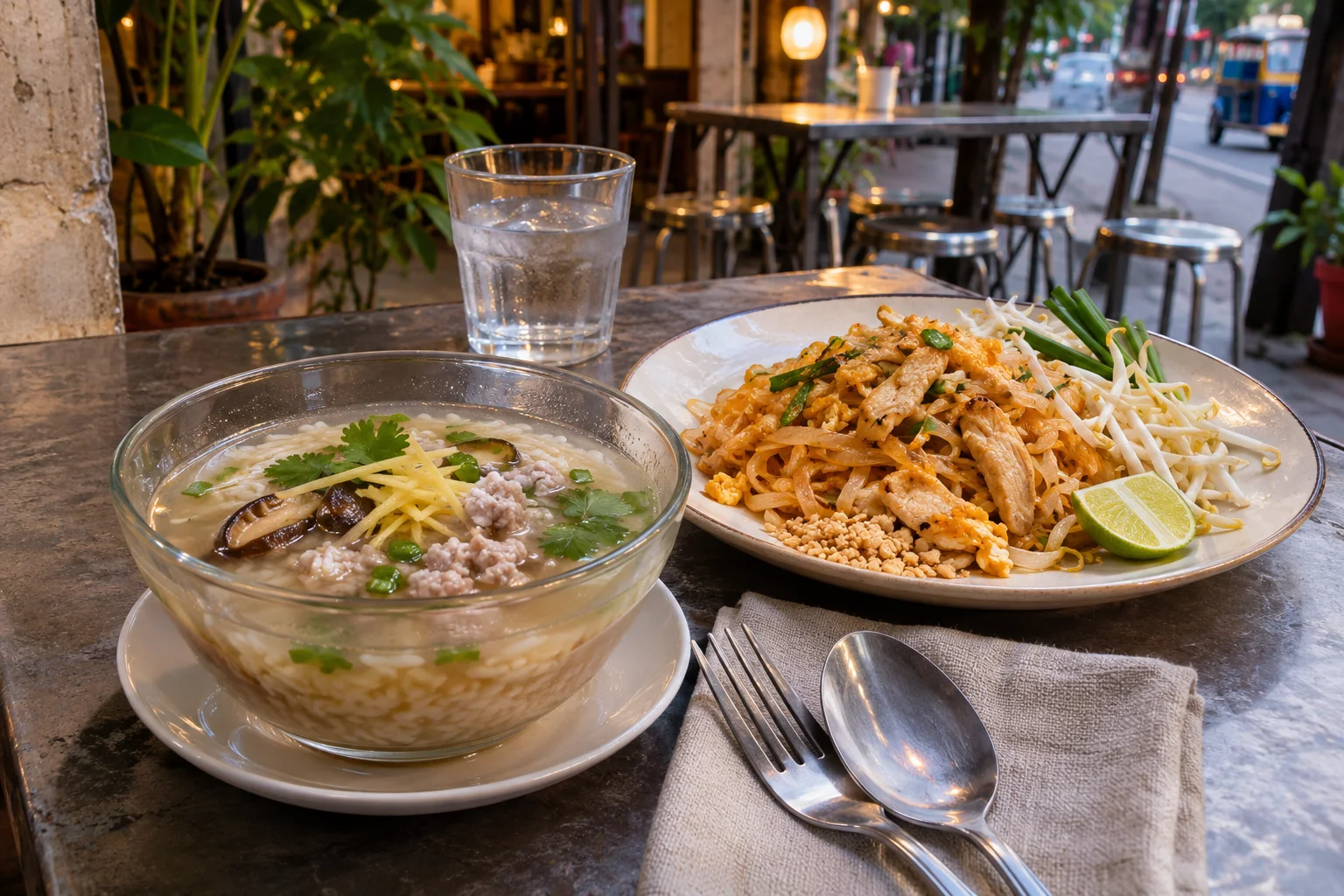
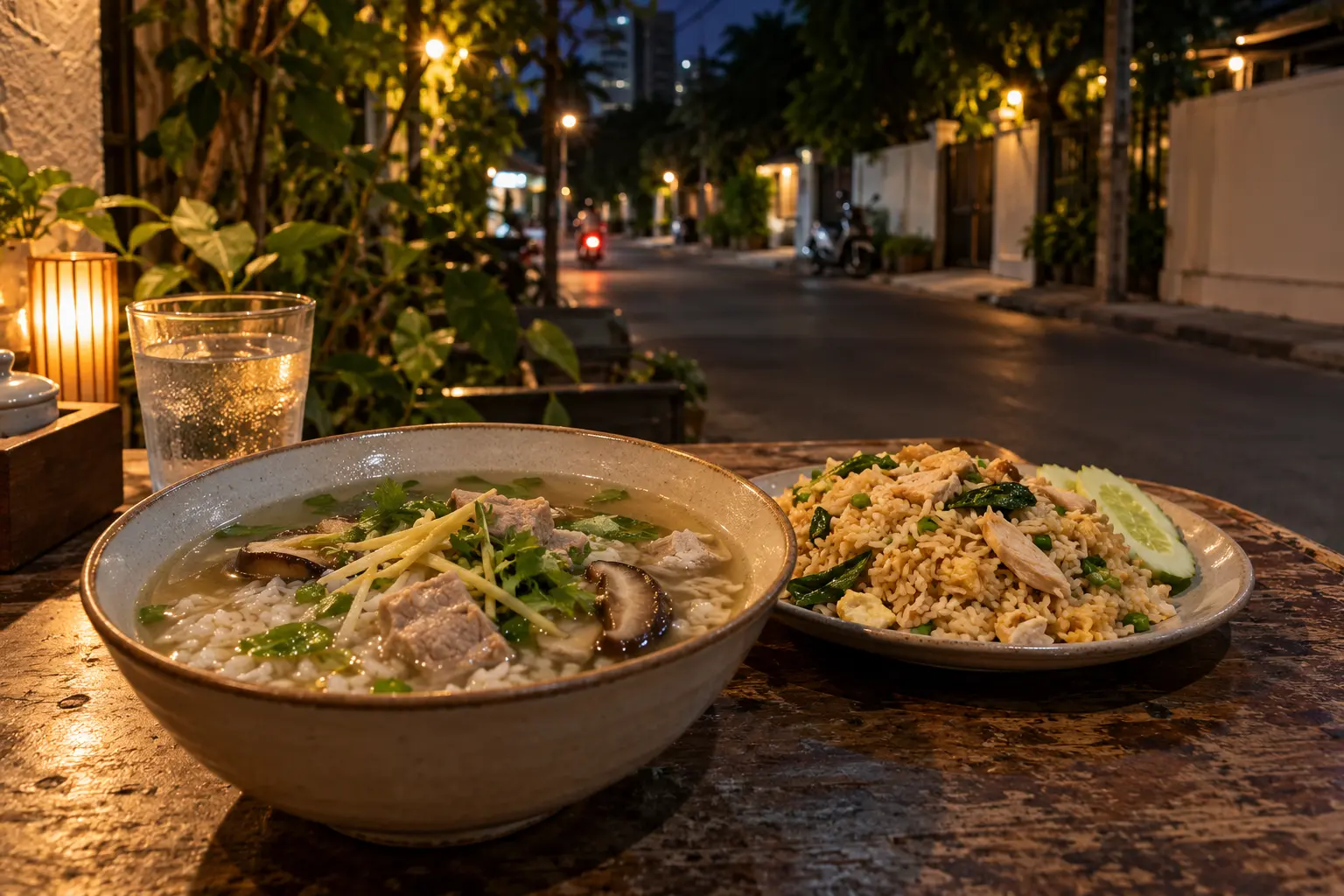
All three images are AI-generated editorial illustrations created for this guide. They are not documentary photographs of THAM, its venue or exact menu servings.
- Jasmine rice at the Bangkok table — AI-generated editorial illustration commissioned for THAM; not an exact venue or menu photograph.
- Rinsing jasmine rice gently — AI-generated editorial illustration commissioned for THAM; not a proprietary method photograph.
- Resting and fluffing cooked rice — AI-generated editorial illustration commissioned for THAM; not a proprietary method photograph.