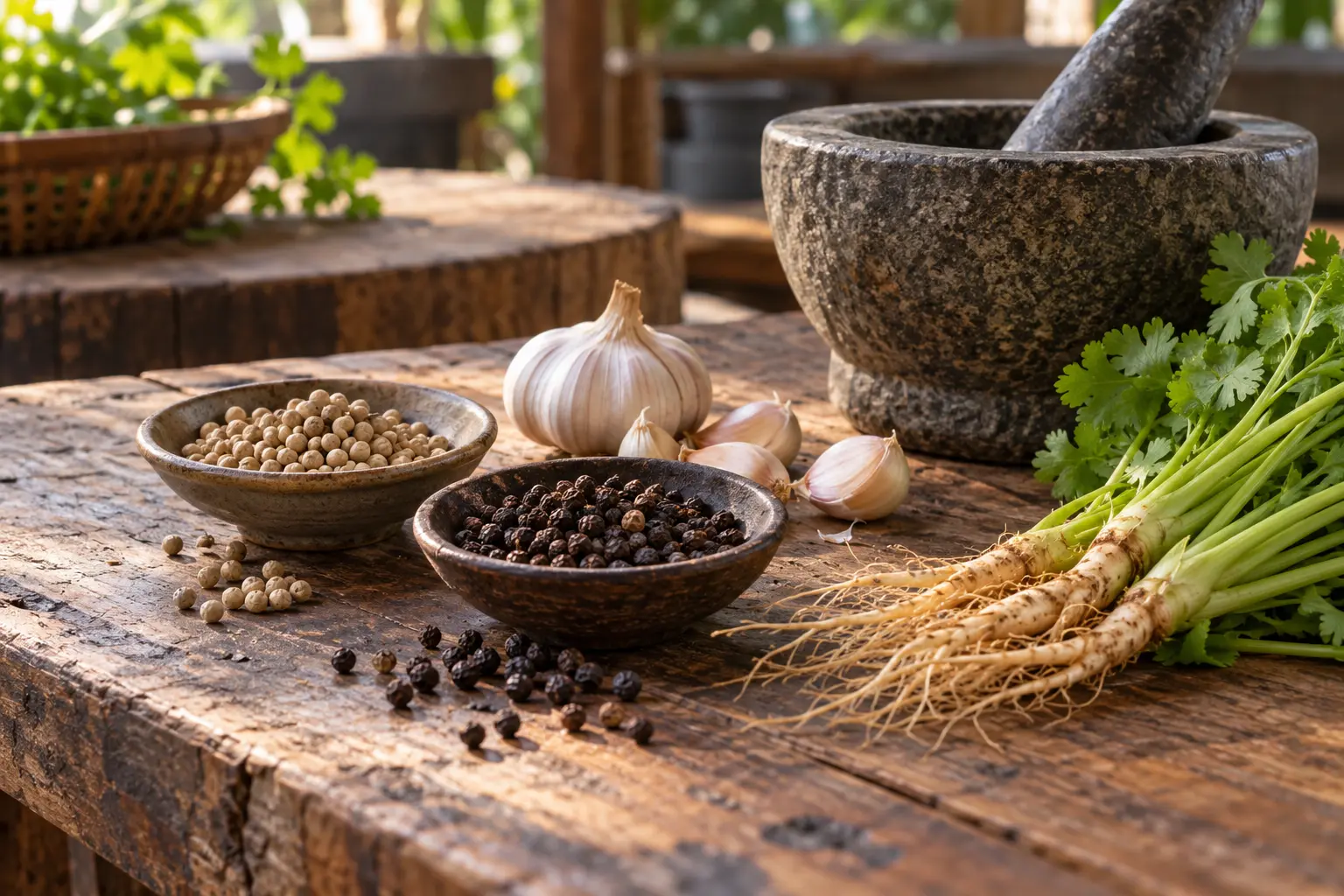
Some of Thai cooking’s most recognisable aromas begin with ingredients that almost disappear into the finished dish. Garlic is easy to spot, but coriander root and pepper may be pounded so finely that they become a fragrant foundation rather than a visible garnish. Together, this trio is commonly known as sam kler: three companions that can season meat, enrich a marinade or give a simple savoury preparation more depth. For a Bangkok visitor, sam kler is a useful piece of culinary vocabulary. It explains why coriander sold with its roots attached is valuable, why “pepper” does not automatically mean chilli, and why a mortar and pestle can change the character of familiar ingredients. It is not one rigid recipe, and it should not be assumed to appear in every garlic or pepper dish. Think of it as a method and a relationship between aromatics.
Meet the three companions
Sam kler is the combination of coriander root, garlic and pepper. Michelin Guide Thailand describes the trio as “three buddies” of Thai cuisine, while Thai SELECT uses the same combination in published recipes and lists a prepared sam kler paste among certified products. Those examples establish a recognised seasoning tradition without turning it into a compulsory formula for every Thai kitchen.
The ingredients each do a different job. Garlic brings a direct savoury aroma that changes as it is crushed and cooked. Coriander root contributes an earthy, concentrated character distinct from the fresh leaf used as a garnish. Pepper adds pungency and warmth. Pounded together, they become more integrated than three separate toppings added at the end.
Ratios and texture depend on the cook and purpose. A paste for a marinade need not match one intended for soup, grilled meat or a small batch of fried food. Some preparations use white pepper, others black pepper. That flexibility is why sam kler is better understood as a culinary building block than as a single recipe with one protected list of measurements.
Pepper is not the same plant as chilli
The Thai word prik thai refers to pepper from Piper nigrum. Chilli peppers belong to the Capsicum group, so the shared English word “pepper” can hide a botanical and culinary difference. Kew’s Plants of the World Online makes the distinction explicit: peppercorns should not be confused with chilli peppers.
Black, white and green peppercorns can all come from Piper nigrum. The Codex standard explains the processing difference. Black pepper is made from dried berries with the outer layer intact. White pepper is dried after that outer layer is removed. Green pepper comes from green berries whose moisture is reduced under controlled conditions.
That processing changes colour, aroma and the way pungency is perceived. Codex characterises black pepper as penetrating and biting, while white pepper is slightly sharp and highly aromatic. Those descriptions are more useful than treating one as simply “stronger.” Freshness, grind and the other ingredients in a dish also shape the final impression.
If chilli heat is a concern, pepper still deserves a separate conversation. THAM serves dishes non-spicy by default, but a dish seasoned with ground pepper can retain aromatic warmth. The Journal’s guide to ordering non-spicy Thai food in Bangkok explains why mild does not have to mean flavourless.
Why coriander root matters
Coriander leaves are bright and familiar, but the root has a denser aroma and a practical advantage: it can be pounded into a paste without behaving like a delicate leafy garnish. Thai market bunches are often sold with roots attached because the whole plant has culinary value.
The roots need careful cleaning. Soil can sit in the small creases and fine fibres, so cooks wash them thoroughly before trimming and pounding. The goal is a clean aromatic ingredient, not a rustic trace of the market. When roots are unavailable, some cooks turn to the lower stems, but that substitution changes the material and should not be described as identical.
This is one reason a Bangkok market visit can expand the way you read ingredients. The part discarded elsewhere may be exactly what a Thai cook wants. The broader field guide to Thai pantry flavours offers the same kind of orientation for tamarind, galangal, makrut lime and fish sauce.
Sam kler is less a fixed formula than a relationship: root for depth, garlic for savoury aroma and pepper for warmth.
The mortar changes the mixture
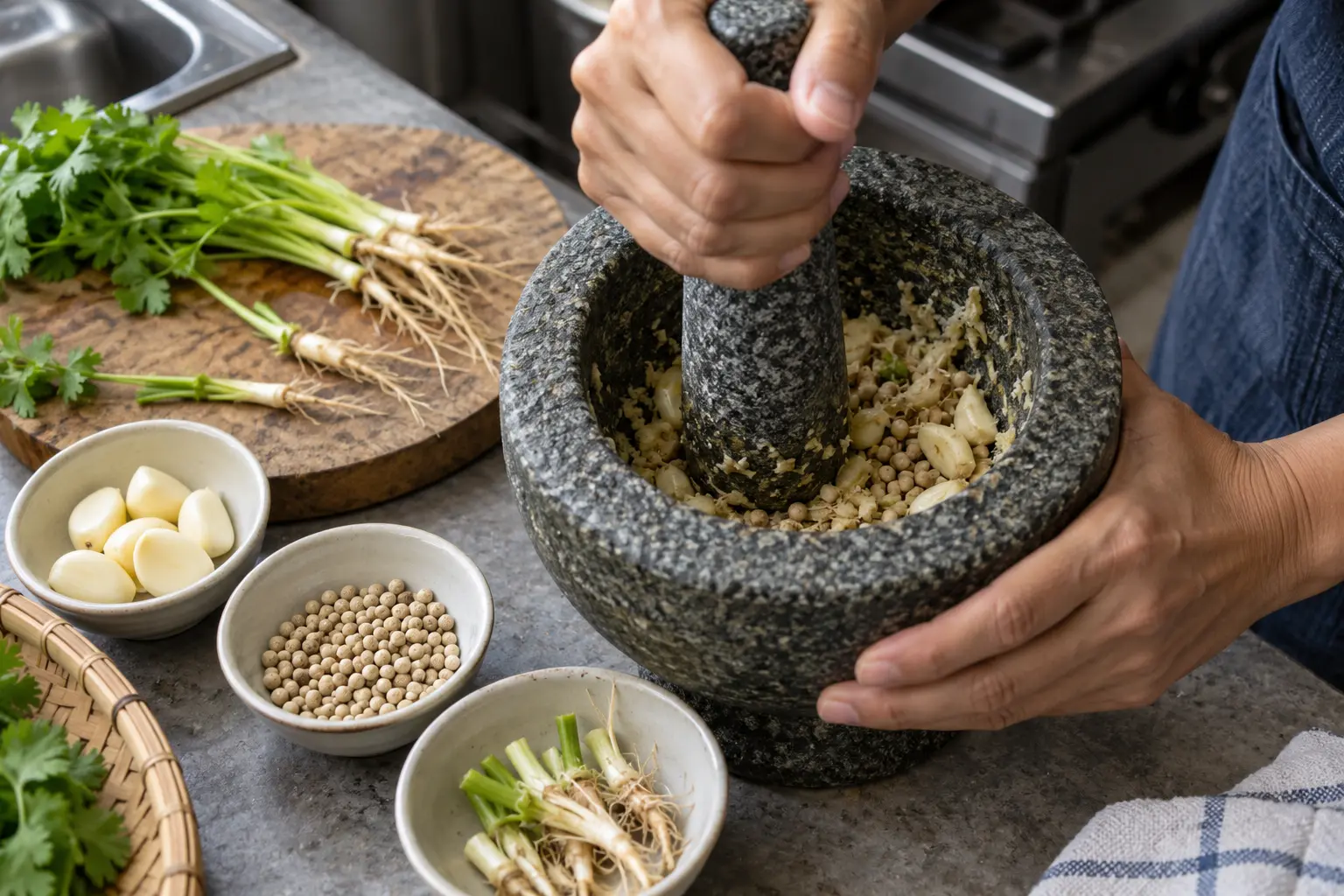
A granite mortar and pestle does more than reduce ingredient size. Crushing bruises fibres, releases aroma and brings garlic, root and pepper into contact. The result can be coarse or smooth depending on the dish. A rough paste leaves small aromatic pieces; a finer paste spreads more evenly through a marinade or seasoning base.
A common practical sequence begins with the harder peppercorns before adding chopped coriander root and garlic, but published methods vary. The useful principle is control: work until the texture suits the preparation rather than assuming every paste must be perfectly smooth. A blender can chop quickly, yet a mortar gives the cook a direct sense of resistance and texture.
Preparation also matters once heat enters the picture. Garlic can turn bitter if pushed too far, while a wet paste affects the temperature of the pan. Good Thai wok timing and preparation begins before the flame is high. Aromatics, protein and seasoning should be ready so that the cook can manage contact and moisture instead of searching for ingredients mid-stir-fry.
Where sam kler appears—and where it may not
Published Thai recipes use coriander root, garlic and pepper in marinades and savoury mixtures for different meats. Thai SELECT, for example, instructs cooks to pound the trio for a chicken marinade. Michelin’s recipe presents the paste as versatile across meat preparations. These are credible examples, not evidence that every Thai chicken dish contains the same base.
That distinction is important when reading a restaurant menu. A name such as garlic pepper chicken tells you which flavours are central, but it does not disclose every ingredient or technique. One kitchen may include coriander root; another may not. One may use black pepper, another white, and another a blend. The dish name is an invitation to ask, not permission to invent an exact recipe.
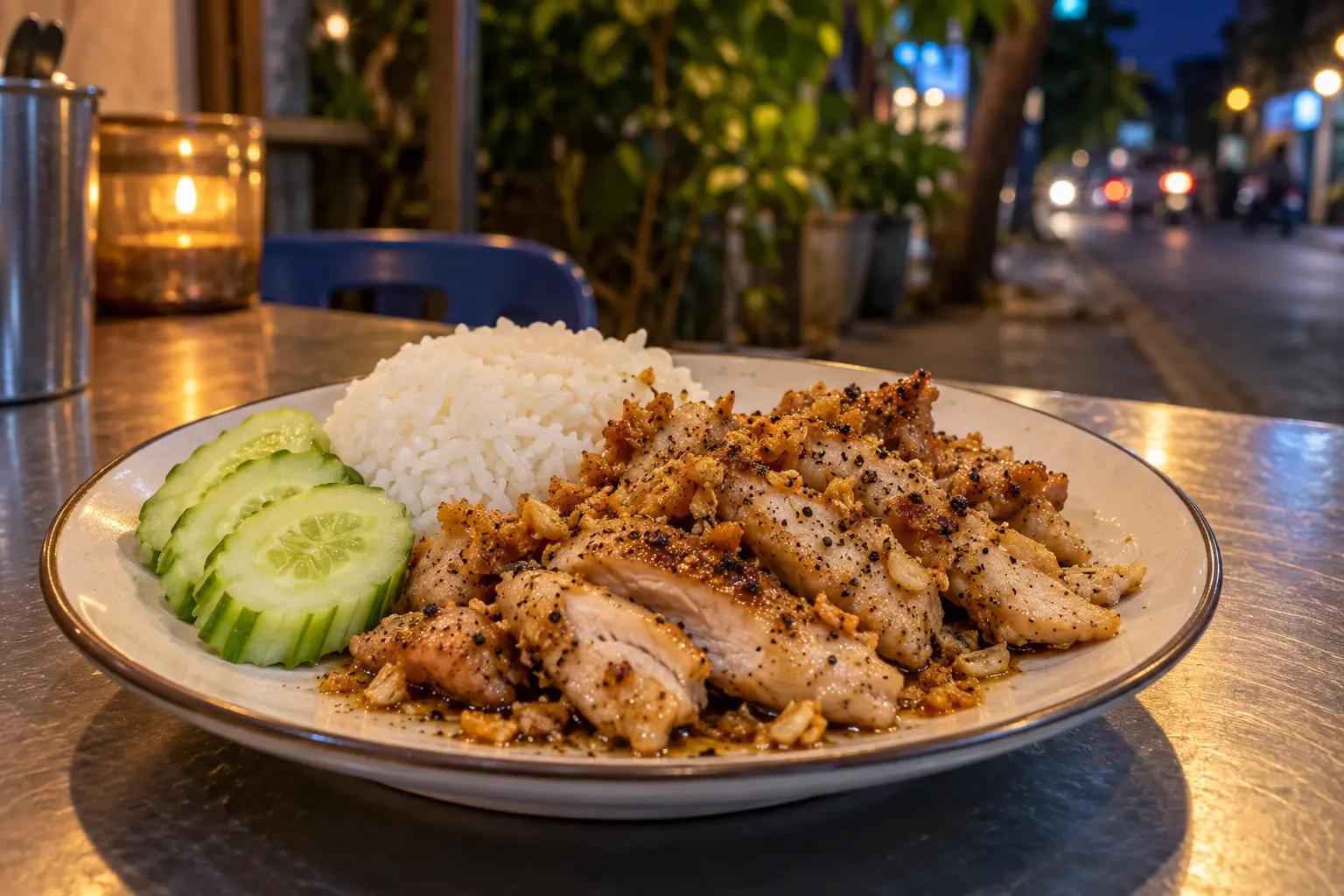
THAM’s confirmed Garlic Pepper Chicken ingredients are chicken, minced garlic, ground pepper, oyster sauce and frying flour. Coriander root is not listed, so this article does not claim that THAM uses sam kler in that dish. The dedicated Garlic Pepper Chicken guide explores the rice plate’s documented ingredients, textures and possible variations without revealing or inventing a proprietary method.
Shop for the trio with purpose
When buying the ingredients in Bangkok, look for coriander with firm roots that can be cleaned, garlic without soft or mouldy cloves, and pepper suited to the recipe you plan to follow. Whole peppercorns hold their aroma longer than a large open container of pre-ground spice. Buy a practical amount, keep it sealed away from heat and moisture, and grind only what you need.
White pepper should look pale ivory to grey rather than brilliant artificial white; black pepper should retain its wrinkled outer surface. Aroma is a better guide than colour alone. A stale container may look correct but contribute little. If you are unfamiliar with a product, start with a small amount and learn how it behaves before changing several other ingredients at once.
At home, choose one complete, tested recipe rather than borrowing a ratio from one source and a cooking time from another. Sam kler is adaptable, but safe handling and protein doneness still depend on the full dish. This article explains an ingredient relationship; it is not a substitute for a tested recipe.
Taste the idea on Yen Akat Road
You can apply this knowledge without trying to identify every invisible ingredient on a plate. Notice whether the warmth comes from ground pepper or chilli, whether garlic remains crisp or has merged into the sauce, and how plain rice changes the intensity of a seasoned bite. Those observations build a more precise flavour vocabulary.
At THAM on Yen Akat Road, Garlic Pepper Chicken is listed at 150 THB with rice included. All dishes are non-spicy by default, with chilli available on request. Check the current THAM menu for the latest description and prices, and use the visit page for the address, opening hours and ordering information.
Sam kler rewards the same curiosity. Three ordinary-looking ingredients become more expressive when their roles are understood: root for depth, garlic for savoury aroma and pepper for a heat that is not chilli. The next time you see coriander roots at a Bangkok market or read “garlic and pepper” on a menu, you will be looking at more than a short ingredient list.
KEEP YOUR CURIOSITY HUNGRY
Look beyond the garnish: three ordinary ingredients can become the aromatic foundation of an entire dish.
Explore the THAM menuRead further
- Kew Science — Piper nigrum and the distinction from chilli peppers
- Codex Alimentarius — Standard for Black, White and Green Peppers
- Michelin Guide Thailand — coriander root, garlic and pepper trio
- Thai SELECT — published chicken marinade using coriander root, garlic and pepper
- Thailand Department of Agricultural Extension — pepper reference
- THAM — current menu and listed prices
Photography & credits
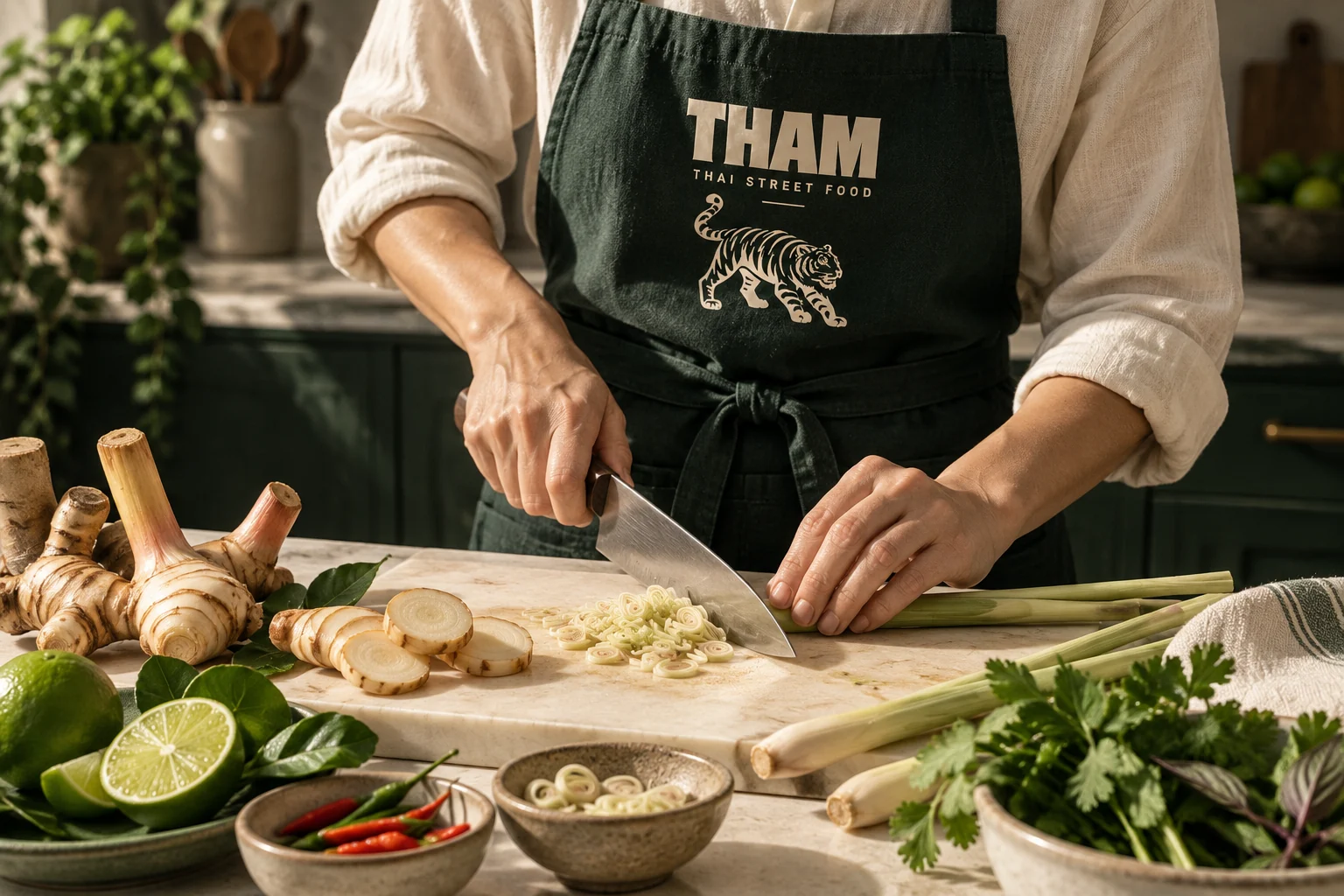
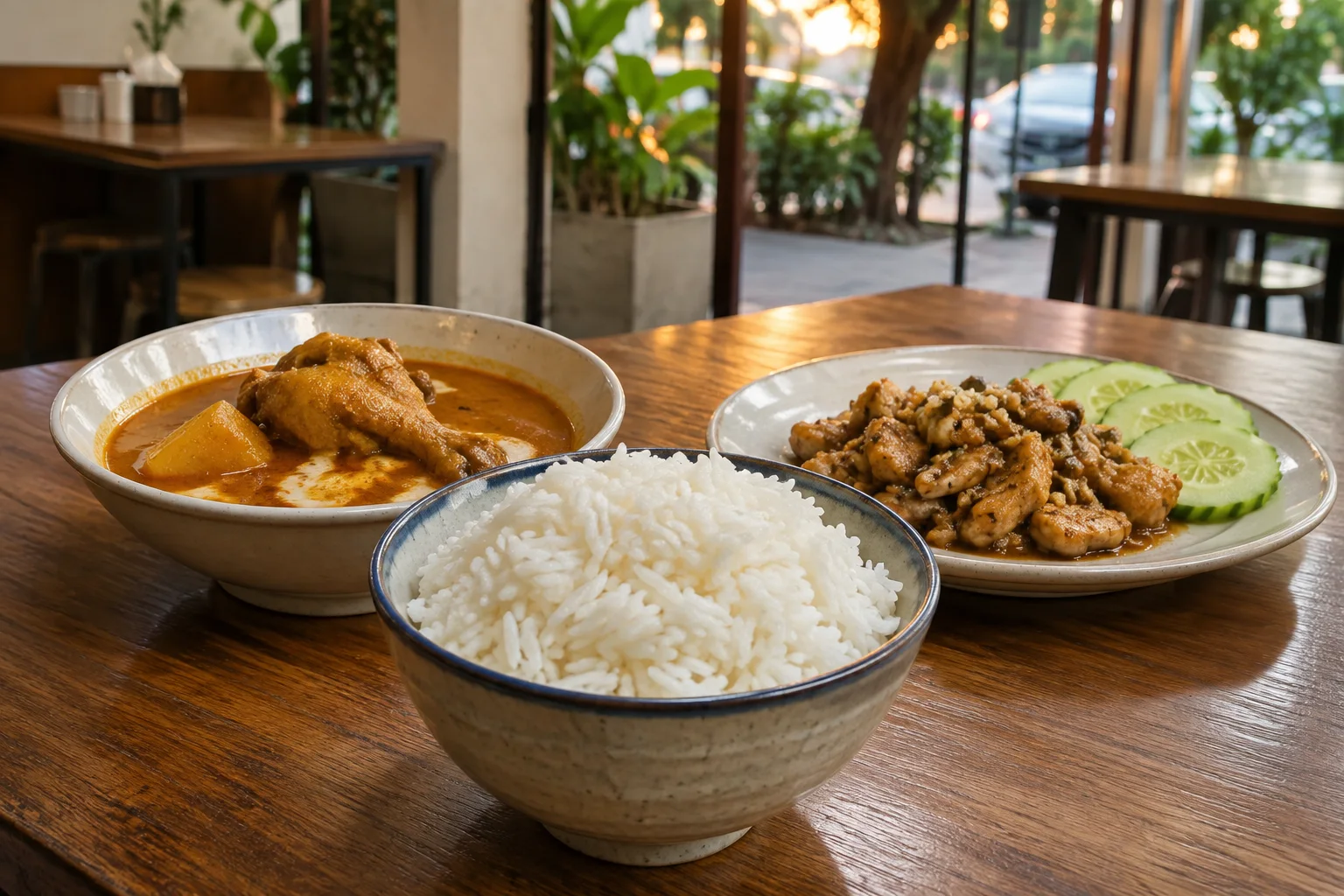
All three images are AI-generated editorial illustrations created for this guide. They are not documentary photographs of THAM, its venue or exact menu servings.
- The three companions of sam kler — AI-generated editorial illustration commissioned for THAM; not a documentary kitchen photograph.
- Pounding sam kler — AI-generated editorial illustration commissioned for THAM; not a proprietary recipe photograph.
- Garlic pepper chicken after dark — AI-generated editorial illustration commissioned for THAM; not an exact venue or menu photograph.