The first visit to a Thai grocery can feel like reading a menu written in ingredients. There are roots that resemble ginger, leaves folded into little packets, bottles of amber liquid and several products all labelled tamarind. Start with a simple question: what does each ingredient do? Thinking in terms of fragrance, sourness and savouriness turns an intimidating shelf into a set of useful cooking choices.
Fragrance is not the same as sourness
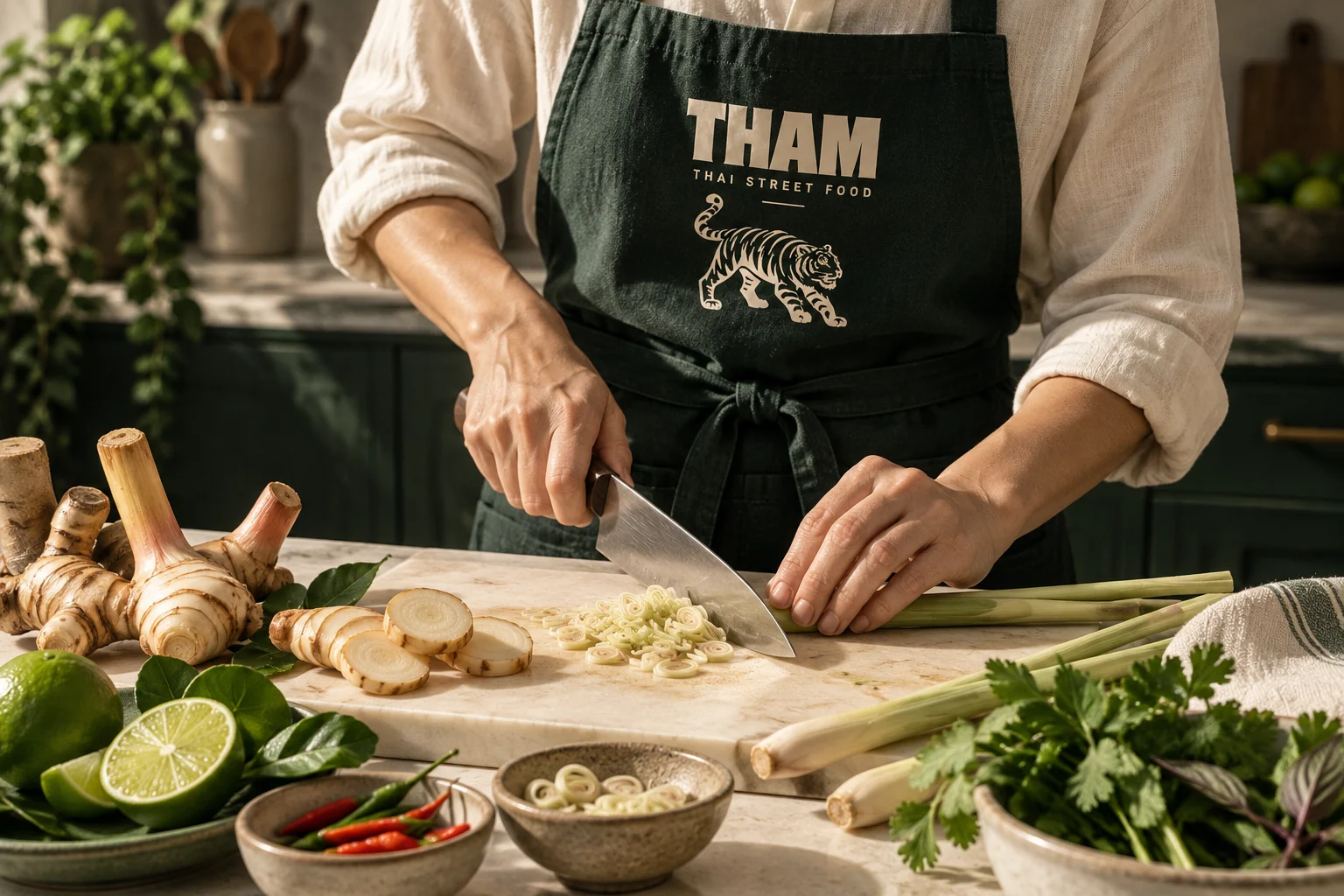
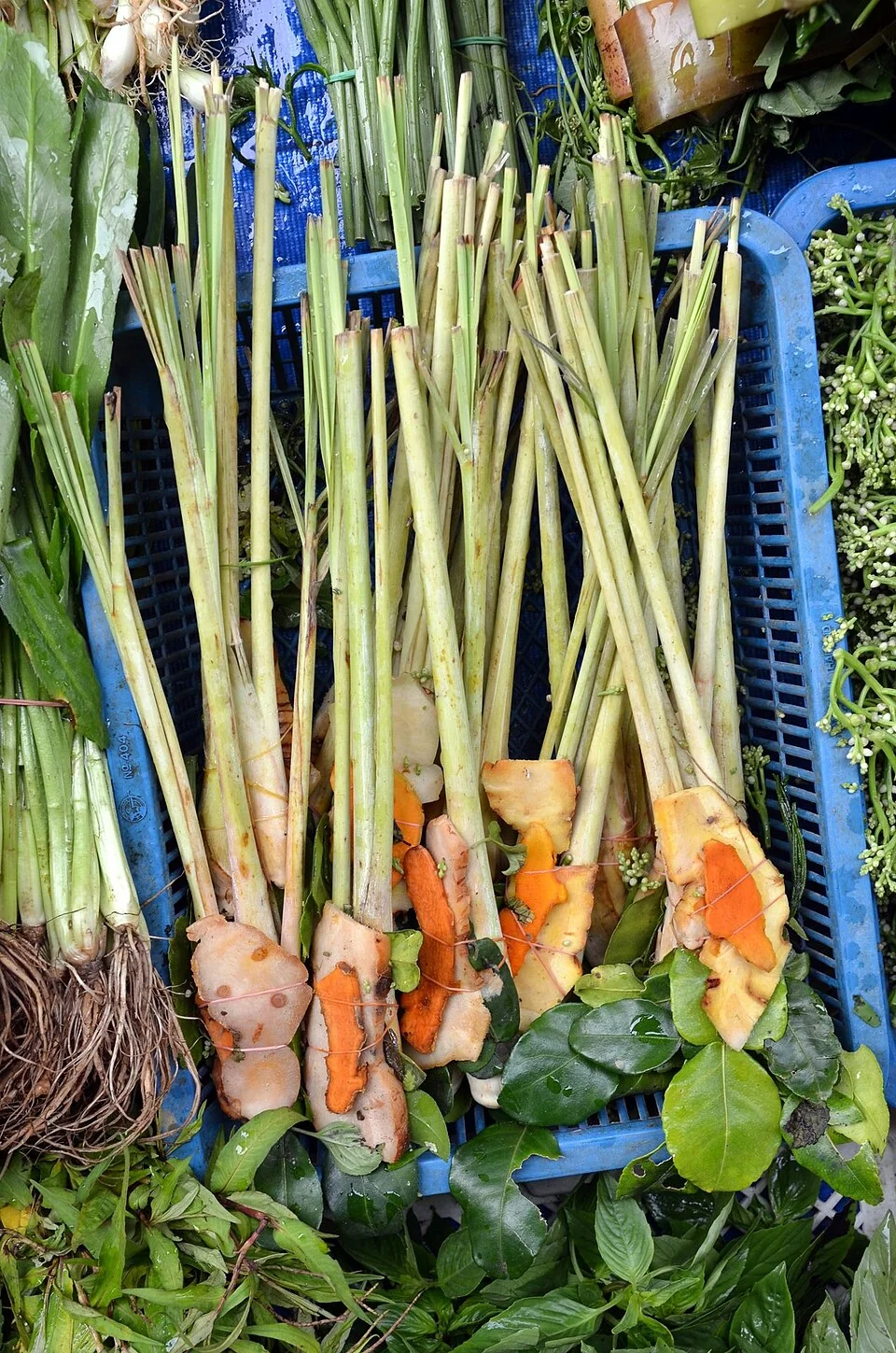
Lemongrass, ตะไคร้, brings a citrus-like aroma, but it does not make a soup sour in the way lime juice does. Its thicker lower stalk is useful in the kitchen. Bruised pieces can perfume a broth; finely prepared lemongrass can become part of a paste. The way you cut it depends on whether you want to infuse the food or eat the ingredient within it.
That distinction is helpful at the table too. A large fibrous piece in a soup may have already done its job. You do not need to chew every aromatic you find. Notice the fragrance in the liquid, then leave tough pieces aside. At home, decide how you will remove or identify those pieces before you serve the bowl to someone unfamiliar with them.
Galangal has its own character
Galangal, ข่า, is a rhizome that may remind you visually of ginger. Similarity in shape does not mean they are interchangeable in flavour. Galangal brings its own aromatic character to soups and pastes. Slices are useful for infusion; a paste requires more thorough preparation. Buying it specifically for a dish is often more informative than replacing it immediately with something already in your fridge.
Try a small sensory exercise while preparing ingredients: smell ginger and galangal separately, then compare them without worrying about finding professional tasting language. Write down whatever helps you remember the difference. You are building a practical memory for your next shopping trip. One clear impression can be more useful than memorising a long list of descriptions that mean little to you.
Makrut lime: leaf, zest and juice
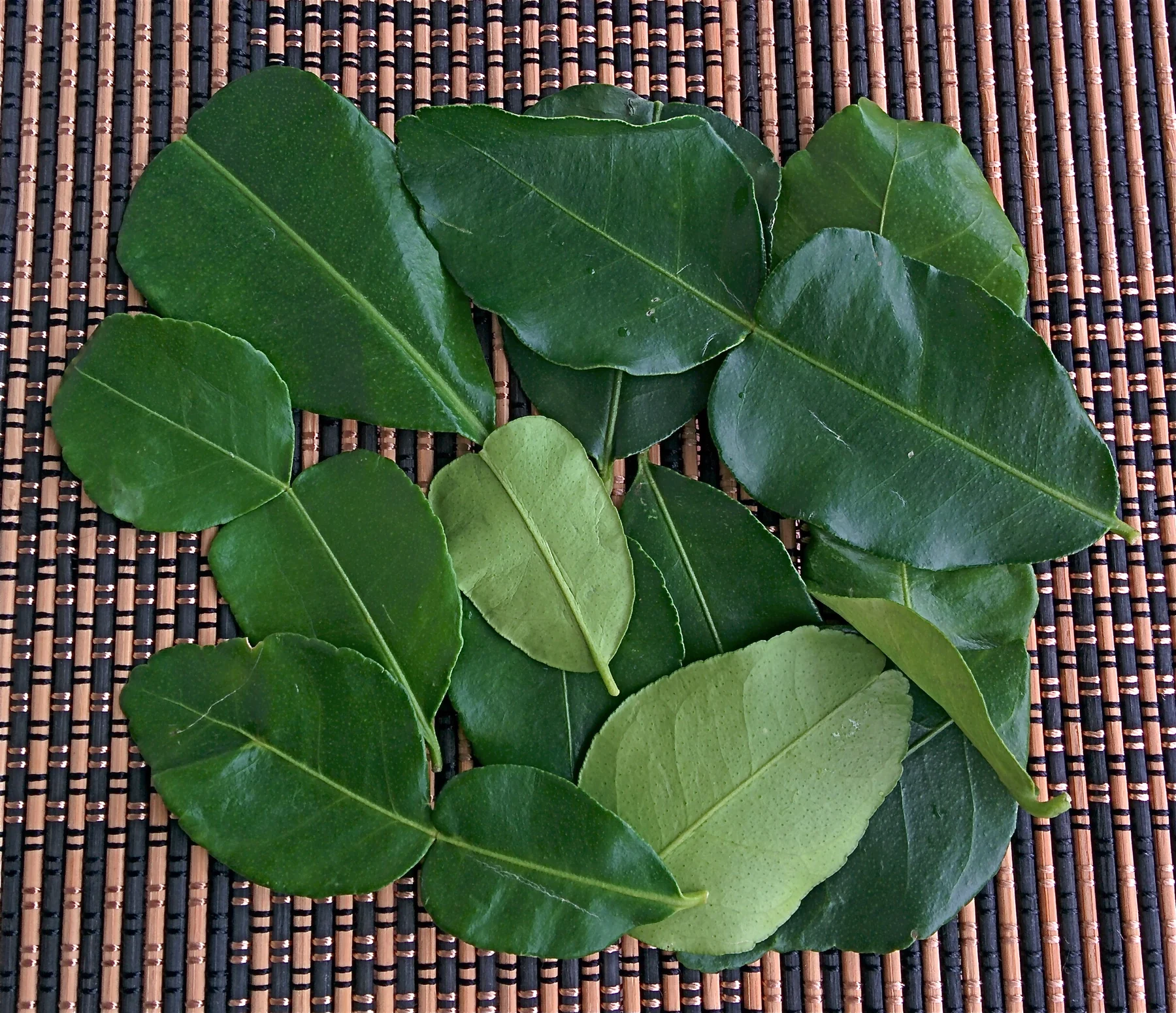
Makrut lime leaves, ใบมะกรูด, are valued for fragrance. The bumpy fruit’s zest also appears in curry pastes. Neither should be confused with the ordinary squeeze of lime used to adjust acidity at the end of cooking. Similar names can hide quite different kitchen roles, so check whether a recipe asks for a leaf, zest or juice before reaching for the fruit bowl.
Large leaf pieces can infuse a dish, while very finely sliced leaves may be eaten as part of it. Frozen leaves are a useful option when fresh ones are difficult to find. Buy a food ingredient from a reliable shop rather than experimenting with unidentified garden leaves. Keep the package name or a photograph of it so you can buy the same ingredient again.
Learn the ingredient. Understand the flavour.
Tamarind starts with a fruit
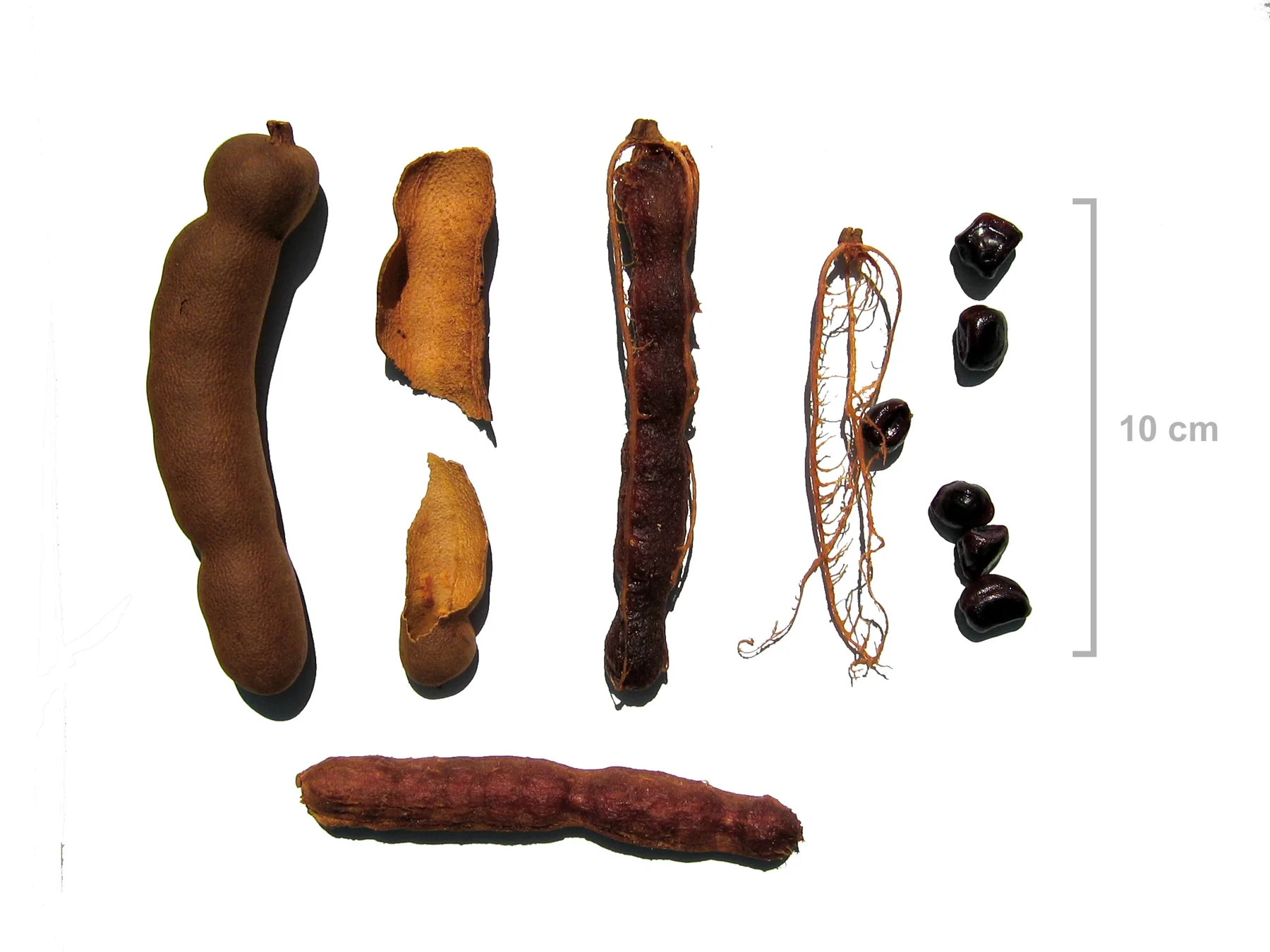
Tamarind, มะขาม, is a fruit inside a brittle pod. Sour cooking tamarind is prepared into a pulp, paste or liquid for seasoning. Sweet tamarind sold for snacking is not automatically the product a recipe means. A packet of pulp and a jar of concentrate also demand different preparation. The word on the front of the package is only the beginning of the shopping decision.
Look at the consistency and the instructions. If you are following a recipe written for pourable tamarind, a spoonful of concentrated paste may push the sourness much further. Add gradually and taste before making another adjustment. Once you find a product you like, note how much works in your regular recipe. Consistency makes experimentation easier, because you know what has actually changed.
Fish sauce: a small bottle with a big job
Fish sauce, น้ำปลา, is a fermented fish-and-salt seasoning that contributes salt and savouriness. Anchovies are commonly used, though products differ. It is not vegetarian. Check the ingredients, then think of it as a seasoning to measure and taste rather than a liquid you must pour generously. If your dish already contains salty ingredients, leave room for the fish sauce before adding extra salt.
Taste a tiny amount in the context of your food, not only straight from the bottle. A strong smell on its own does not tell you how a small quantity will behave in soup or a dressing. Read storage instructions and label an opened bottle with the date if that helps you manage your kitchen. A good pantry is useful because you understand what is in it.
Shop for one meal, then build from there
You do not need a cupboard full of unfamiliar products to begin. Choose one dish and buy its essential ingredients. Keep fresh aromatics separate in your thinking from acids and salty seasonings, then look for the places where your next recipe overlaps. This is a practical organising method, not a formal classification of Thai cooking.
Take the same curiosity to your restaurant order. Recognising galangal in Tom Yum or tamarind in Pad Thai gives you another way to connect the plate with the kitchen. Ask questions, make notes and enjoy the gradual familiarity. The pantry becomes less mysterious one ingredient at a time, and each discovery gives you another reason to cook.

KEEP YOUR CURIOSITY HUNGRY
Spot these ingredients in our dish descriptions, then see how they come together in a bowl.
Explore the THAM menuRead further
Photography & credits
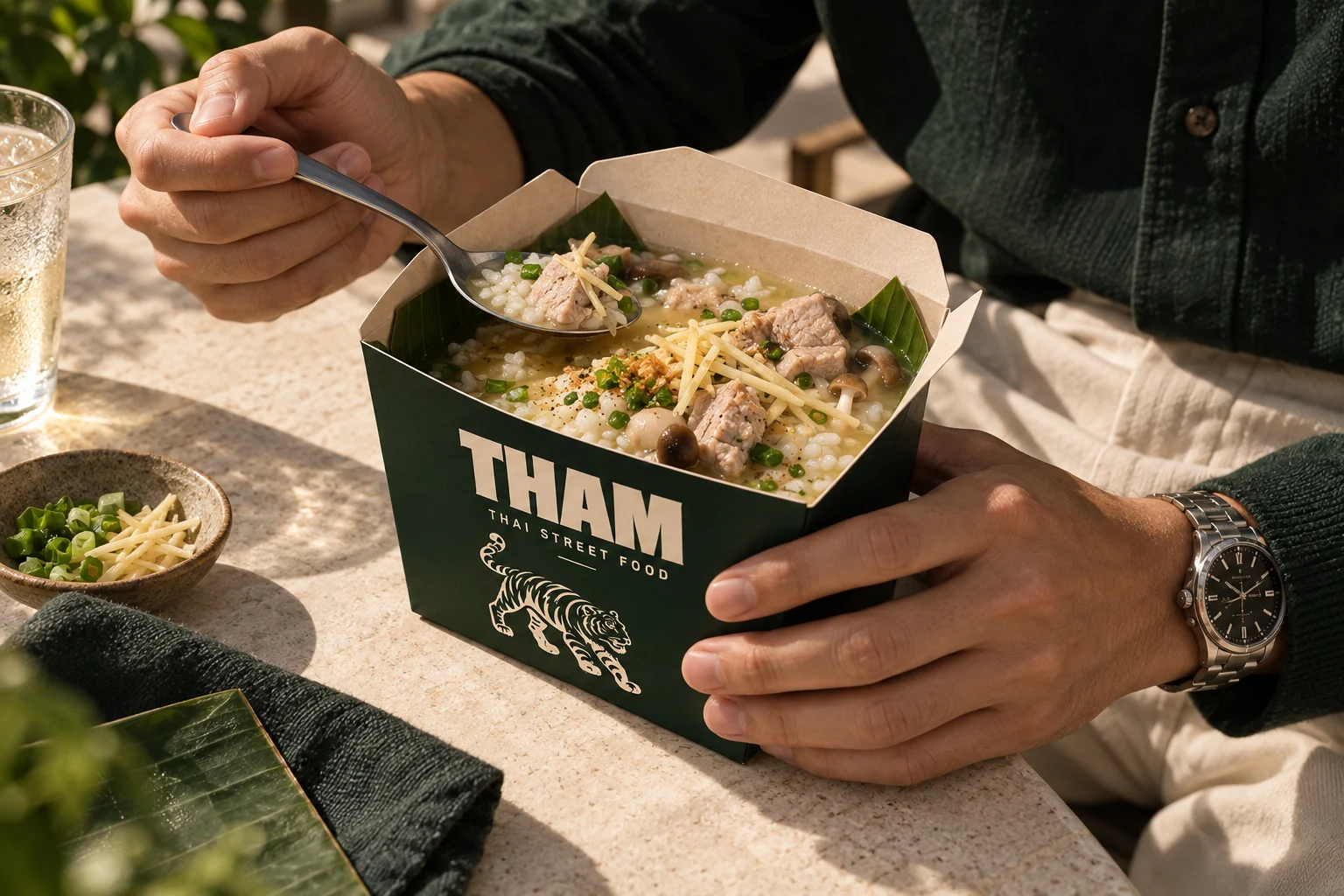
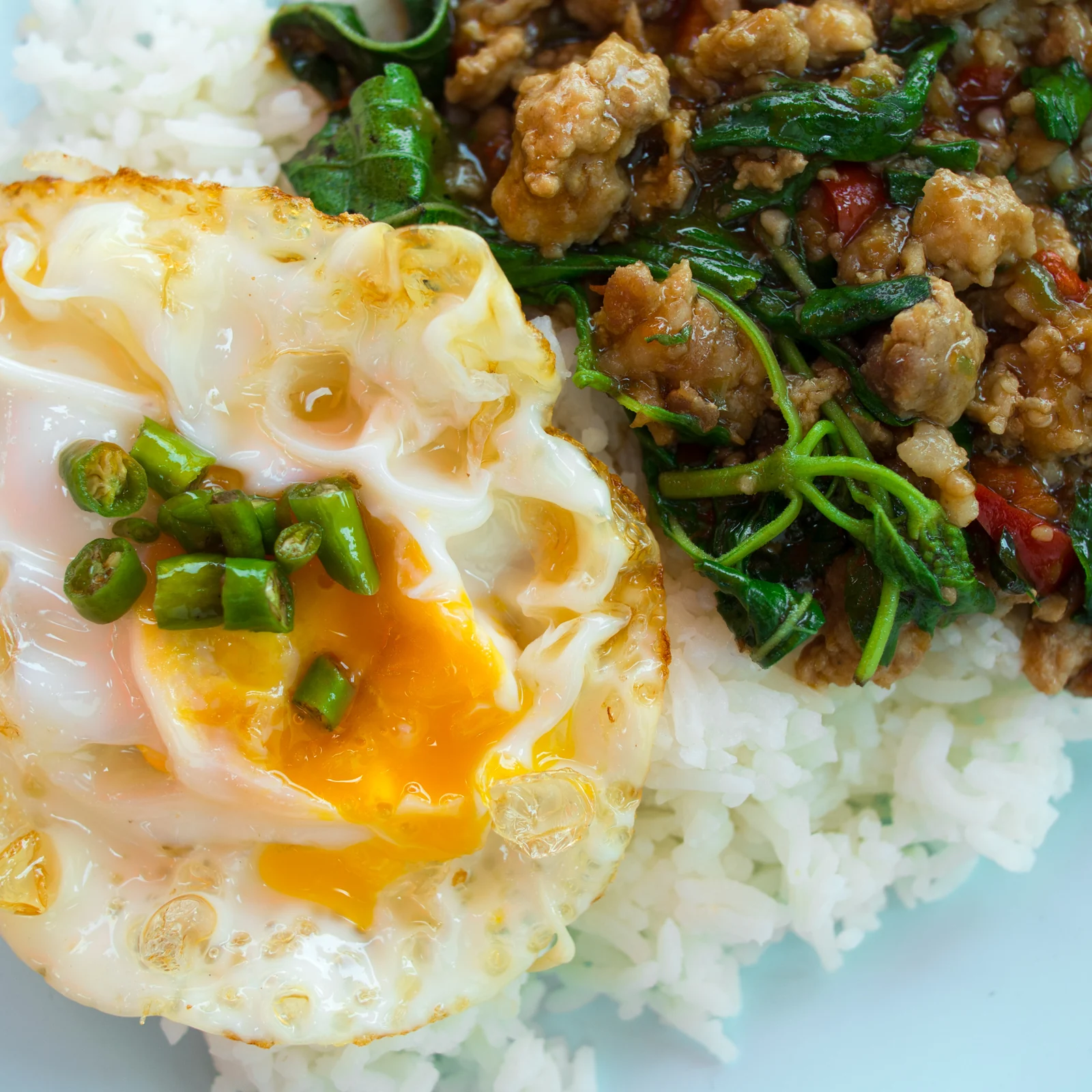
Editorial photographs illustrate Thai food and culture. THAM lifestyle images are creative brand imagery, including AI-generated scenes; they do not document the restaurant, its location or exact servings.
- A little Thailand in your kitchen — THAM — AI-generated lifestyle illustration.
- Tom yam kai ingredients.jpg — Takeaway. CC BY-SA 3.0. Resized and compressed for the web.
- 57 - IMG 20180611 112300.jpg — Susan Slater. CC BY-SA 4.0. Resized and compressed for the web.
- Tamarind pods edible part.jpg — Sonja Pauen - Stanhopea. CC BY 2.0 de. Resized and compressed for the web.
- Fish sauce.jpg — kentnk2009. CC0. Resized and compressed for the web.