Say it: ma-kham Approximate English sounds
Pad Thai is often introduced through its noodles, but the flavour that ties the plate together begins inside a brown pod. Tamarind contributes the rounded sourness that moves through the sauce and coats the rice noodles. It is different from the quick brightness of lime squeezed at the table: tamarind has already become part of the dish before the plate arrives. That distinction matters when tasting Pad Thai in Bangkok. Sweetness may be the first note some diners notice, while others focus on peanuts, egg or chilli. Yet a satisfying plate needs more than one loud flavour. Tamarind gives the sauce direction, allowing sweet, salty and savoury elements to meet without turning the noodles into dessert. At THAM on Yen Akat Road, both Chicken Pad Thai and Prawn Pad Thai list tamarind among their central ingredients. This guide looks closely at the fruit, the sauce and what to notice in your next forkful.
Meet the fruit behind the sauce
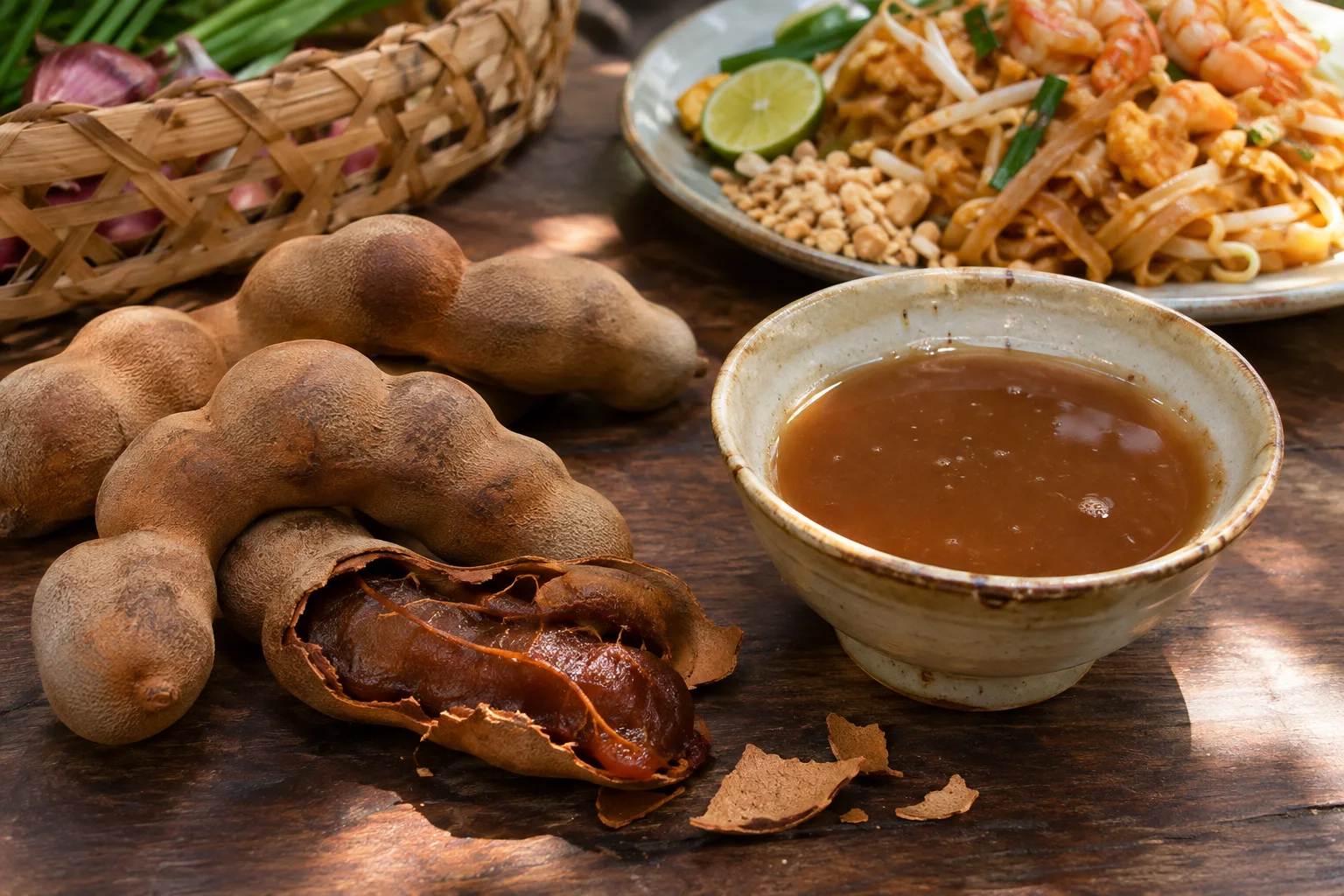
Tamarind comes from *Tamarindus indica*, a tropical tree in the legume family. Its fruits form brown, pod-like shells around seeds and sticky pulp. Kew Science describes that pulp as acidic and records its long use in curries, pickles, confectionery and drinks. The tree is now widespread across the tropics, even though its accepted native range is on islands off eastern Africa. Its journey is older and broader than any single national dish.
The useful part for Pad Thai is not the brittle shell. Cooks work with the dense pulp inside, sold in several forms: whole pods, compressed blocks, prepared pulp or strained liquid. Products vary in concentration, sweetness and added ingredients, so “one spoonful of tamarind” is not a universal measure. A cook has to understand the form in front of them before deciding how much belongs in a sauce.
Freshly extracted tamarind liquid is usually cloudy brown rather than polished or transparent. Fibres and seeds are removed, but the fruit’s character remains. That slightly earthy, fruity acidity is why tamarind can sit comfortably beside fish sauce, sugar, tofu, egg and roasted peanuts instead of tasting like a separate garnish.
From sticky pulp to a pourable ingredient
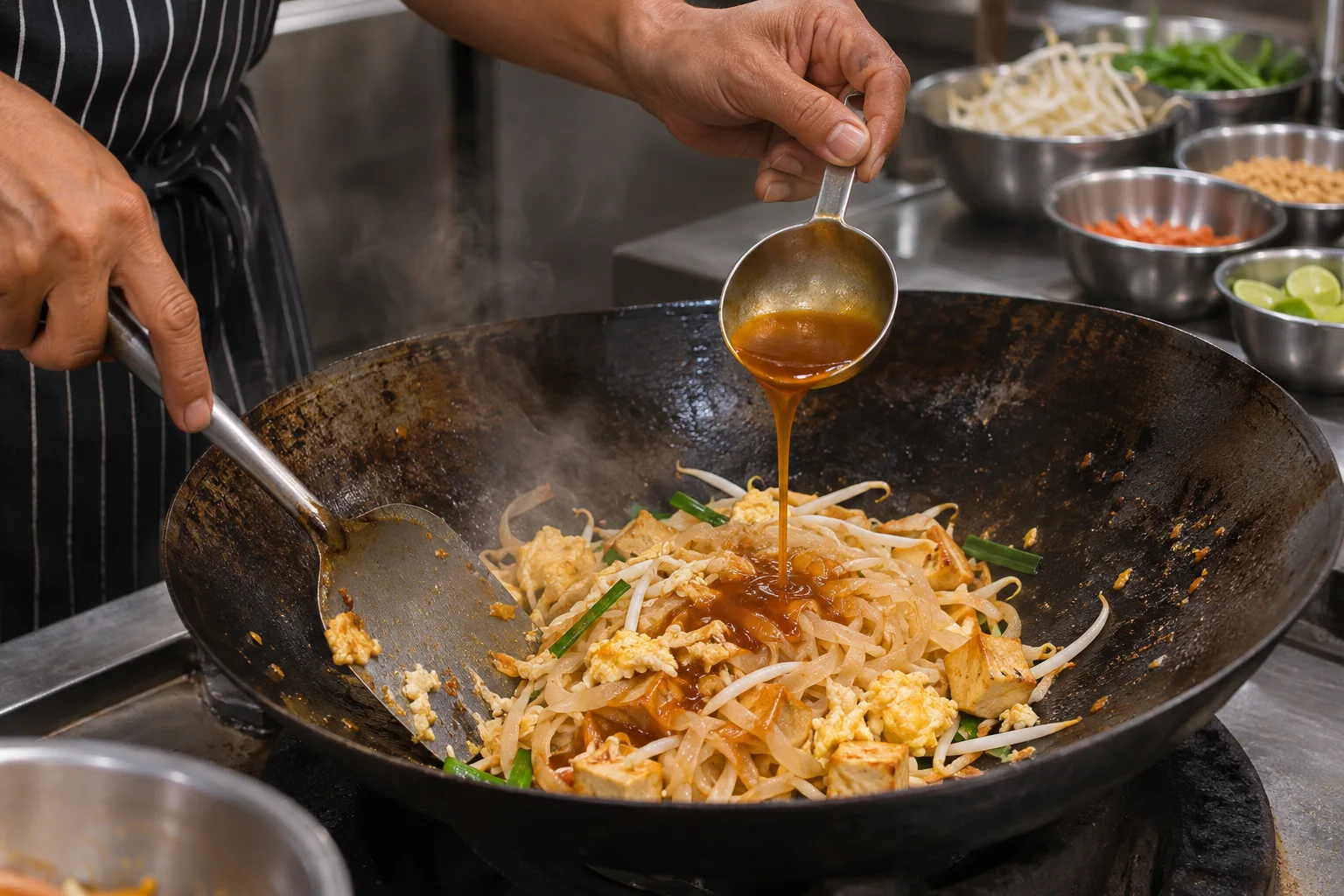
Traditional preparation begins by softening tamarind pulp in water, working it apart and straining out the solids. Thai SELECT’s ingredient guide describes heating tamarind with water and filtering the resulting liquid. Other reliable methods soak the pulp before pressing it through a sieve. The exact water ratio changes the strength, which is one reason experienced cooks taste the extract rather than judging it only by colour.
This extraction is simple, but it is not a proprietary THAM recipe. It explains the ingredient’s transformation: a firm, fibrous mass becomes a liquid that can be measured and blended. A prepared commercial concentrate may be much stronger, while a bottled sauce may already contain sugar or salt. Swapping one form for another without reading the label can move a dish far away from the intended balance.
For home cooking, follow one tested recipe written for the tamarind product you have. The Journal’s Chicken Pad Thai noodle guide focuses on soaking, sequencing and pan control; it is a better starting point than improvising a sauce from unrelated ratios. Tamarind rewards adjustment, but only after the basic method is understood.
Why Pad Thai needs more than sourness
The Thailand Foundation describes a traditional Pad Thai sauce as a meeting of sour, salty and sweet, with tamarind paste, fish sauce and sugar playing distinct roles. Tamarind is therefore not a solo flavour. Its acidity becomes useful through contrast: sweetness rounds the edge, salt deepens the savoury centre, and the noodles carry the mixture across the plate.
This is why calling Pad Thai simply “sweet noodles” misses the structure. Excess sugar can hide the fruit; too much concentrated tamarind can make every bite contract around sourness. A balanced sauce should let you recognise tang without feeling that the noodles have been dressed like a sour salad. Egg, tofu and protein then add their own textures and savoury weight.
The cooking window is short. Once noodles and sauce meet in a hot pan, absorption and evaporation happen together. The guide to Thai wok cooking in Bangkok explains why preparation matters before the flame is turned up. A cook cannot pause halfway through fast wok work to discover that the extract is twice as concentrated as expected.
Tamarind does not sit on top of Pad Thai; it travels through the noodles and gives the sauce its direction.
Tamarind and lime are two different kinds of brightness
A lime wedge beside Pad Thai is not evidence that the tamarind failed. The two ingredients work at different moments. Tamarind is integrated into the cooked sauce and spreads through the noodles. Lime is fresh, aromatic and immediate; a squeeze lands on the surface and changes the bites it touches first.
Taste before squeezing. Begin with a forkful that includes noodles, egg and tofu, then notice whether the sourness feels gentle, prominent or hidden by sweetness. Try a second bite with bean sprouts or chives for freshness. Only then add a little lime if you want a sharper top note. This sequence lets you understand the plate before personalising it.
Chilli is another separate decision. Heat can make acidity feel more vivid, but tamarind itself is not chilli. THAM serves dishes non-spicy by default, with chilli available on request. Diners who prefer mild food can still experience tamarind’s full sweet-sour role; our guide to non-spicy Thai food in Bangkok explains how to state that preference clearly.
Chicken or prawns: the sauce stays at the centre
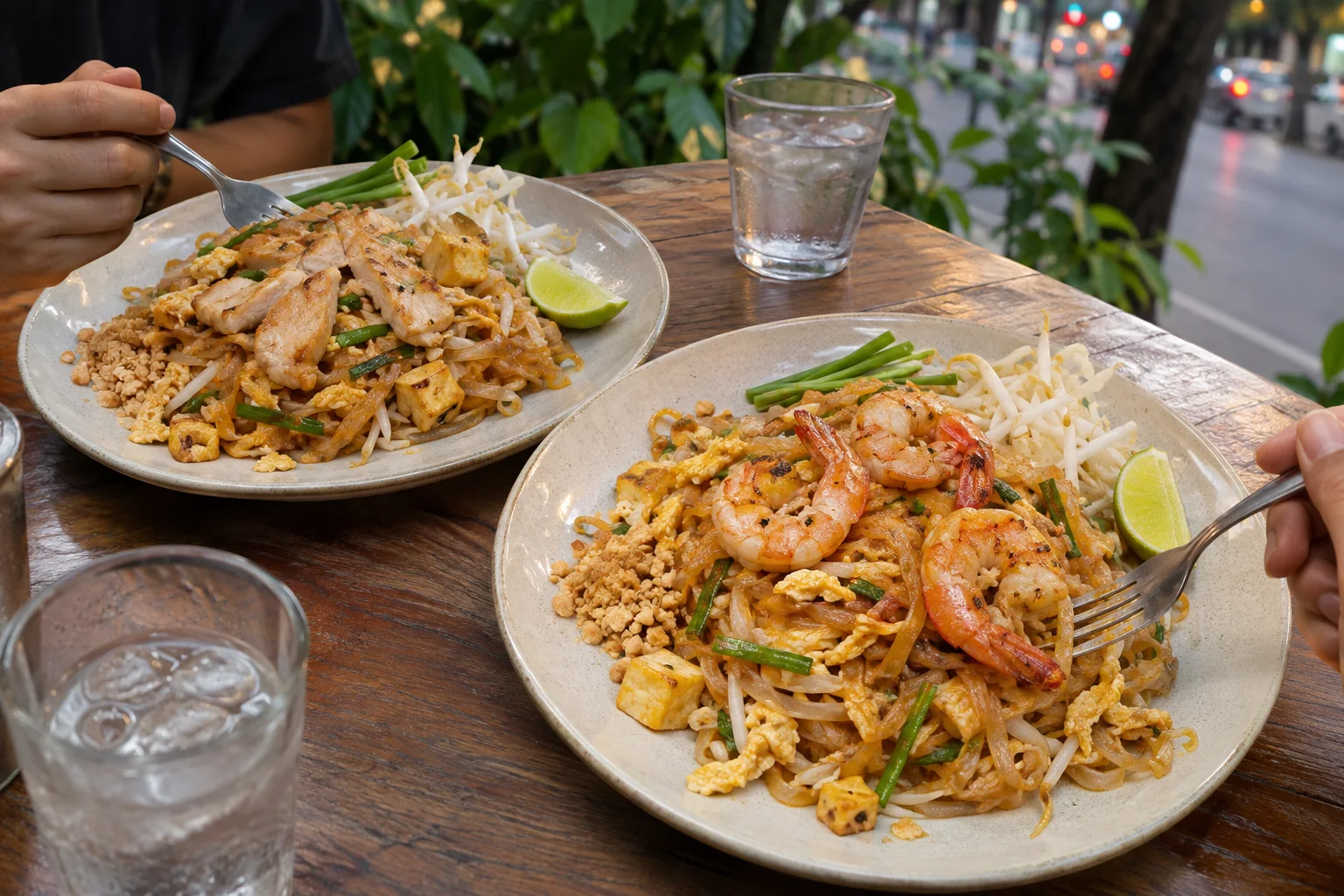
THAM currently offers Chicken Pad Thai at 160 THB and Prawn Pad Thai at 170 THB. Both versions use rice noodles, egg, tofu and tamarind; the protein changes while the sauce remains the shared foundation. Chicken adds a mild savoury presence and a firmer bite. Prawns bring their own sweetness and a more delicate texture.
That makes the choice personal rather than hierarchical. Choose chicken if you want a familiar, substantial noodle plate. Choose prawns if seafood is the part you want to notice. The Prawn Pad Thai guide explores why seafood timing matters, but neither version should be reduced to its protein alone. Tamarind, noodles and egg still determine much of the plate’s rhythm.
Allergy questions come before tasting notes. Both menu versions include egg and tofu, and sauces or preparation may introduce other allergens beyond the short ingredient description. Ask the team about your specific needs before ordering. A dish being mild, sour or made with one preferred protein does not establish that it is suitable for an allergy or dietary restriction.
Taste tamarind on Yen Akat Road
When a Pad Thai arrives, look beyond colour. A darker plate is not automatically more authentic, and a pale one is not automatically under-seasoned. Tamarind products vary, and appearance also changes with sugar, heat and cooking time. Judge the relationship among flavours: tang that travels through the noodles, enough sweetness to round it, savoury depth, and fresh elements that keep the plate lively.
Use the current THAM menu for prices and confirmed ingredients rather than treating an editorial guide as a permanent menu. If you order for takeaway or hotel delivery, the sauce continues settling into the noodles during the journey, so receive the food promptly and follow the team’s practical advice.
THAM is at 15, 1 Yen Akat Road, Chong Nonsi, Yan Nawa, Bangkok 10120. Before visiting, check directions, hours and ordering information. Then taste the plate in stages: noodles first, lime second, chilli only if you want it. One small brown fruit can reveal the architecture of an entire dish.
KEEP YOUR CURIOSITY HUNGRY
Taste the noodles first, add lime second and notice how one brown pod holds the plate together.
Explore the THAM menuRead further
Photography & credits
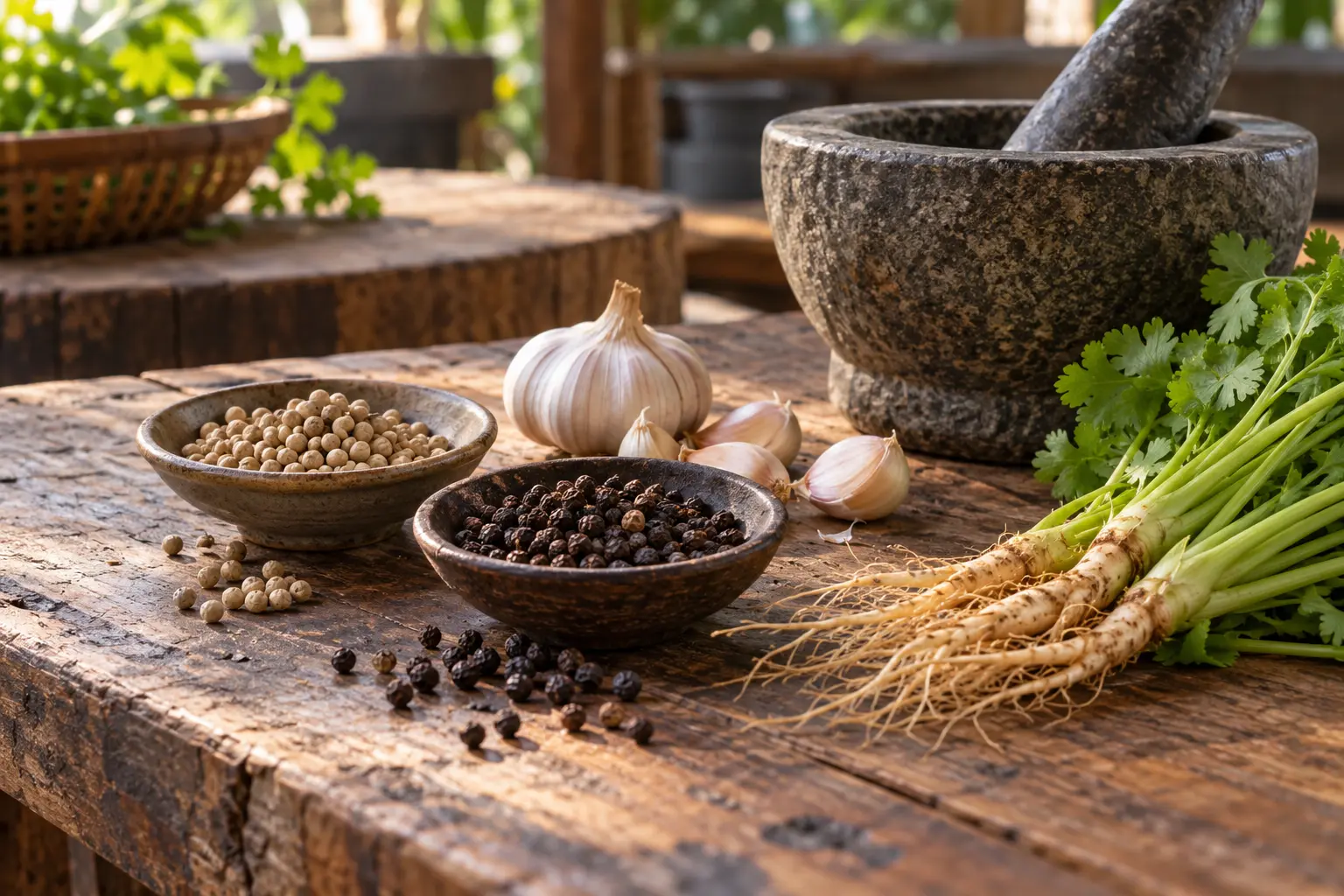
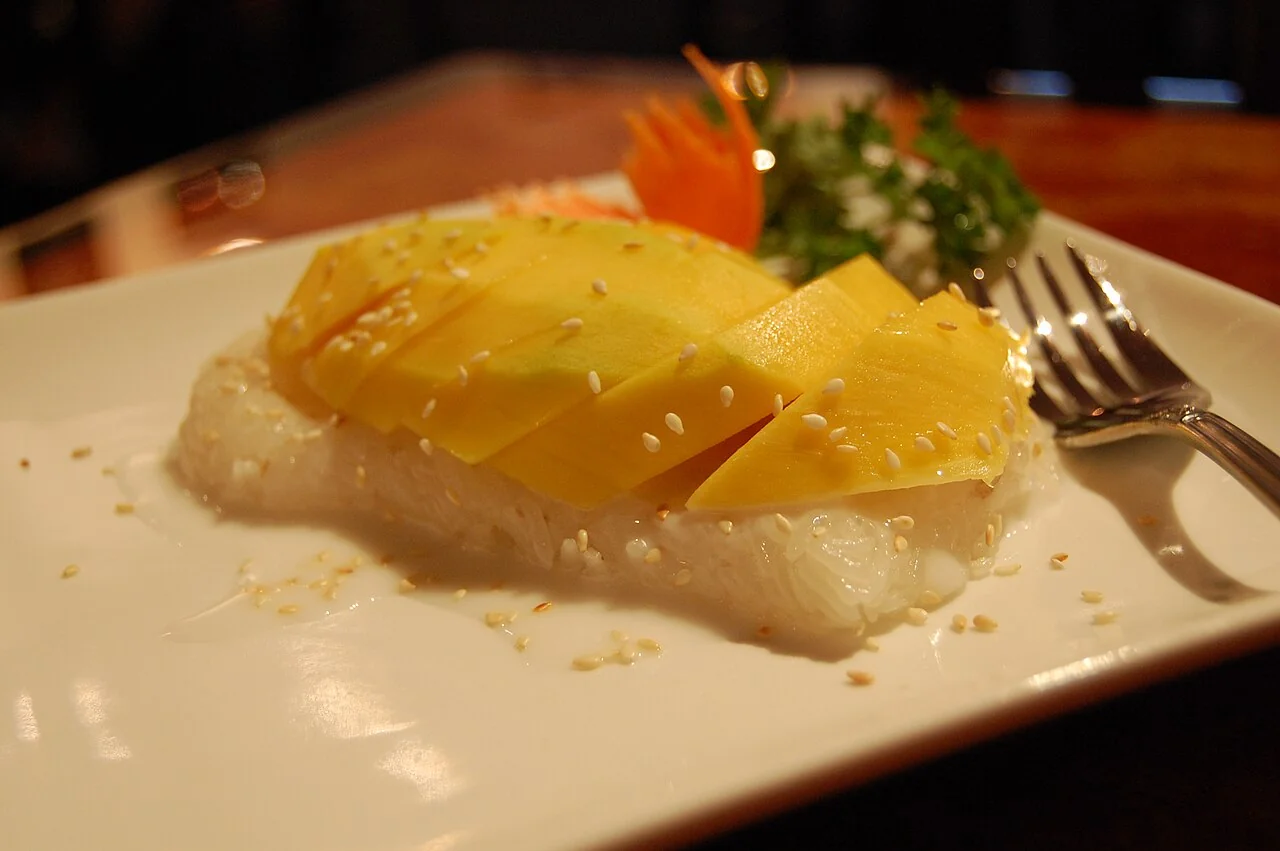
All three images are AI-generated editorial illustrations created for this guide. They are not documentary photographs of THAM, its kitchen, venue, recipe or exact menu servings.
- Tamarind and Pad Thai — THAM — AI-generated editorial illustration.
- Tamarind sauce in the Pad Thai wok — THAM — AI-generated editorial illustration.
- Chicken and prawn Pad Thai in Bangkok — THAM — AI-generated editorial illustration.