Pad Thai is often a traveller’s first Thai noodle dish and a home cook’s first attempt to bring the trip back into the kitchen. Familiarity can make it seem obvious. Look a little closer and it becomes more interesting: a tangled history, a sauce built around tamarind and a cooking rhythm that rewards preparation. This is a story about meeting those details, followed by a simple chicken version to try at home.
A famous dish with an untidy history
Pad Thai is closely associated with twentieth-century Thai nation-building and the promotion of noodle eating. Accounts differ over precisely how it emerged. Thailand NOW presents competing explanations, while Thailand Foundation tells a more specific household story. Treating one neat invention date as settled history would make the story simpler than the evidence allows.
The longer name, kuai tiao pad thai, also points towards the influence of Chinese noodle vocabulary and the way food develops through contact and adaptation. A national favourite can carry more than one cultural thread. You do not have to choose between enjoying the dish and recognising that its history is more complicated than a menu caption.
Follow the tamarind
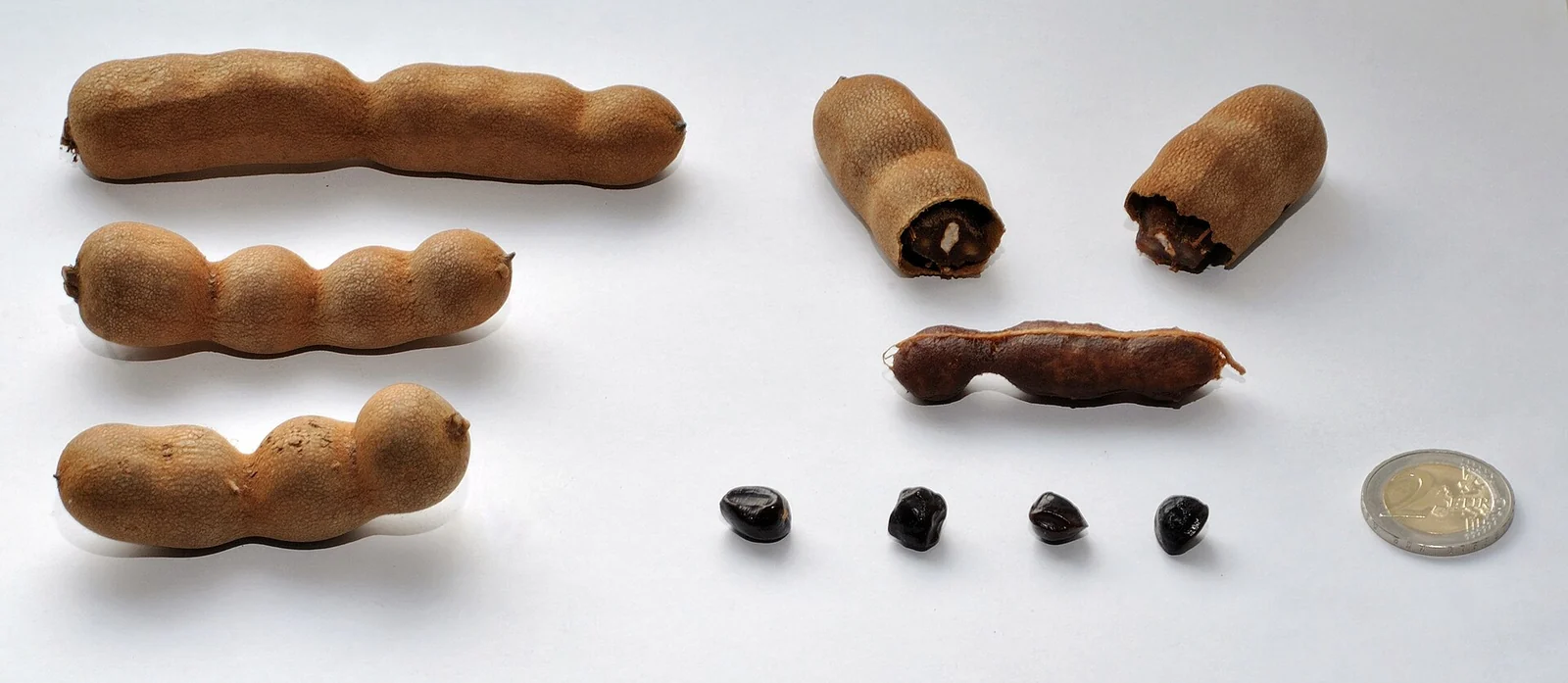
Tamarind gives the sauce its characteristic sour direction; sugar rounds it out, while fish sauce contributes salt and savouriness. The important home-cooking detail is the product in your hand. A pourable Thai cooking tamarind and a dense concentrate may have very different strengths. Read the label and begin cautiously with a concentrated product.
Taste the mixed sauce before it reaches the noodles. It should make you notice sourness, sweetness and salt without one completely swallowing the others. Your noodles and other ingredients will change the final impression. Keep a little water nearby for cooking adjustments rather than treating a thick sauce as proof that the finished plate will be better.
Give the noodles room
Medium dried rice noodles need preparation appropriate to their brand and thickness. Follow the packet’s soaking instructions and aim for pliable strands ready to finish in the pan. Set out the chicken, tofu, eggs and vegetables before switching on the heat. Once the cooking starts, searching a cupboard for fish sauce becomes a particularly inconvenient interruption.
A home pan has limits. If two portions crowd it, cook one portion at a time. Space makes tossing and checking the noodles easier. Use a small splash of water if they remain firm, then let it cook away. Aim for coated strands you can lift and separate, rather than noodles sitting in a puddle.
Good noodles begin before the pan gets hot.
Protein does not tell the whole story
Chicken and prawn versions offer different textures, but the protein in the title is not a complete ingredient list. Fish sauce, eggs, peanuts, tofu and other seasonings need consideration too. Check labels and ingredients when cooking for someone with an allergy. Do not assume a noodle dish is free of an allergen because its headline ingredient sounds suitable.
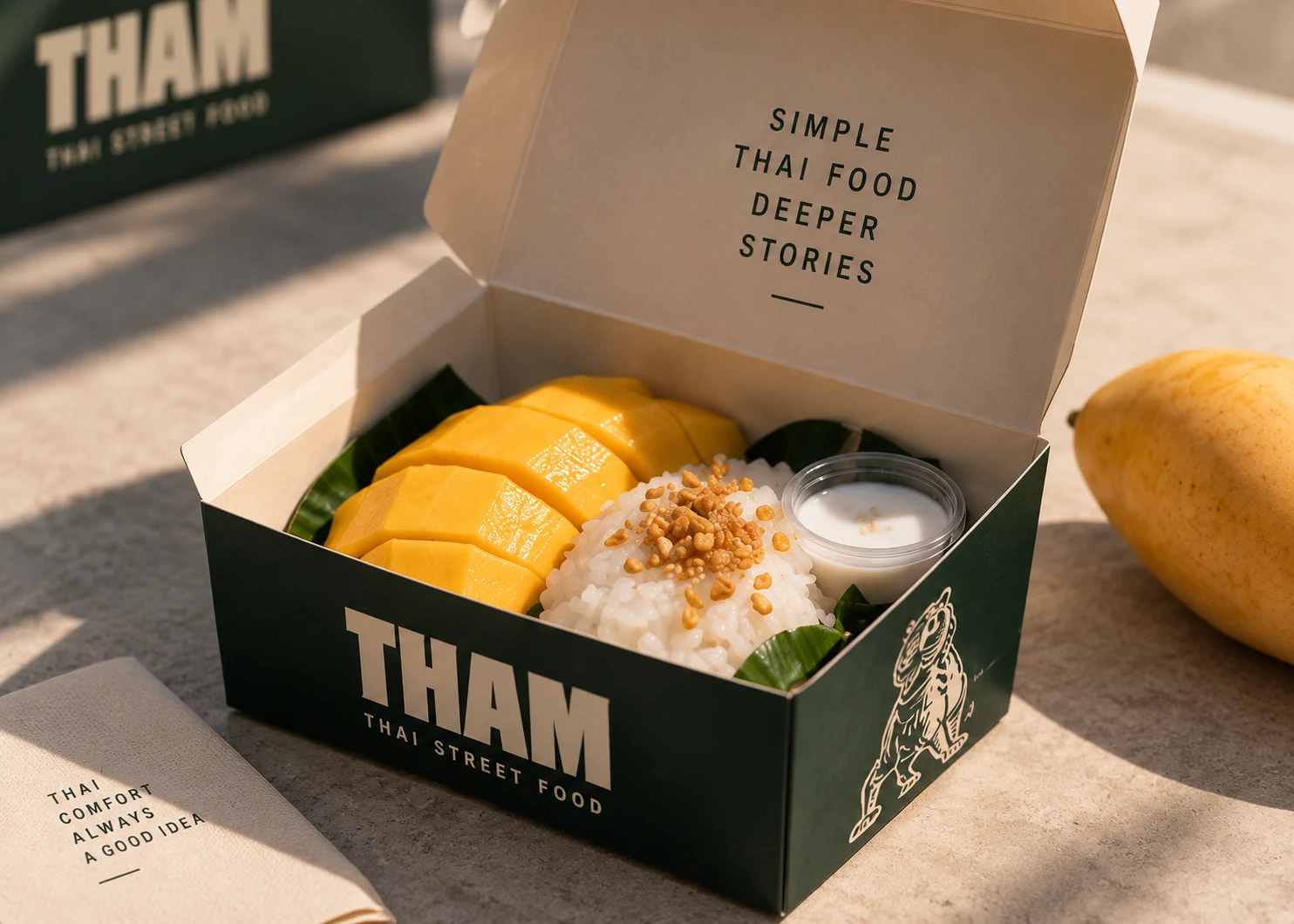
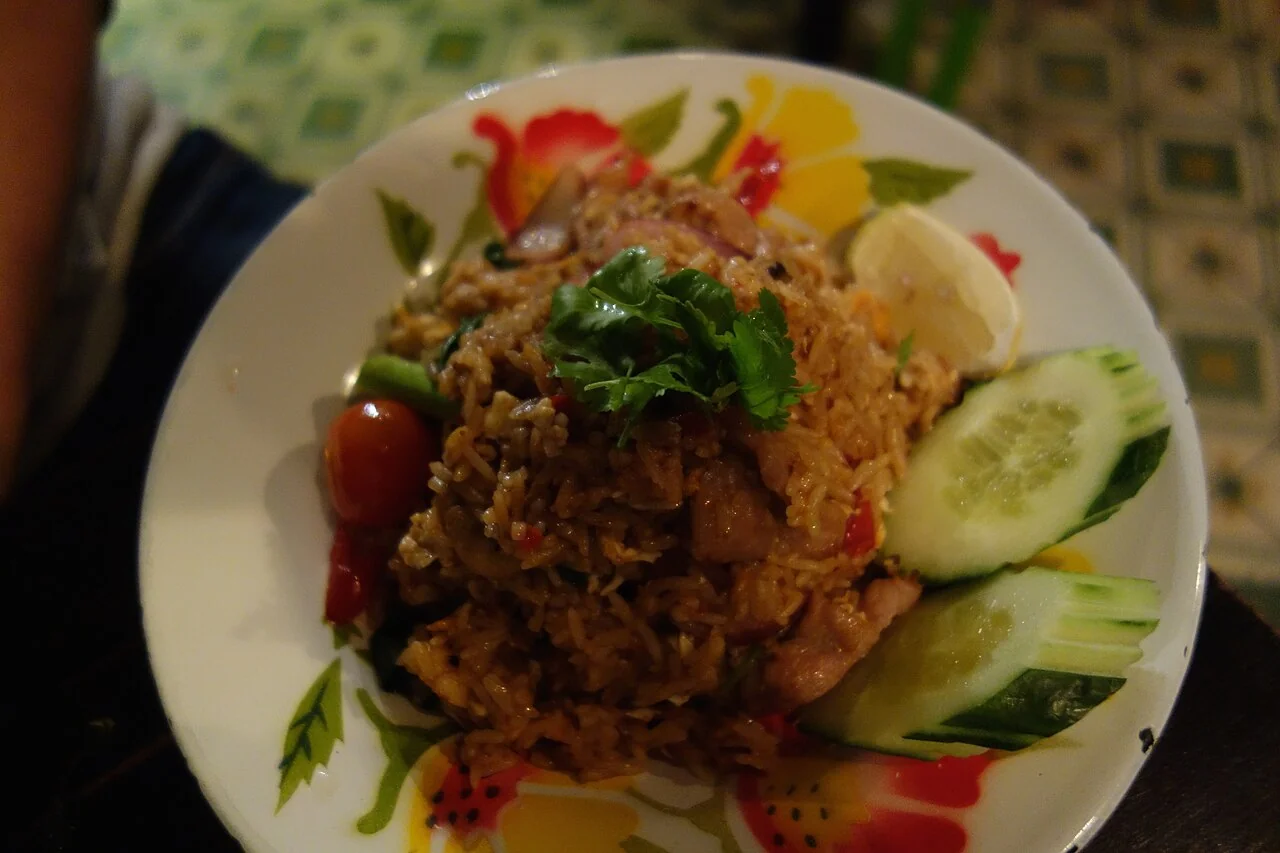
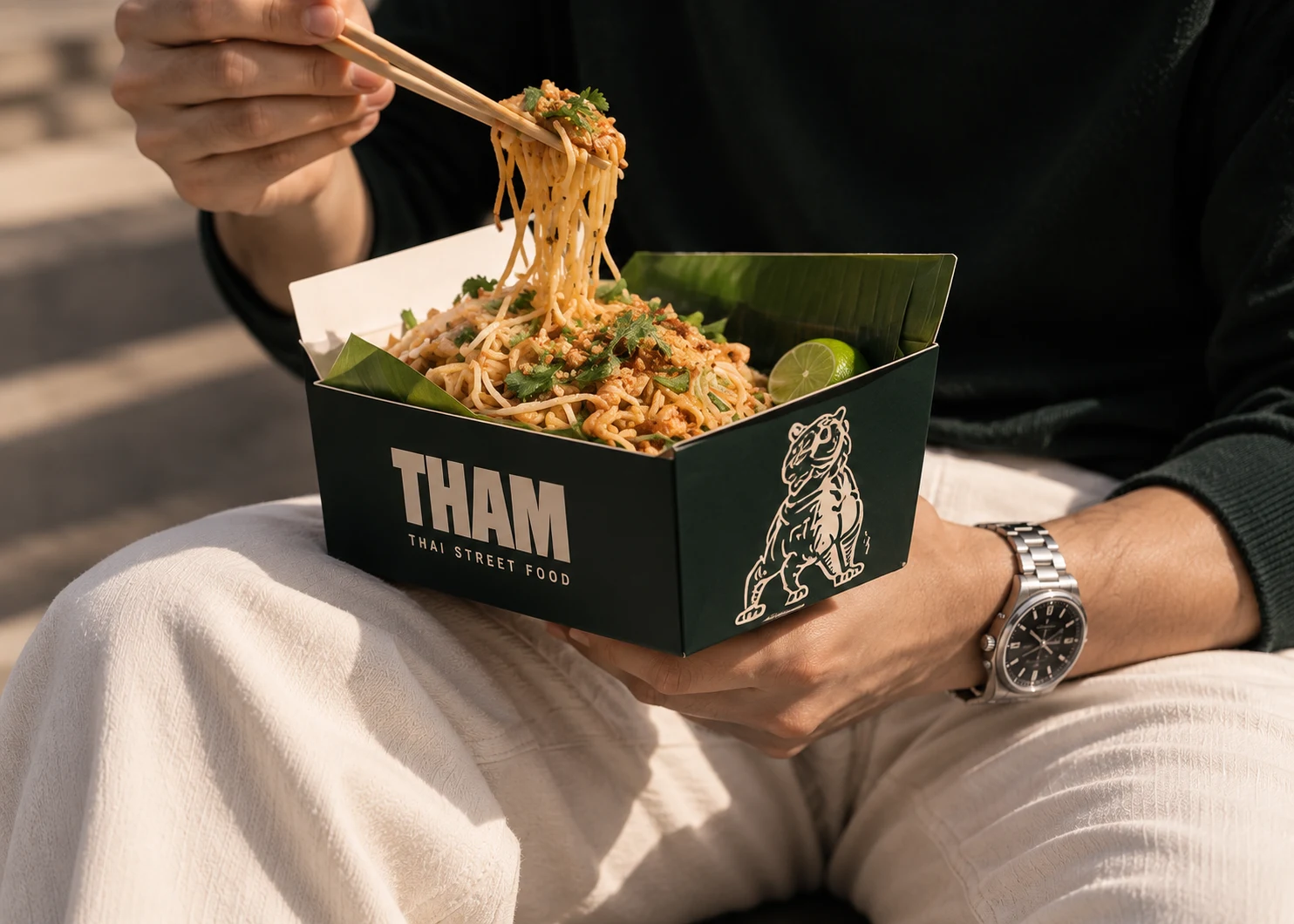
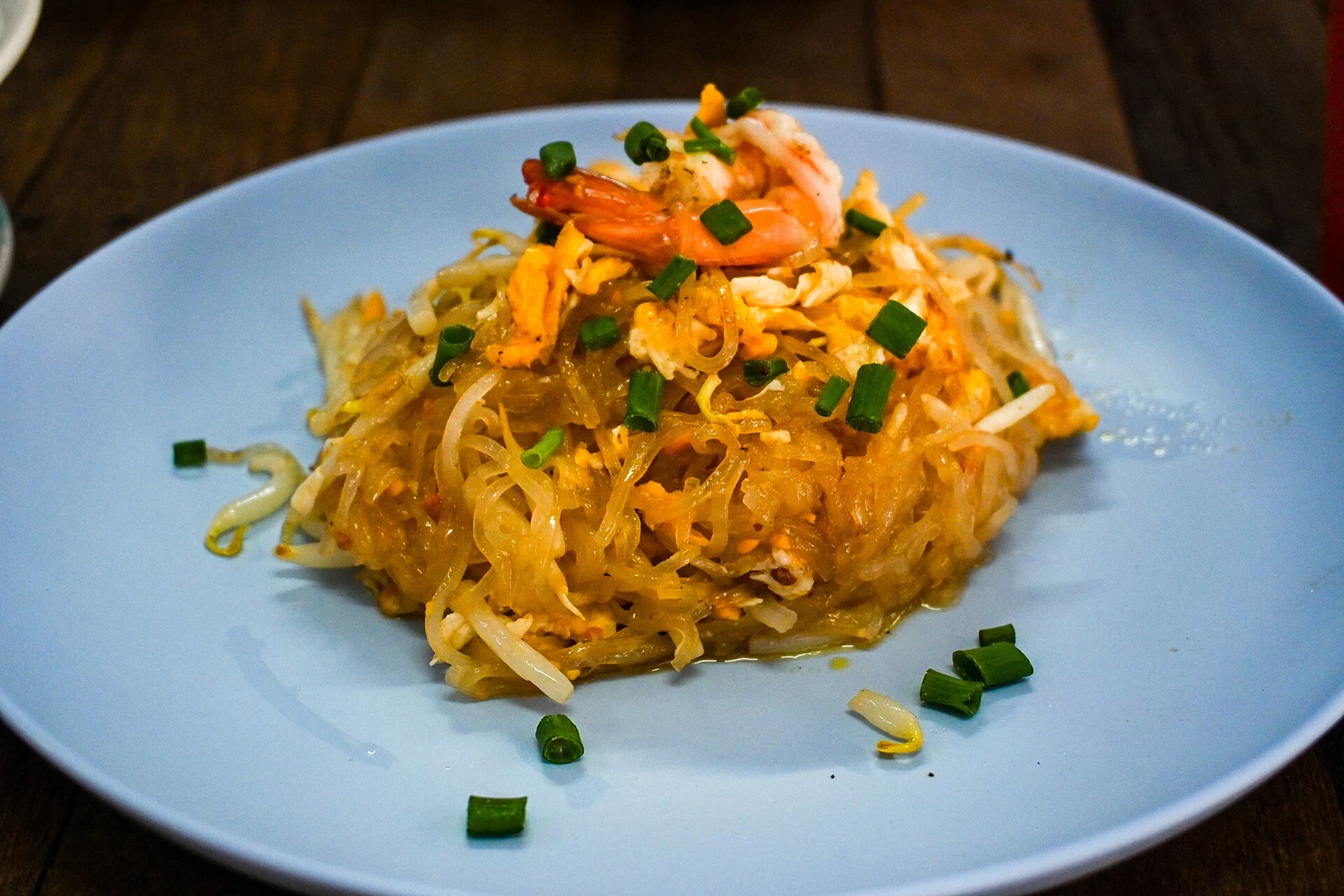
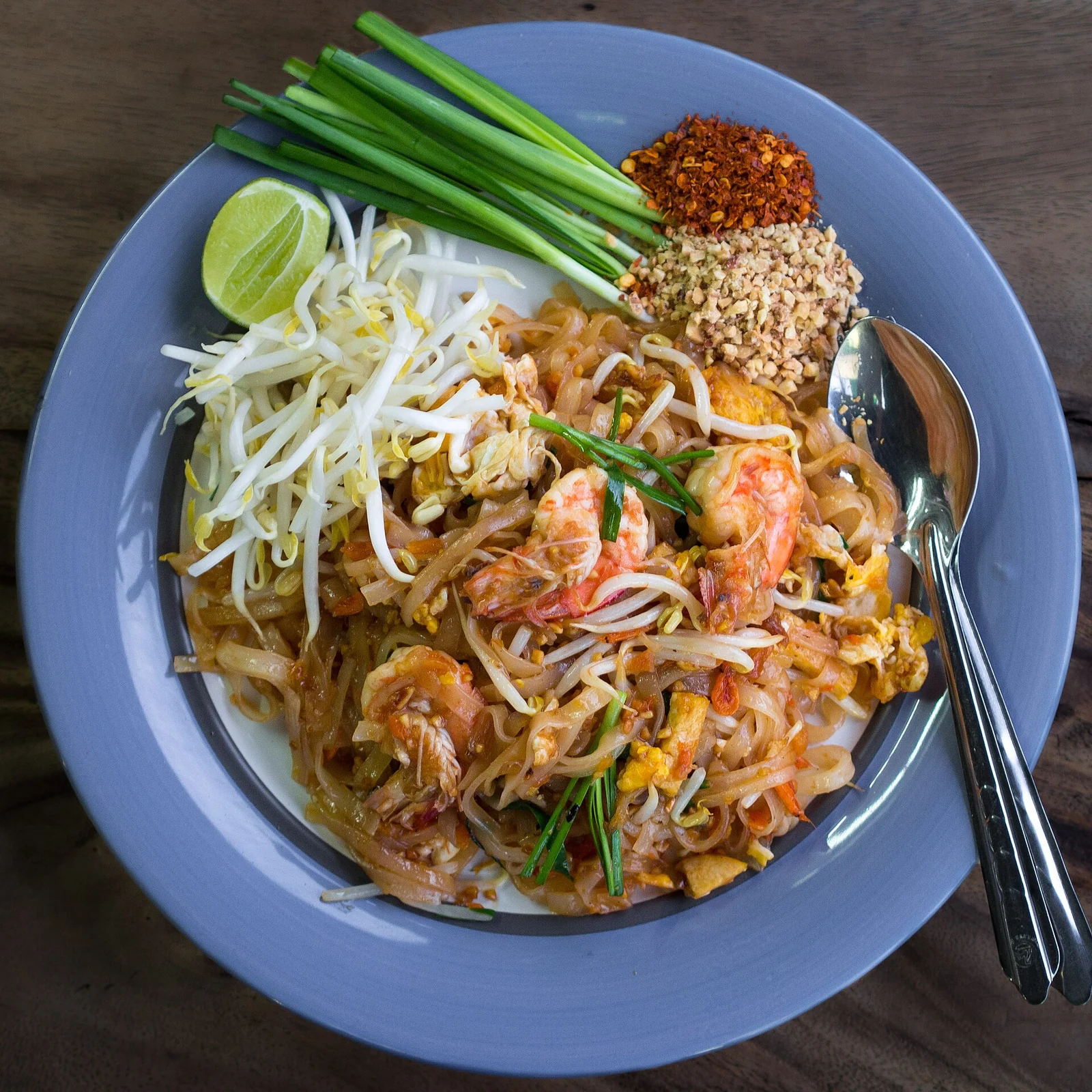
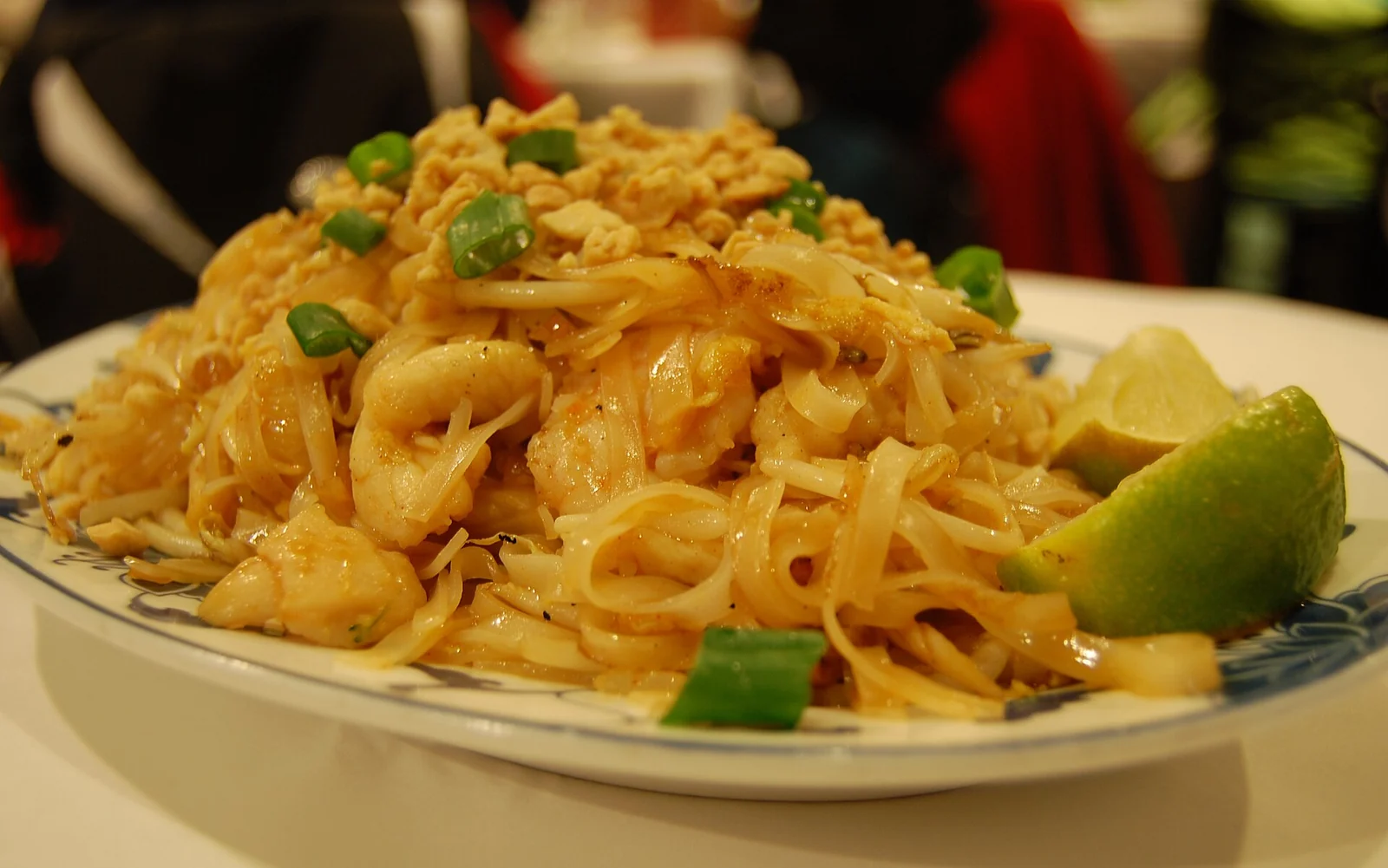
The photographs here show several Pad Thai presentations, including prawns. The recipe below is a home chicken adaptation, separate from THAM’s restaurant formula. It simplifies the shopping list and gives you a practical starting point. At THAM, both chicken and prawn Pad Thai are on the menu, with matching protein extras available.
Finish with attention
Put the lime and peanuts beside the plate, then taste before adding more. A squeeze of lime can lift a bite; peanuts change its texture. The useful habit is to adjust a little at a time. Cook the chicken thoroughly, serve the noodles promptly and enjoy the result while you can still notice all those separate details coming together.
MAKE IT AT HOME
A little Pad Thai, at home.
An original home-kitchen adaptation, not THAM’s restaurant recipe.
Gather
- 150 g medium dried rice noodles; 200 g boneless chicken, thinly sliced
- 2 eggs; 80 g firm tofu, cubed; 100 g bean sprouts
- 25 g garlic chives, cut into short lengths; 1 small shallot and 2 garlic cloves, chopped
- 2 tbsp neutral oil; 2 tbsp chopped roasted peanuts; lime wedges
- Sauce: 30 g palm or light-brown sugar, 2 tbsp fish sauce, 3 tbsp pourable Thai cooking tamarind and 4 tbsp water
Cook
- Soak the noodles following the packet until pliable, then drain. Stir the sauce ingredients together until the sugar dissolves. If using concentrated tamarind, start with less and dilute and taste before cooking.
- Heat half the oil in a large pan. Cook the chicken until it reaches 74°C / 165°F at the centre, measured with a food thermometer. Transfer to a clean plate.
- Add the remaining oil, shallot, garlic and tofu. Stir briefly until fragrant. Add noodles and sauce; toss until the noodles are tender, adding small splashes of water if needed. Work in two batches if the pan is crowded.
- Clear a space in the pan, add the eggs and scramble until set. Fold into the noodles. Return the chicken, add sprouts and chives, and cook until everything is hot and the sprouts have softened.
- Serve promptly with peanuts and lime on the side. Taste before adding lime or further seasoning.
Check ingredient labels for allergens. This home adaptation has not been kitchen-tested; noodle brands and tamarind strengths vary, so adjust by texture and taste.
KEEP YOUR CURIOSITY HUNGRY
Try a home version, then discover the chicken and prawn Pad Thai on our menu.
Explore the THAM menuRead further
Photography & credits
Editorial photographs illustrate Thai food and culture. THAM lifestyle images are creative brand imagery, including AI-generated scenes; they do not document the restaurant, its location or exact servings.
- Pad Thai, the THAM lifestyle collection — THAM — supplied creative brand imagery.
- Pad Thai with prawns in Bangkok — ProtoplasmaKid. CC BY-SA 4.0. Resized and compressed for the web.
- Tamarind pods, pulp and seeds — kaʁstn (Carschten). CC BY-SA 3.0 de. Resized and compressed for the web.
- Prawn pad Thai from a street stall — Takeaway. CC BY-SA 3.0. Resized and compressed for the web.
- A mound of pad Thai — Stu Spivak. CC BY-SA 2.0. Resized and compressed for the web.