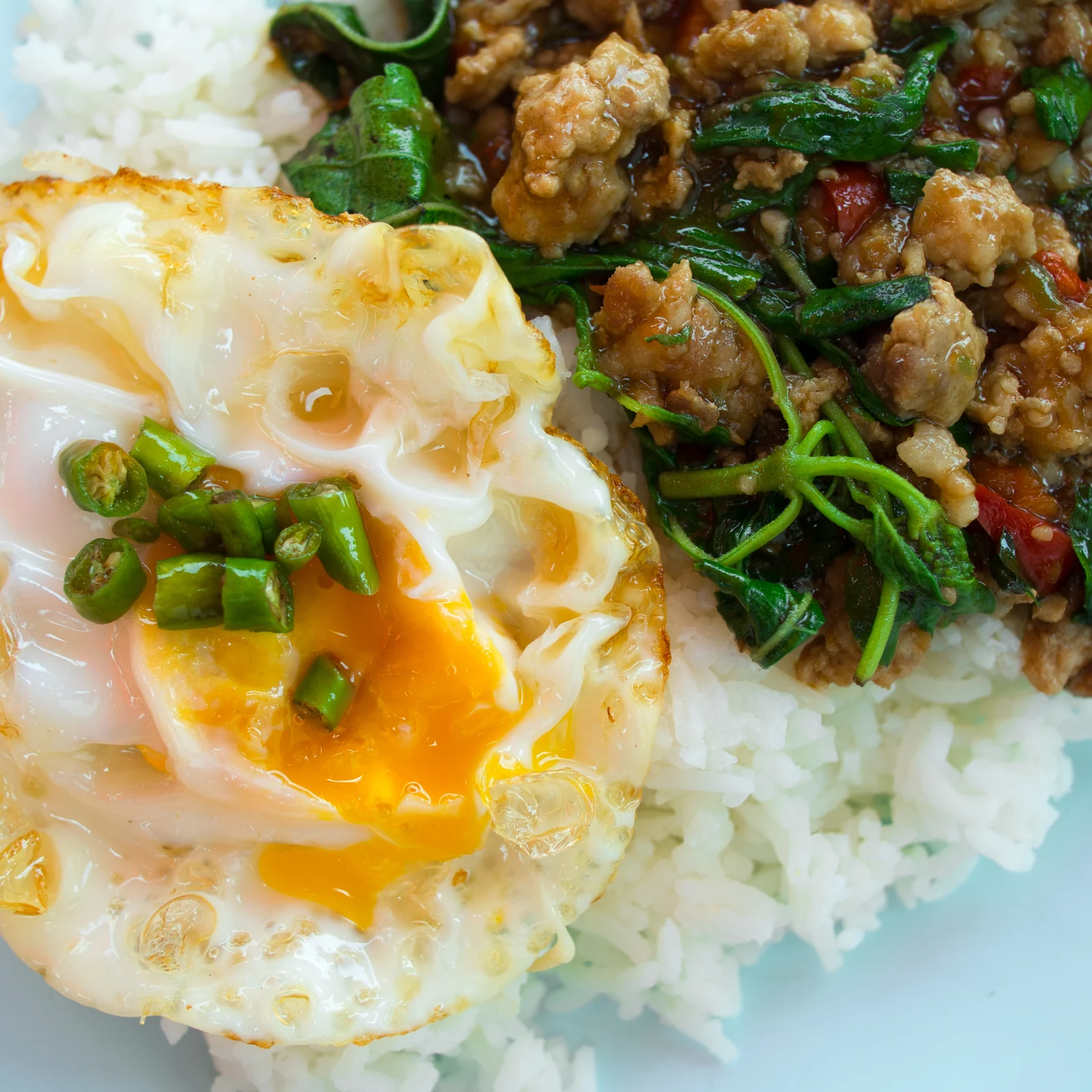
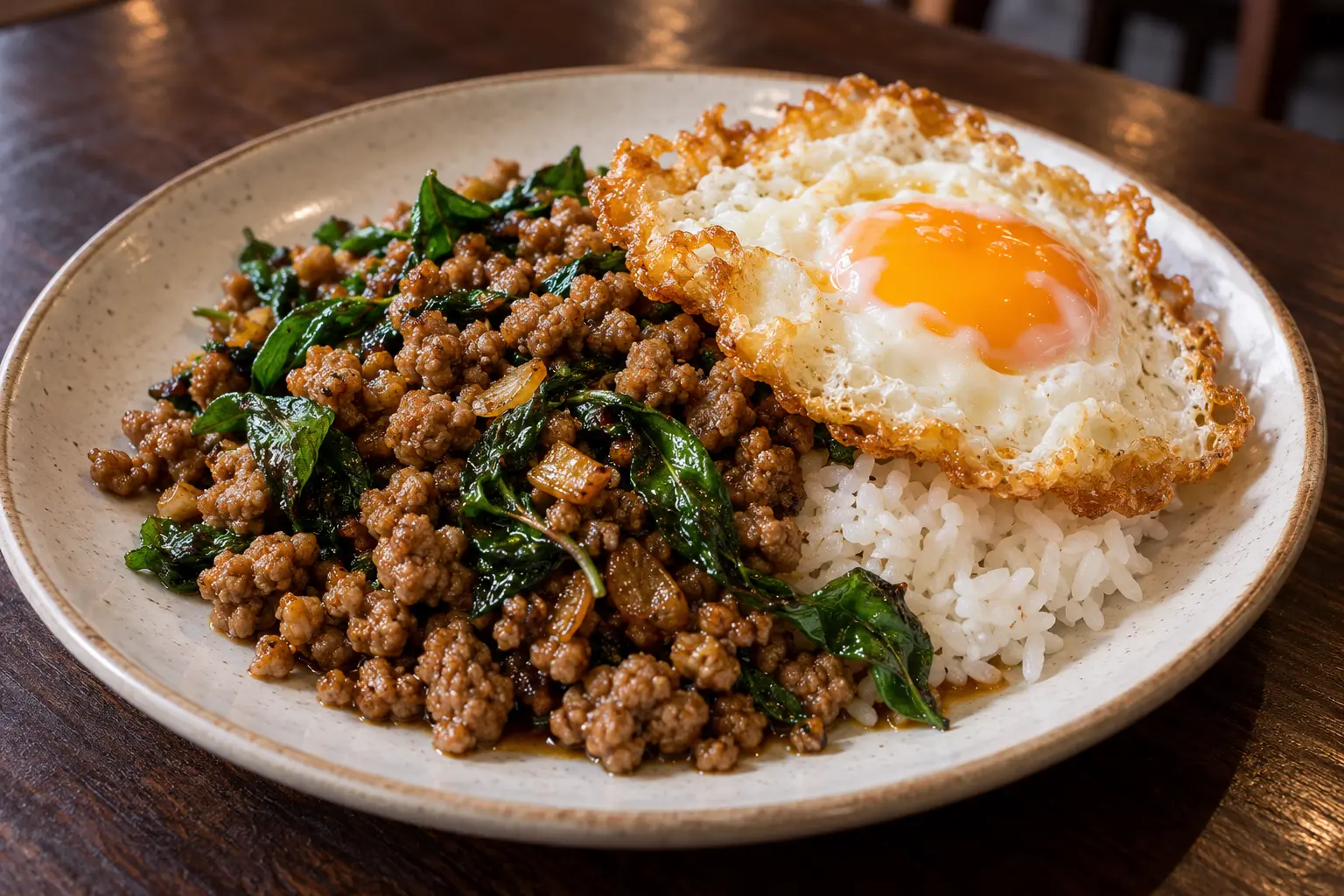
An egg can look like a small addition to a plate, but in Bangkok it often changes the whole rhythm of a meal. Order Pad Kra Pao and you may hear two extra words: kai dao. They mean fried egg, yet the result is not simply the neat, pale-edged egg many visitors know from breakfast. A Thai-style kai dao is often fried so the white develops crisp, lacy edges while the yolk stays softer at the centre. That contrast explains why it works so naturally with rice and a savoury basil stir-fry. The edge cracks under a spoon, the tender white adds substance and the yolk can soften the garlic-and-basil sauce below. At THAM on Yen Akat Road, a fried egg is available as a 15 THB add-on to Pork Pad Kra Pao. This guide explores what that little extra contributes, how to order it and how to enjoy the combination without treating one preferred texture as the only correct version.
What “kai dao” means on a Bangkok menu
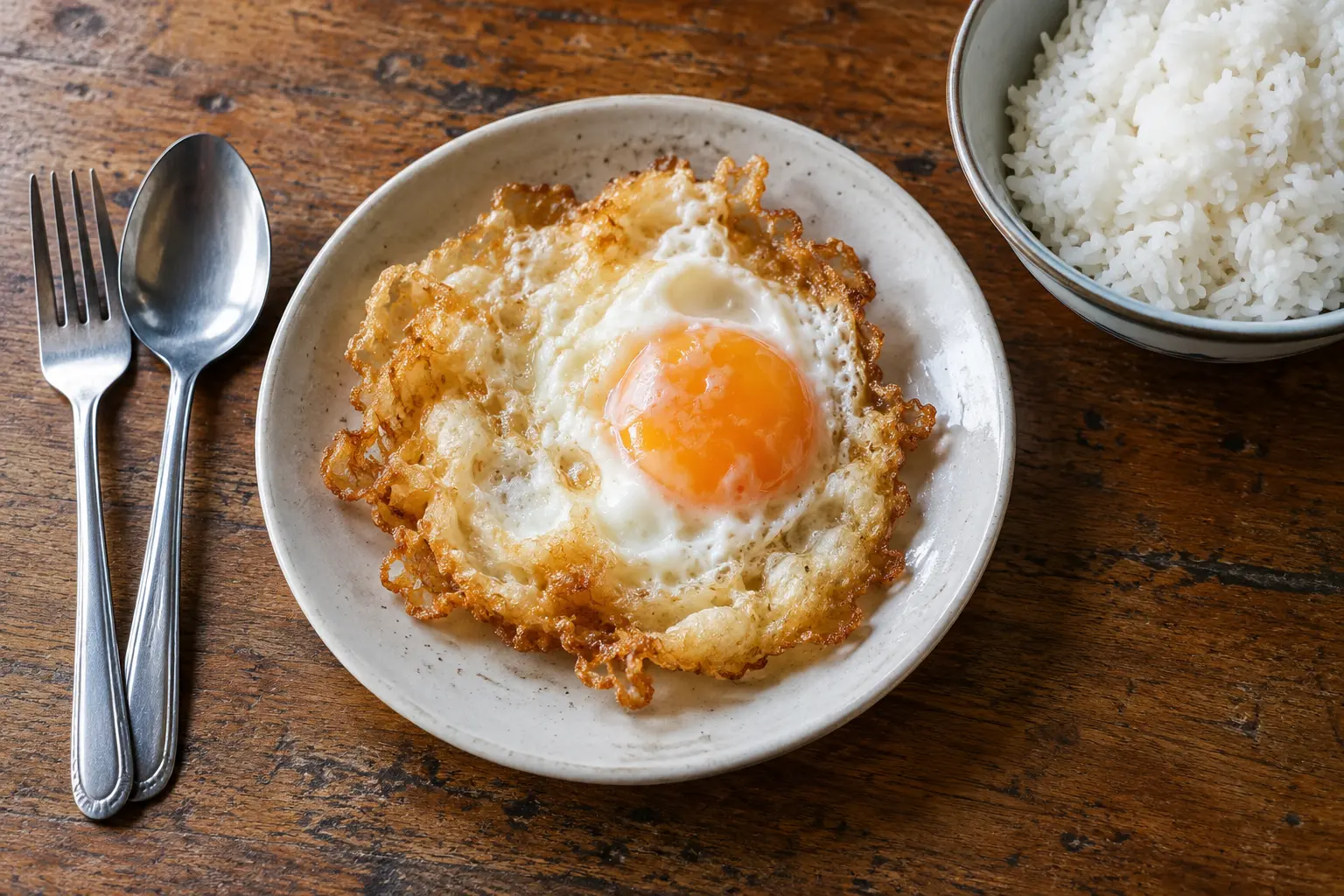
Khai or kai means egg, while dao means star. English spellings vary because Thai sounds can be transliterated in several ways, so you may see kai dao, khai dao or another close form. On a menu, they point to the same practical idea: a fried egg. The “star” description makes sense when hot oil pushes the white into irregular rays and crisp frills around the yolk.
The texture depends on the cook, the oil temperature and how long the egg stays in the pan. Some kai dao have deeply golden edges and a liquid yolk. Others are cooked through, with a firmer centre. Neither result needs to be presented as a universal standard. If the yolk texture matters to you, ask clearly rather than assuming every kitchen uses the same timing.
Kai dao also belongs to a wider family of everyday Thai egg dishes. It should not be confused with khai jiao, the puffed Thai omelette whose beaten egg forms a light, craggy mass in hot oil. Both can appear with rice, but their structure and eating experience are quite different.
Why it fits Pad Kra Pao so well
Pad Kra Pao is built around contrast even before the egg arrives. Minced pork offers a loose, savoury texture; garlic gives depth; holy basil brings a peppery herbal aroma; and jasmine rice provides a calm foundation. Thai government and Thai SELECT food guides both describe a fried egg as a familiar partner for the basil stir-fry, reflecting a pairing seen at food stalls, simple restaurants and home tables across the country.
The egg adds three more layers. First comes the crisp edge, which stands apart from both rice and pork. Next is the tender white. Finally, a softer yolk can spread through a few spoonfuls, making the sauce feel rounder without erasing the basil. You do not need to break the yolk over the entire plate at once. Try one bite with the crisp edge, another with rice and pork, then decide how much yolk you want to mix in.
Our guide to holy basil and Pad Kra Pao looks more closely at the herb itself. The important distinction is that the egg supports the dish; it does not replace holy basil as the flavour that gives Pad Kra Pao its identity.
Crisp edges are made by heat and oil
A Western-style fried egg is often cooked gently in a thin film of fat. Thai kai dao can use a more assertive method: the egg meets a generous amount of hot oil, and the white bubbles around the edges. Heat sets the outside quickly while the centre continues to cook. The result can resemble a small edible cloud with a bronze, brittle border.
That technique also explains why the egg may look less geometrically perfect. An irregular outline is part of the texture. Tiny bubbles create delicate sections that shatter easily; thicker areas stay tender enough to cut with a spoon. The cook controls the final balance through temperature and timing rather than pressing the egg into a mould.
At home, safety matters more than theatre. Moisture can spit when it reaches hot oil, so the pan should be stable and the egg should be lowered carefully. There is no need to copy a restaurant burner or chase maximum heat. A crisp edge can be developed with patience and control. The broader lesson of Bangkok wok cooking is that professional speed begins with preparation, not recklessness.
This article explains a technique and a cultural pairing; it is not THAM’s proprietary recipe. The exact result at any restaurant can vary from the editorial illustrations shown here.
Kai dao changes the plate one crisp edge and one spoonful at a time.
How to order the egg you actually want
If you simply want the standard add-on, “kai dao” is enough to identify a fried egg. If you have a strong preference for the yolk, explain it in plain language when ordering. A soft or runny yolk is often described with mai suk—not fully cooked—while suk indicates cooked. Pronunciation varies, so a friendly English explanation or a gesture can be more useful than trying to sound perfect.
Food safety and personal comfort come first. Children, pregnant diners, older adults and people with weakened immune systems may prefer a fully cooked yolk. If you are unsure, request the egg cooked through. A softer yolk is a texture choice, not a test of authenticity.
At THAM, Pork Pad Kra Pao is listed at 150 THB with rice included, and the fried egg add-on is 15 THB. The two items therefore total 165 THB before drinks, dessert or other extras. Prices can change, so check the current THAM menu rather than treating this article as a permanent price list.
THAM prepares dishes non-spicy by default, with chilli available on request. That means the egg does not need to serve as a rescue from excessive heat. Diners can focus on basil, garlic, pork, rice and texture, then choose their own chilli level. Our non-spicy Thai food guide offers more language and dish ideas for anyone who prefers gentle food.
Eat it with a spoon and fork
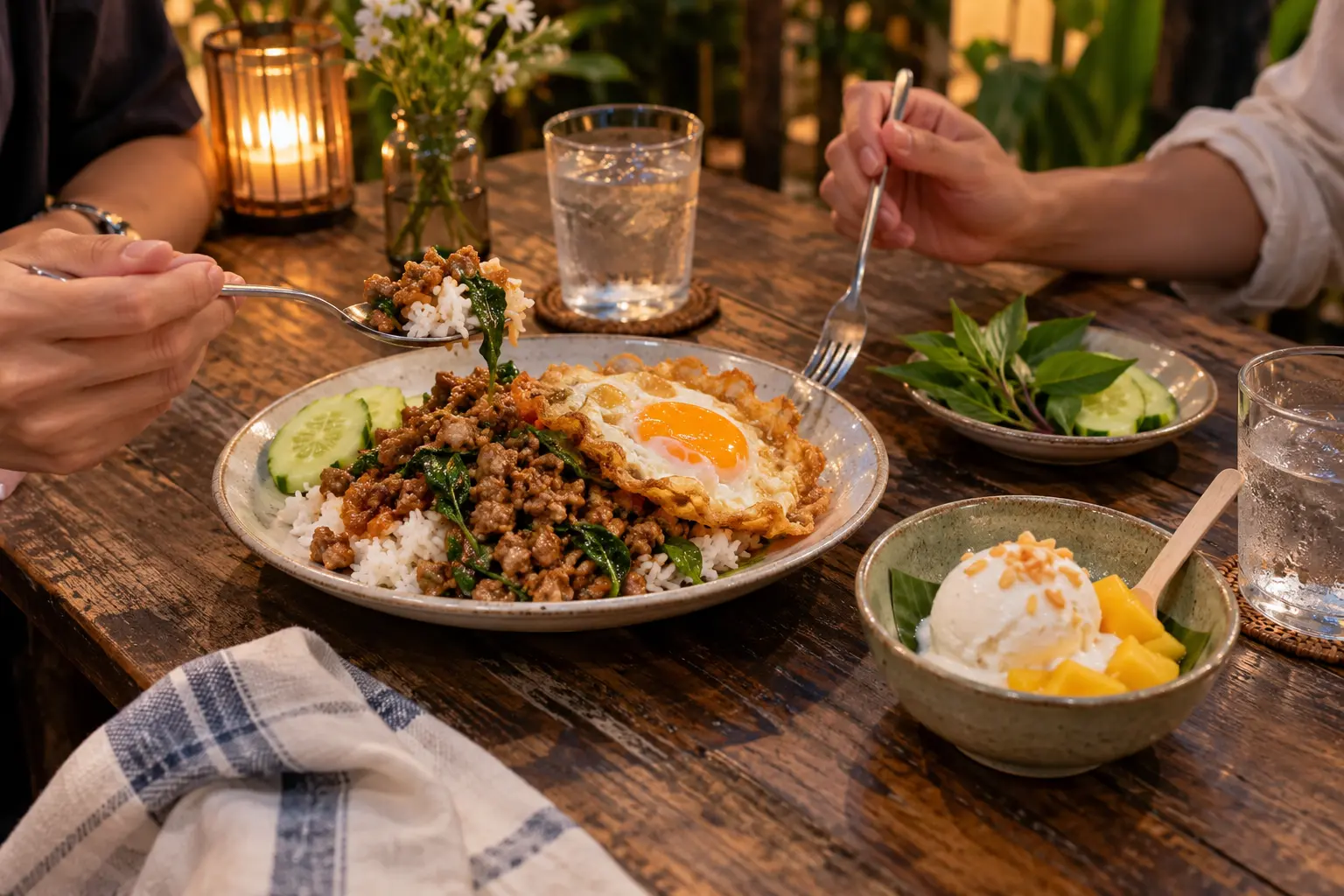
The most practical way to eat Pad Kra Pao with kai dao is also the familiar Thai way to approach many rice plates: use the fork to guide food onto the spoon. The spoon cuts easily through the egg white and gathers rice, pork and basil into one bite. Chopsticks are not required simply because the dish is Thai.
Start at an edge if you want to preserve the yolk for later. If you prefer the yolk mixed through the rice, open it near the centre and fold only part of the plate together. There is no dining rule that says every bite must contain every component. The pleasure comes from changing the proportions as you eat.
For a fuller explanation of utensils and shared dishes, read our guide to Thai dining etiquette in Bangkok. The short version is reassuring: eat neatly, share thoughtfully when dishes are communal and use the tool that suits the food.
A small extra with a clear purpose
Kai dao is worth ordering when you want more texture and richness, not because a plate is somehow incomplete without it. Some diners love the brittle edge and flowing yolk; others prefer the basil pork and rice exactly as served. Both choices make sense.
If you are planning a meal for two, an egg can also be a more focused addition than another full dish. It changes one plate for 15 THB and still leaves room to compare noodles, soup or dessert. The Thai dinner-for-two budget guide shows how small extras affect three sample totals.
On Yen Akat Road, the most useful approach is to order deliberately: Pork Pad Kra Pao for its garlic, pork and holy basil; rice for balance; kai dao if you want its crisp-white-soft-yolk contrast; and chilli only at the level you enjoy. Before visiting, check THAM’s practical information for the current address, hours and contact options.
A good kai dao does not need to dominate the plate. It earns its place one edge, one spoonful and one change of texture at a time.
KEEP YOUR CURIOSITY HUNGRY
Order the texture you enjoy, keep chilli at your preferred level and notice how one egg changes the rhythm of the plate.
Explore the THAM menuRead further
Photography & credits
All three images are AI-generated editorial illustrations created for this guide. They are not documentary photographs of THAM, its venue or exact menu servings.
- Pad Kra Pao with kai dao — AI-generated editorial illustration commissioned for THAM; not an exact menu photograph.
- The crisp edges of kai dao — AI-generated editorial illustration commissioned for THAM; not a proprietary recipe photograph.
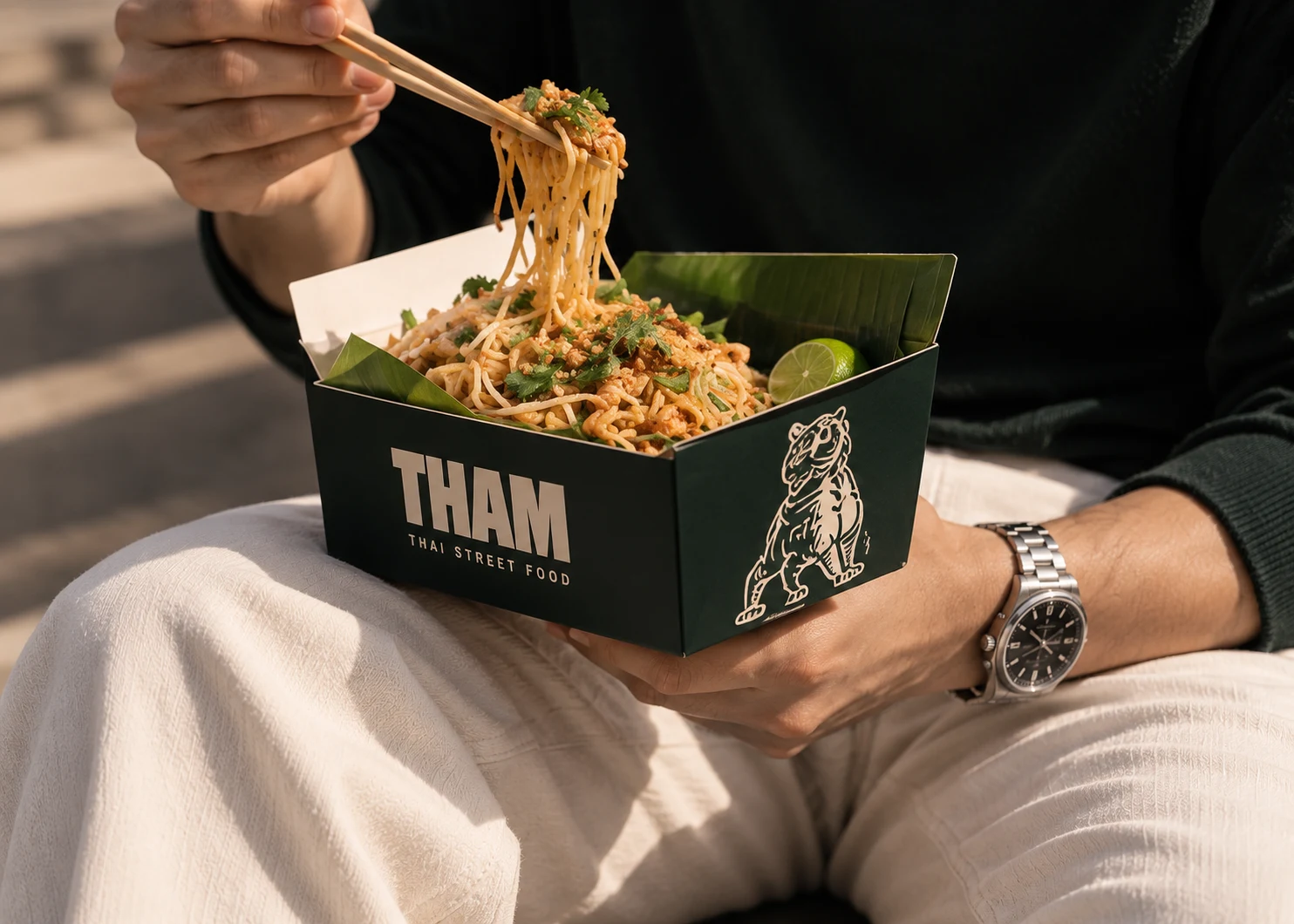
- Sharing a Thai meal with kai dao — AI-generated editorial illustration commissioned for THAM; not a venue or exact menu photograph.