Eating Thai food in Bangkok does not have to mean chasing the hottest chilli on the table. Thai cooking can be bright with tamarind, fragrant with herbs, savoury with soy and fish sauce, mellow with coconut, or gently warming with ginger and white pepper. Heat is one element, not the entire cuisine. If you prefer little or no chilli, the useful question is not “Can I eat Thai food?” but “Which flavours and dishes suit me tonight?” At THAM on Yen Akat Road, dishes are prepared non-spicy by default, and chilli can be added on request. That makes the menu approachable for first-time visitors, families and diners whose tolerance is simply lower than their friends’. This guide explains how to order clearly, how to distinguish chilli heat from other kinds of warmth, and how to build a satisfying mild meal without reducing Thai food to something bland.
Mild Thai food can still be full of flavour
“Mild” describes the level of chilli; it does not describe the whole taste of a dish. Pad Thai can be tangy and slightly sweet because tamarind helps define its sauce. Khao tom can be aromatic with ginger, mushrooms and broth. Fried rice gains savoury depth from seasoning and the wok. Massaman curry is rounded by coconut, potato and peanut. None of those qualities depends on a mouthful of fresh chilli.
It helps to choose by flavour and texture rather than by heat alone. Do you want a spoonable rice soup, separate grains of fried rice, soft noodles, or a rich coconut curry? Are you looking for something bright and tangy, delicate and brothy, or roasted and garlicky? Those questions lead to a better dinner than treating “not spicy” as the only requirement.
Remember that non-spicy does not always mean sensation-free. Ginger can feel warming, black or white pepper can prickle, garlic can be assertive, and curry spices can be aromatic even when the dish contains little chilli. If any of those ingredients bothers you, mention it specifically. Personal tolerance varies, so a clear description is more helpful than asking whether a dish is “safe.”
Start gently with rice soup or fried rice
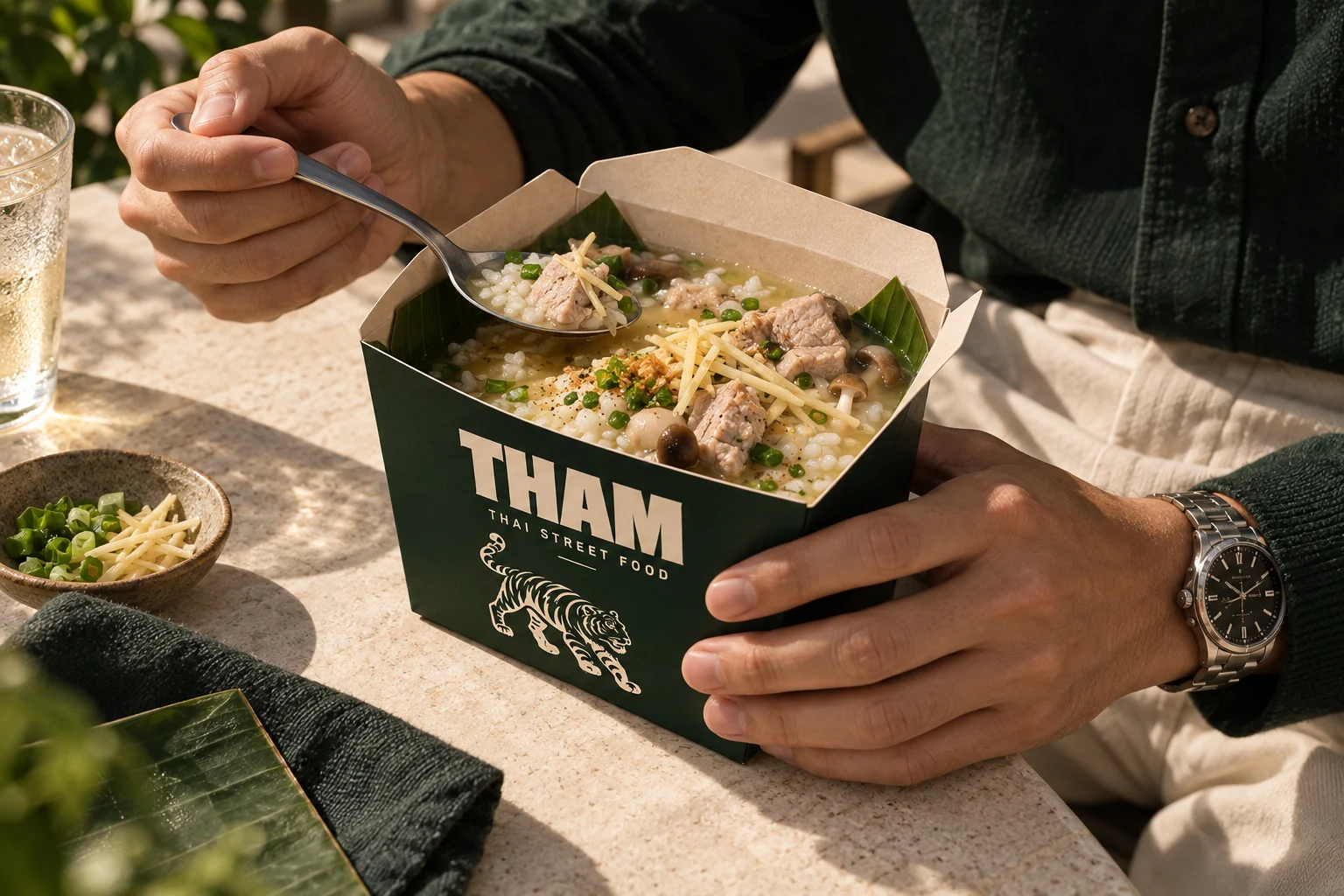
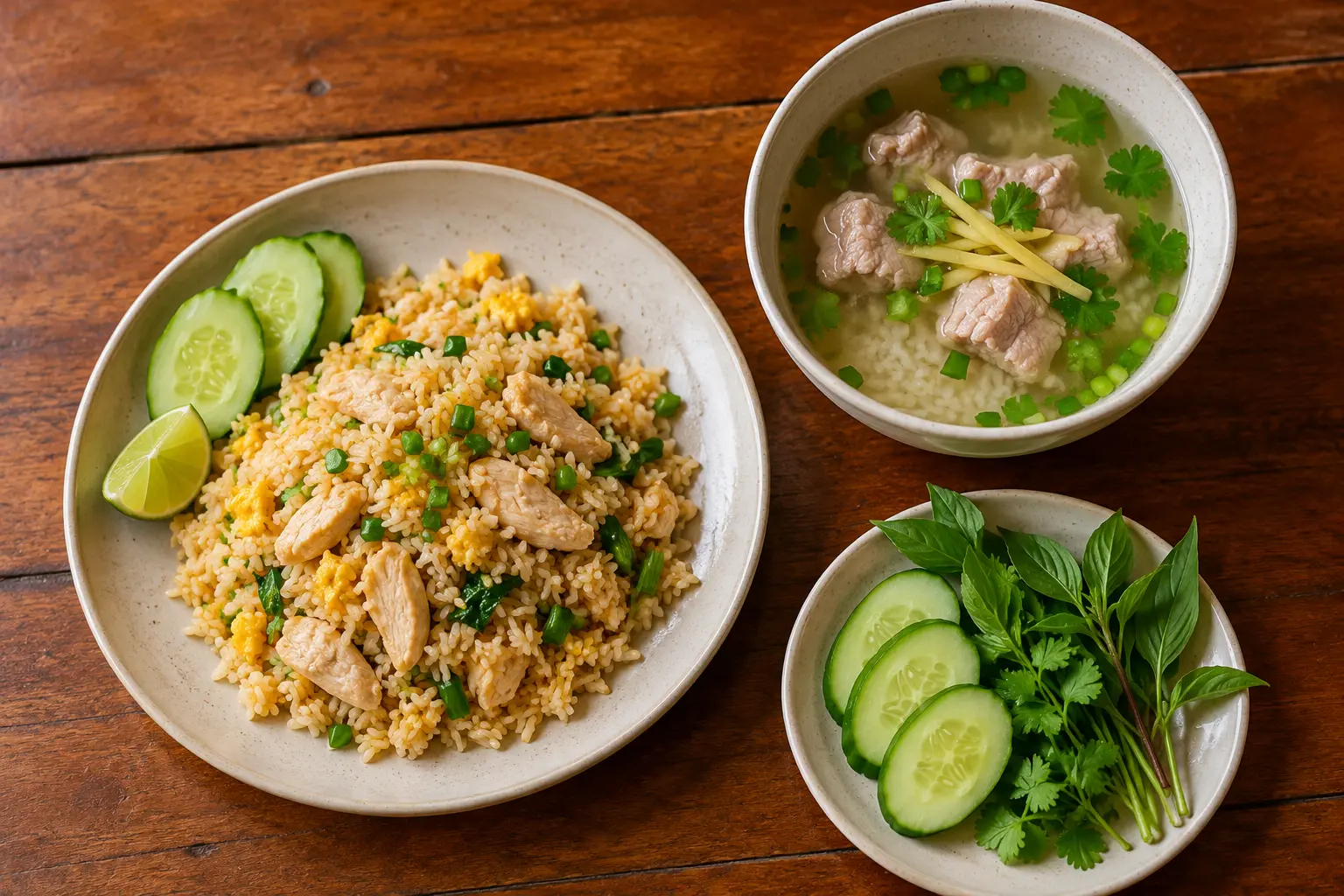
For a calm introduction, THAM’s Khao Tom Signature combines pork, rice, chicken broth, shiitake and ginger. The rice sits in the broth, giving the bowl a soft, comforting texture. Ginger adds fragrance and warmth without creating the sharp burn associated with chilli. If you are sensitive to ginger as well, ask the team before ordering. Our deeper guide to khao tom and jok explains why Thailand’s two familiar rice-bowl traditions are related but texturally different.
Chicken Khao Pad offers another easy starting point. It combines fried rice with chicken, egg, onion and soy sauce. The pleasure comes from savoury seasoning, soft egg and grains of rice heated in the wok. It is useful for diners who want a complete plate rather than a bowl of broth, and for a mixed group it provides a neutral centre alongside more aromatic shared dishes.
These two choices both use rice, yet they do not feel repetitive. One is moist and spoonable; the other is dry-fried and separated into bites. Choosing between them according to appetite is more useful than trying to identify a single “least spicy” dish.
Pad Thai lets tang and texture take the lead
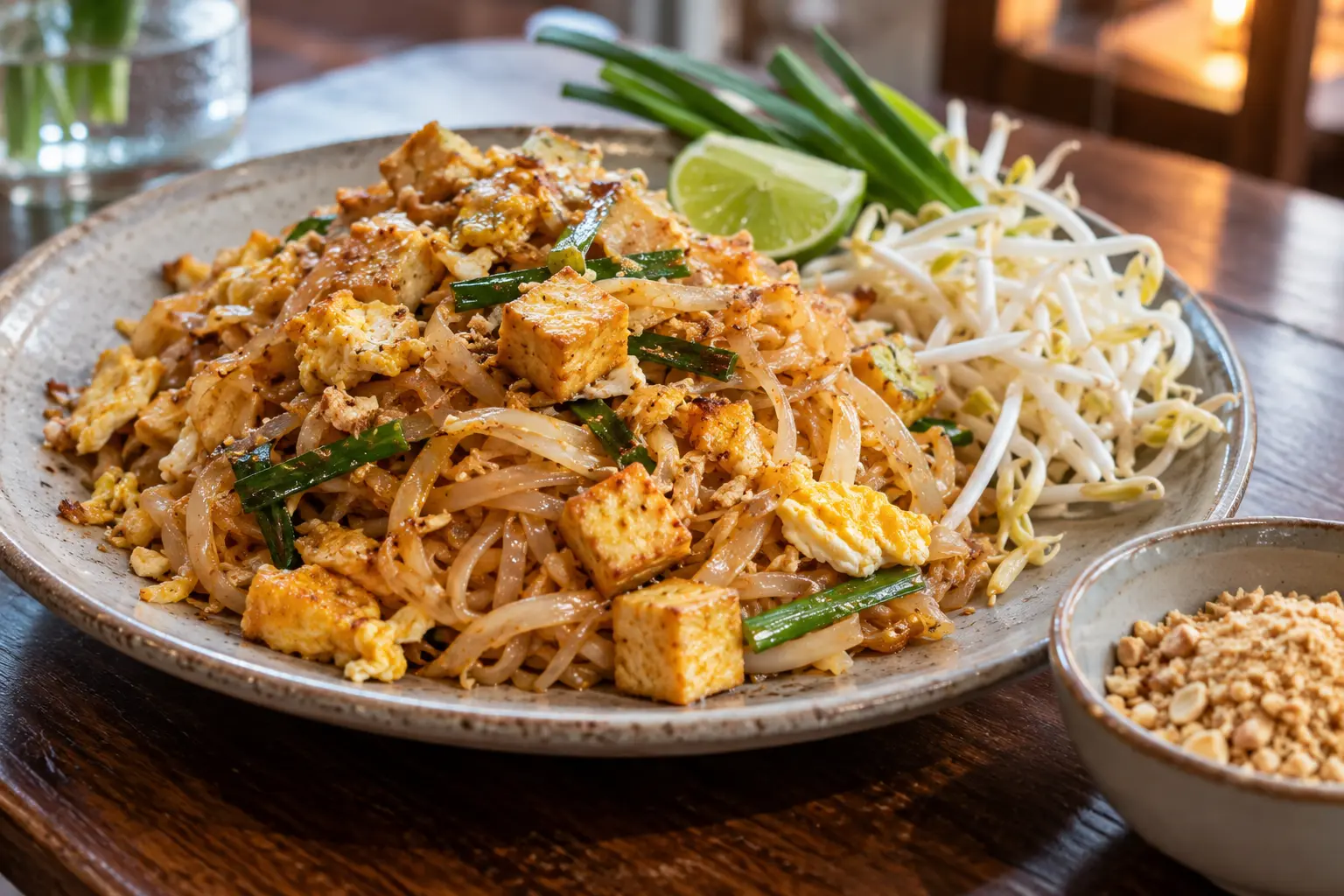
Pad Thai is often a comfortable bridge into Thai food because its central flavours do not require chilli. At THAM, rice noodles are cooked with tamarind, egg and tofu, with chicken or prawns depending on the order. Bean sprouts, lime and peanuts bring contrast at the table. Chilli need not be mixed through the noodles; tell the team how you want the dish prepared and keep any optional hot seasoning separate.
Pay attention to the balance as you eat. Lime adds freshness, peanuts add crunch, sprouts stay crisp, and tamarind gives the sauce its characteristic tang. That combination is why a mild plate can still feel lively. If you want to understand the dish before choosing your protein, read our prawn Pad Thai guide for its ingredients, history and texture.
Pad Thai also shows why “no chilli” and “no allergens” are different requests. Peanuts, egg, tofu and sauces may matter to someone with an allergy or intolerance. Never assume that a mild dish is automatically suitable for your dietary needs. Name the ingredient you must avoid and let the team check the actual preparation.
No chilli does not mean no character.
What about basil stir-fry and curry?
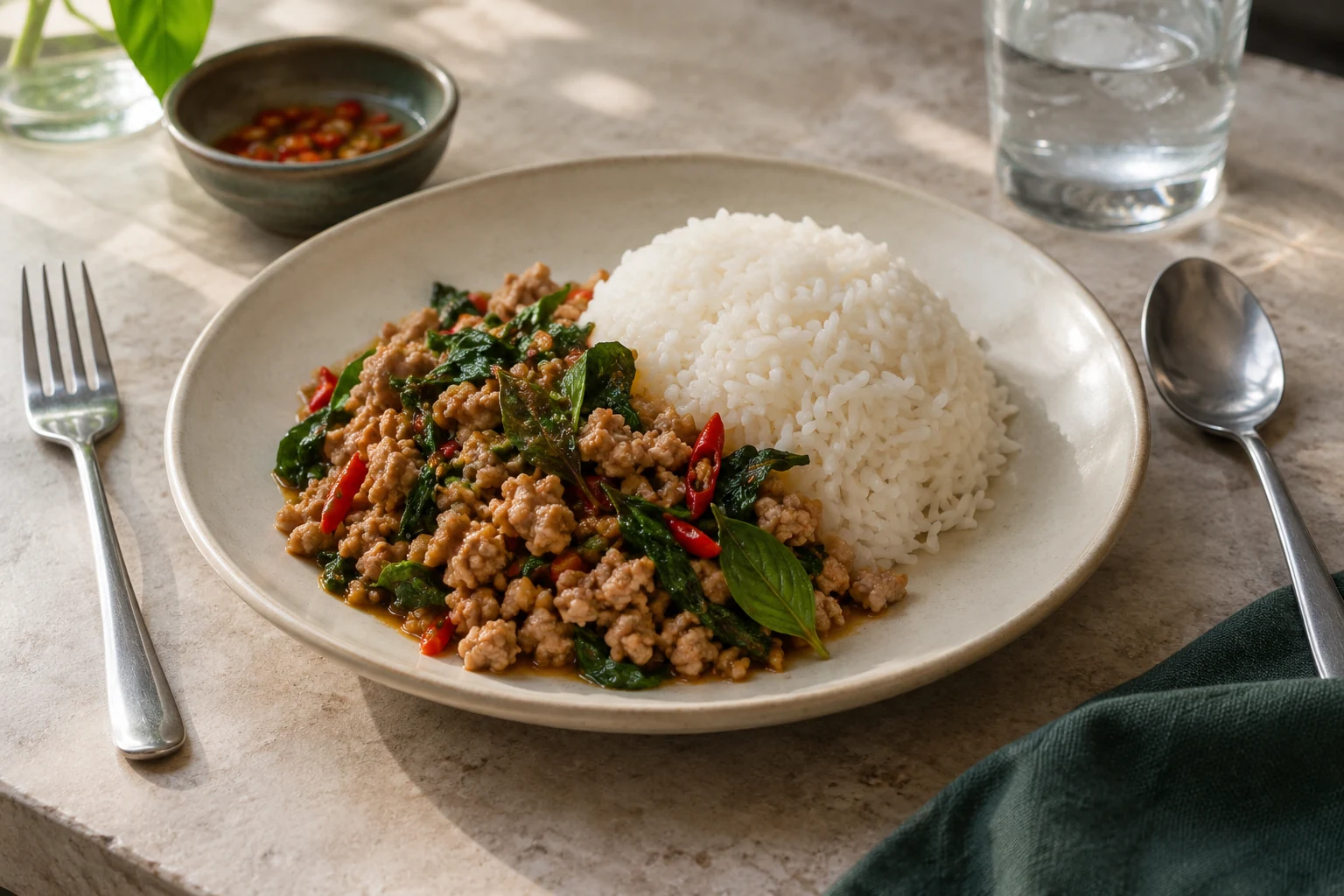
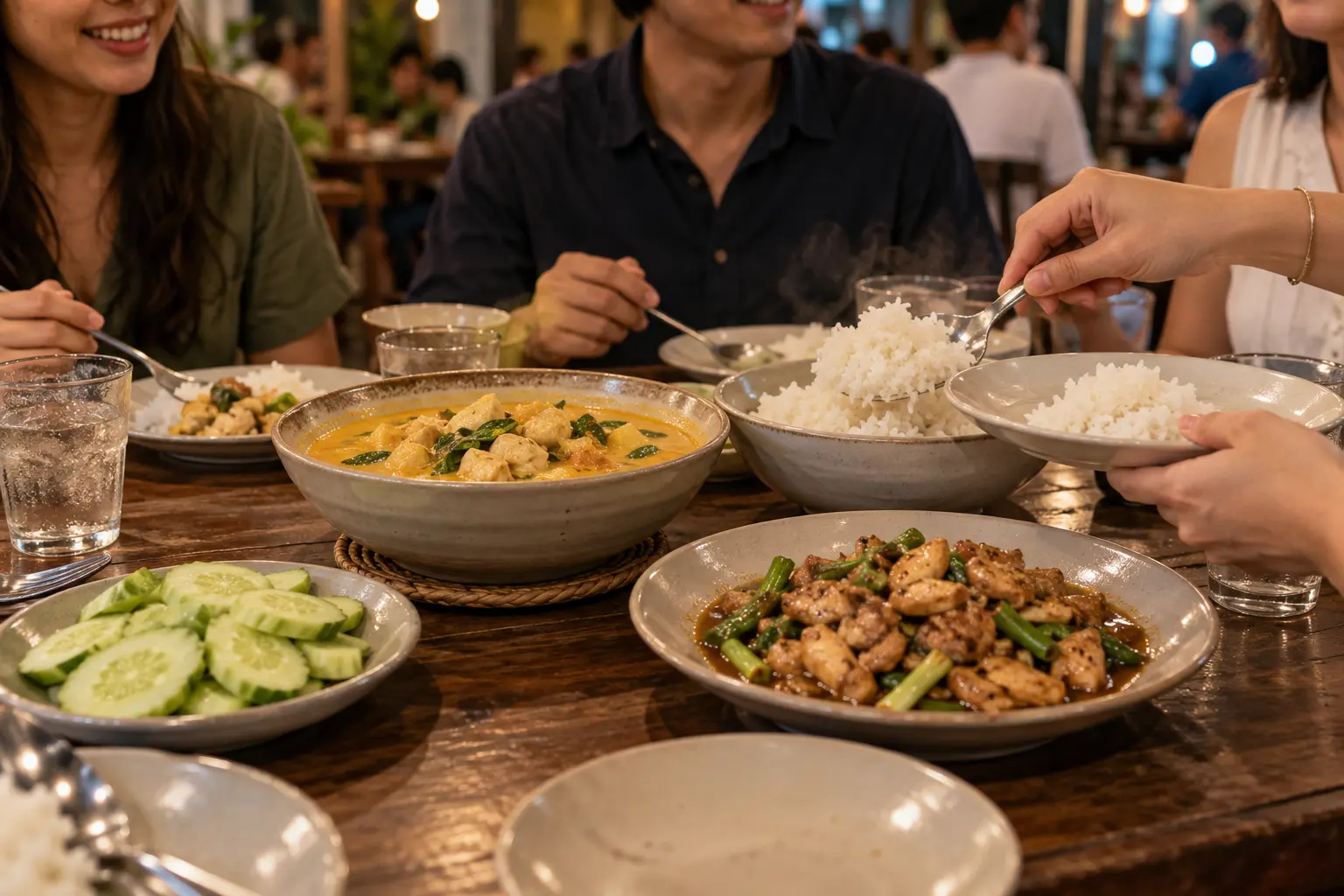
Pad kra pao is famous for chilli, but holy basil and garlic also shape its personality. At THAM, Pork Pad Kra Pao can be prepared without added chilli, allowing the basil’s herbal aroma to come forward. Diners who usually avoid the dish because of its fiery reputation can approach it from a different angle. Our story of holy basil and pad kra pao explains what makes the herb so distinctive.
Chicken Massaman is another route for diners who enjoy a richer plate. Coconut, potato and peanut give it a rounded, savoury-sweet profile, while its spice blend is aromatic rather than defined only by chilli heat. “Mild curry” still deserves a conversation, however, because recipes and tolerance differ. Ask about the current preparation and mention sensitivities rather than relying on the colour of the sauce. The Chicken Massaman guide explores the dish’s ingredients and layered character in more detail.
Garlic-and-pepper dishes deserve the same distinction. They may contain no chilli yet still have a peppery bite. If black or white pepper feels hot to you, say so. “No chilli and very little pepper, please” communicates much more than “not spicy.”
How to order non-spicy food clearly in Bangkok
At THAM, non-spicy is the starting point, but confirming your preference is still useful—especially when several people at the table want different heat levels. A simple “No chilli, please” is clear in English. The Thai phrase “mai sai prik” means “do not add chilli.” You do not need perfect pronunciation or a long explanation; point to the relevant dish and speak calmly.
For a group order, match each request to its plate: “Pad Thai, no chilli; Pad Kra Pao, medium spicy.” Asking for chilli on the side is another practical option for diners who want to adjust one bite at a time. It lets a table share food without forcing everyone to accept the same heat level.
Treat allergies separately and explicitly. Say which ingredient causes the problem, ask about sauces and garnishes, and allow the kitchen to confirm what is possible. Photographs and general descriptions cannot guarantee how a particular order is prepared. If a severe allergy is involved, tell the team before ordering rather than relying on a spice-level request.
Build a balanced mild meal at THAM
For one person, start with the texture you want most: Khao Tom Signature for broth, Chicken Khao Pad for rice, or Chicken or Prawn Pad Thai for noodles. If you want dessert, Mango Sticky Rice combines ripe fruit, sticky rice and coconut, while Coconut Ice Cream gives a cooler finish and Khanom Tuay offers small steamed coconut puddings.
For two people, contrast works well. Pair rice soup with Pad Thai, or fried rice with a mild basil stir-fry. Begin with two dishes and add more only if you are still hungry. Sharing does not require a huge banquet; the point is to notice how broth, noodles, herbs and wok-cooked rice differ.
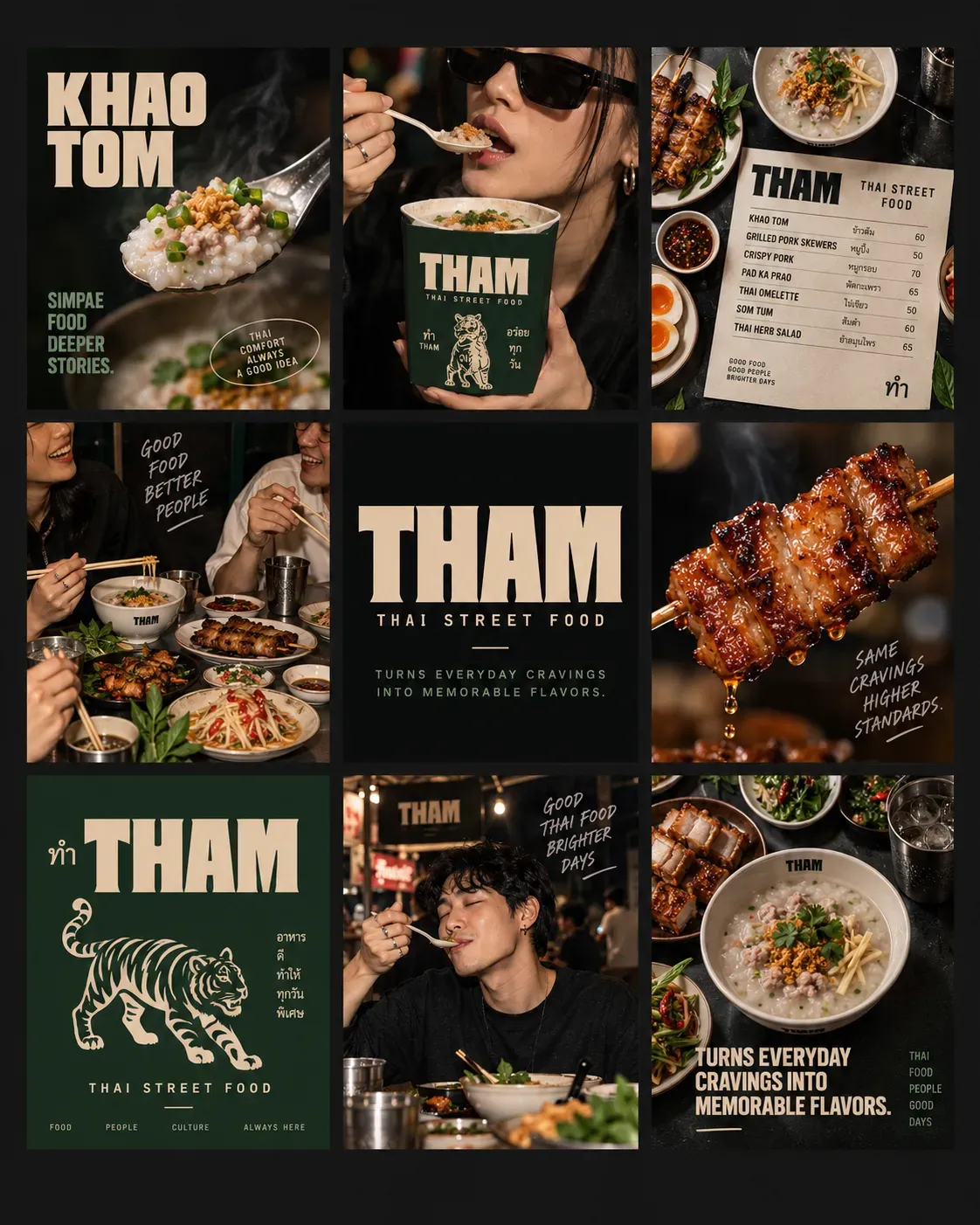
Use THAM’s Bangkok street-food menu guide to see the current selection, then check Visit Us and practical information before heading to Yen Akat Road. THAM is in Chong Nonsi, Yan Nawa, away from the busiest tourist corridors but within central Bangkok. The aim is simple: order at your own comfort level, keep chilli optional, and discover how much character Thai food has beyond heat.
KEEP YOUR CURIOSITY HUNGRY
Order at your own comfort level, keep chilli optional and discover how much character Thai food has beyond heat.
Explore the THAM menuPhotography & credits
All three images are AI-generated editorial illustrations created for this guide. They are not documentary photographs of THAM, its venue or exact menu servings.
- Mild Thai rice dishes — AI-generated editorial illustration commissioned for THAM; not a venue or exact menu photograph.
- Pad Thai without chilli — AI-generated editorial illustration commissioned for THAM; not an exact menu photograph.
- A shared mild Thai meal — AI-generated editorial illustration commissioned for THAM; not a venue or exact menu photograph.