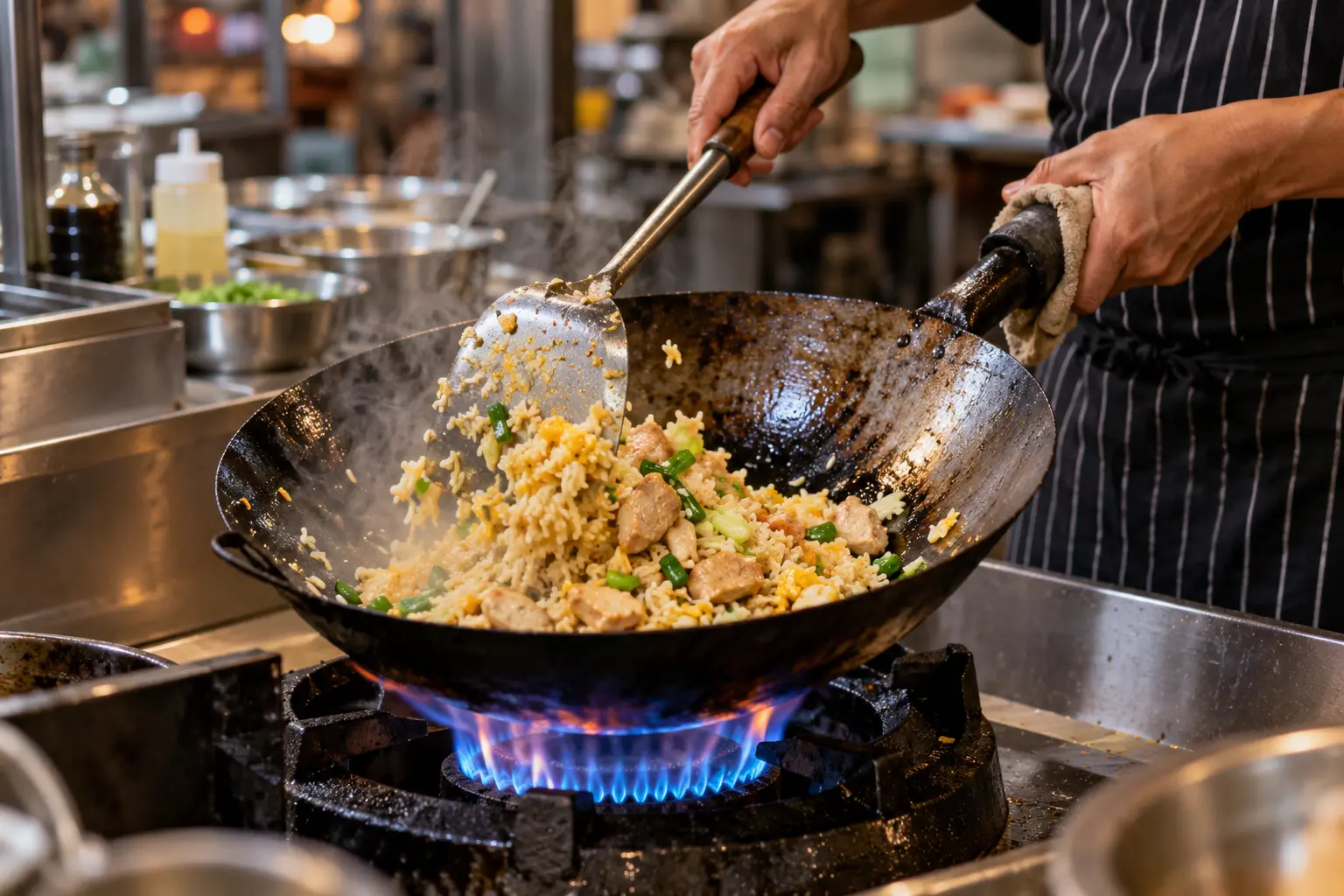
In Bangkok, some of the most memorable cooking happens in minutes. A cook reaches for a prepared bowl, heats a wok, adds ingredients in a deliberate order and sends out a plate while the aromas are still rising. The speed can look improvised, but good wok cooking is built on preparation, heat control and timing. The visible action is only the final stage of a process that began before the flame was lit. The wok is not exclusively Thai. Stir-frying and the vessel itself arrived through Chinese influence and became deeply integrated into Thai cooking. Thai cooks adapted the technique to local ingredients and tastes: fish sauce, tamarind, curry pastes, garlic, basil, lime and palm sugar can all enter the picture. The result is not one fixed “wok flavour,” but a flexible way to cook rice, noodles, meat, vegetables and aromatics quickly. At THAM on Yen Akat Road, several familiar dishes help explain the method: Chicken Khao Pad, Pork Pad Kra Pao, Garlic Pepper Chicken and Pad Thai all depend on sequencing and control. This guide is about the technique behind that energy, not THAM’s proprietary recipes.
The wok is a landscape of heat
A wok’s rounded shape creates more than one cooking zone. The bottom receives the strongest heat, while the sloping sides allow ingredients to be moved away from the centre. A cook can sear something where the pan is hottest, lift it towards the edge, then make room for aromatics or sauce below. That difference in temperature is one reason the vessel is so versatile.
Professional street kitchens may use powerful burners that recover heat quickly after cold ingredients are added. At home, the flame is usually gentler, so copying the theatre of a Bangkok wok station is less useful than understanding the principle. Preheat the pan, cook modest portions and avoid loading it with so much food that everything releases water at once. A crowded wok cools; instead of frying, the ingredients begin to steam.
“Wok hei,” often translated as the breath of the wok, describes the roasted, smoky character associated with intense high-heat cooking. It can be especially noticeable in fried rice and stir-fried noodles, but it is not the measure of every Thai stir-fry. Many Thai home cooks care more about freshness, seasoning and texture than recreating a restaurant flame. A satisfying dish does not need a dramatic fireball.
Preparation is what makes speed possible
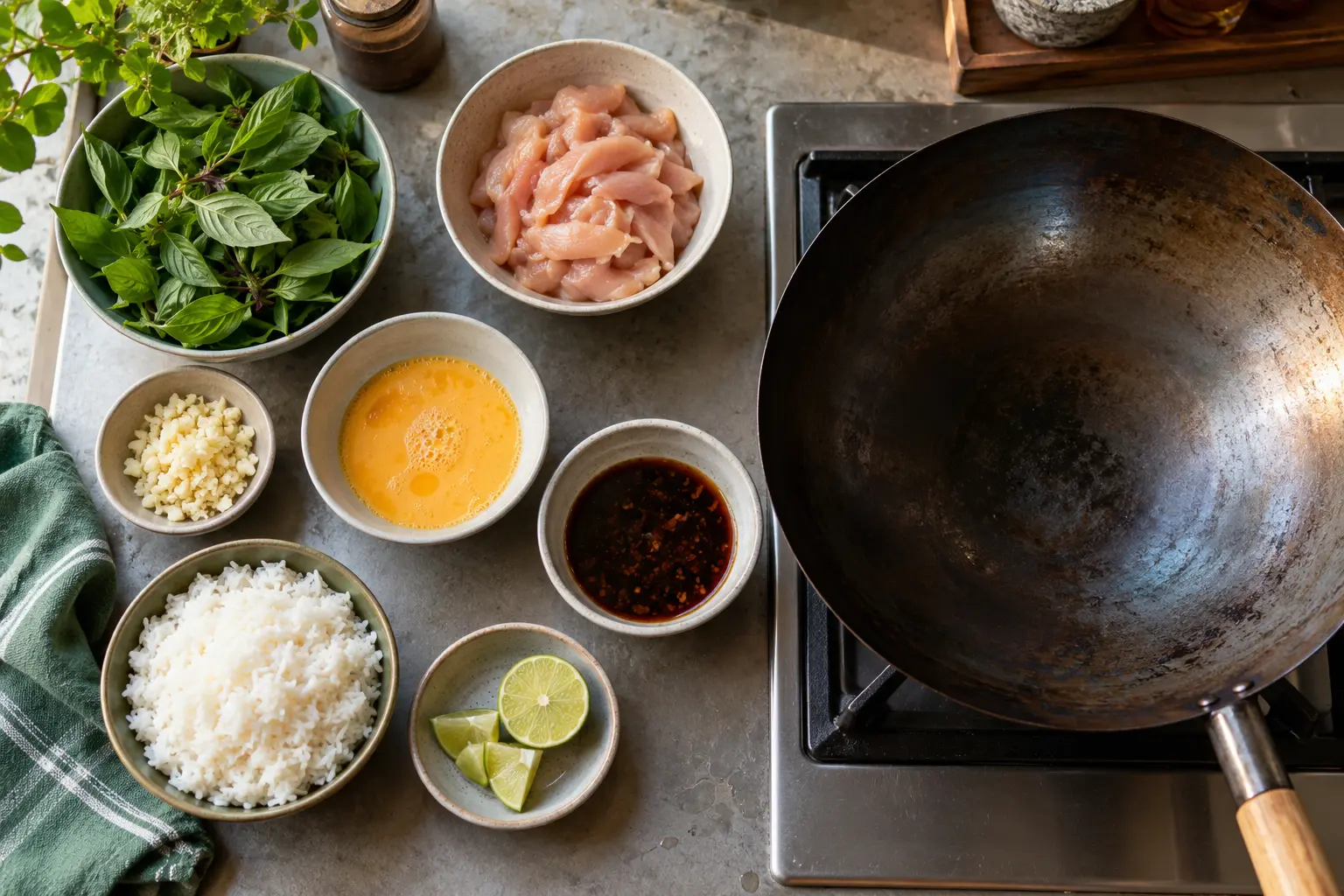
Once cooking begins, there is rarely time to chop another onion or search for fish sauce. Professional rhythm comes from having the ingredients cut, measured and arranged within reach. Cooks often call this mise en place: everything in its place.
For a simple stir-fry, that might mean protein in one bowl, aromatics in another, a mixed sauce ready to pour, and quick-cooking herbs kept separate. Rice should be loosened before it reaches the wok. Noodles may need soaking or other preparation first. Dense vegetables go in earlier than tender leaves. The exact sequence changes with the dish, but the logic remains: add each ingredient when it has enough time to cook without damaging what is already in the pan.
This is why street-food speed should not be confused with carelessness. Much of the labour has moved offstage. A fast service works because the cook has removed avoidable decisions from the hottest minute of the process.
Small batches protect texture
Temperature falls whenever food enters the pan. A powerful commercial burner can recover quickly; a domestic hob may not. Cooking less at one time is therefore one of the most useful home adaptations. It gives moisture a chance to evaporate and lets ingredients make direct contact with hot metal.
For chicken or pork, spreading pieces into a single layer can encourage browning before constant movement begins. If the protein releases liquid, allow that moisture to cook away rather than immediately adding more wet ingredients. For fried rice, separate grains and a roomy pan matter because large clumps trap steam.
Our Chicken Khao Pad home guide explains a complete home adaptation, including why cooled jasmine rice is easier to separate. The goal is not dryness for its own sake. Good fried rice should remain tender, but the grains should feel distinct rather than compressed into a soft mass.
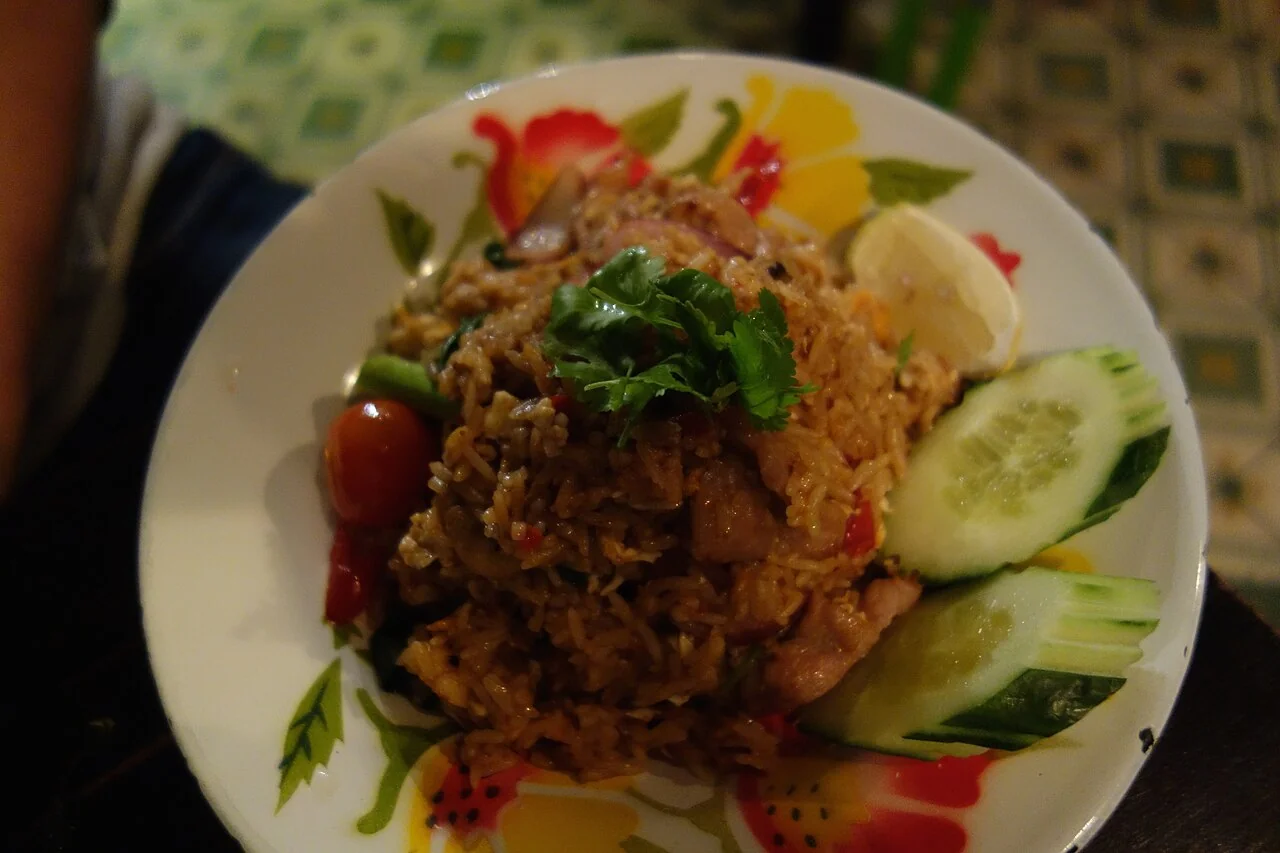
At THAM, Chicken Khao Pad provides a clear example of how a modest ingredient list can still depend on technique. Chicken, egg, onion, soy seasoning and rice meet in one pan, yet their textures do not all require the same amount of time.
The visible speed begins with invisible preparation.
Sequence builds aroma without burning it
Garlic can move from fragrant to bitter quickly. Basil loses its freshness if cooked for too long. Sauce can reduce and caramelise when it touches the hot wok, but it can also scorch if the pan is left unattended. Wok cooking is therefore a sequence of short windows rather than one long simmer.
In a basil stir-fry, the protein and sauce need enough time to cook and combine, while the leaves are usually a late addition. Their aroma rises quickly as they wilt. The story of holy basil and Pad Kra Pao looks more closely at the herb that gives the dish its identity.
Garlic Pepper Chicken follows a different aromatic direction. Garlic and pepper are not simply garnishes scattered over a finished plate; the cook has to develop their fragrance while protecting them from harsh burning. Read our Garlic Pepper Chicken guide for the dish’s flavour profile and a home-kitchen version.
The important lesson is that movement alone is not the technique. Good stir-frying also includes moments of deliberate contact: letting protein sear, letting moisture evaporate, or allowing sauce to touch hot metal before it coats the food.
Rice, noodles and minced meat behave differently
One wok can produce very different results because the cook changes the method for the main ingredient. Fried rice benefits from loosened, cooled grains and enough space to move. Minced meat can be broken up across the hottest surface, then combined with sauce and herbs. Rice noodles need enough moisture to soften and absorb seasoning without turning gluey.
Pad Thai makes that last challenge visible. The noodles, tamarind-based sauce, egg, tofu and chosen protein need to come together while sprouts and lime retain their freshness. The best texture is not achieved by leaving everything untouched over maximum heat. It comes from managing moisture, contact and movement. Our Prawn Pad Thai guide explores how its tang, chew and contrasting garnishes fit together.
These dishes also show why there is no universal ten-second rule for the wok. A thin piece of chicken, a handful of cooked rice and a bundle of noodles respond differently. Technique means observing the pan and adjusting, not forcing every ingredient through the same choreography.
A safer, smarter approach at home
Home cooks do not need to toss food above an open flame. Use a stable flat-bottomed wok or a wide pan suited to your hob. Keep the handle turned away from the edge, dry ingredients before they meet hot oil, and use a spatula to move the food. If the pan smokes aggressively or the oil smells burnt, reduce the heat and reset.
Prepare small portions and let the pan regain heat between batches. Keep tender herbs until late, and taste only when the food is safely cooked. If a professional kitchen’s smoky depth cannot be reproduced, concentrate on the qualities you can control: fresh aromatics, balanced seasoning, correct doneness and contrasting texture.
The broader lesson of Bangkok wok cooking is not “hotter at any cost.” It is readiness. The cook knows what comes next, keeps the pan responsive and stops before freshness disappears.
Taste the technique on Yen Akat Road
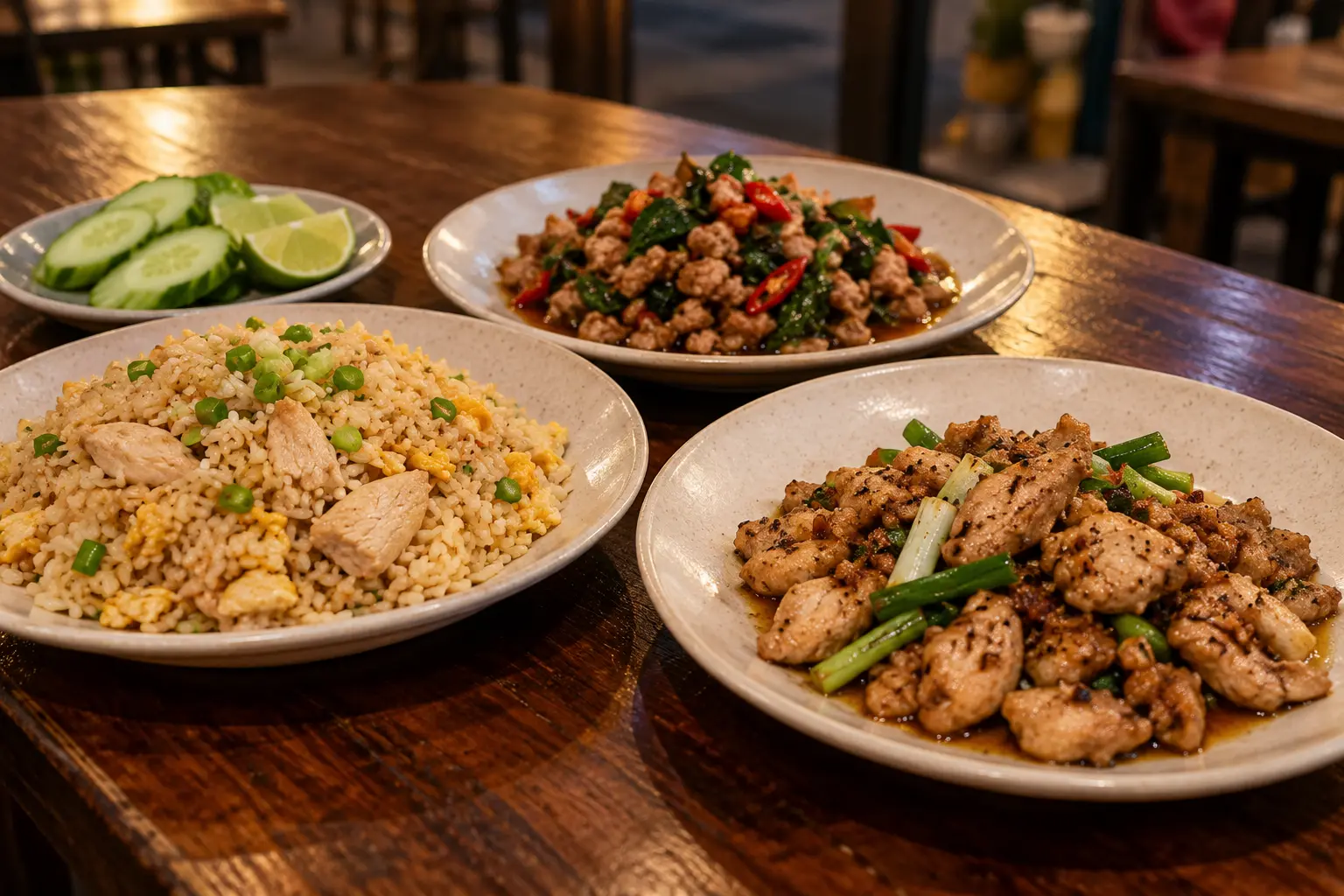
When choosing from THAM’s menu, compare wok-cooked dishes by texture. Chicken Khao Pad offers separated rice and egg; Pork Pad Kra Pao brings minced pork together with garlic and basil; Garlic Pepper Chicken emphasises savoury aromatics; Pad Thai focuses on noodles, tamarind and contrast at the table.
Browse the THAM street-food menu guide to plan what you want to try, then check Visit Us for current practical details before coming to Yen Akat Road in Chong Nonsi, Yan Nawa. Watch for the details beyond the flame: the separate grains, the late lift of basil, the sauce clinging to noodles and the aroma that arrives before the plate.
KEEP YOUR CURIOSITY HUNGRY
Look beyond the flame: good wok cooking is readiness, control and the confidence to stop while every ingredient still has character.
Explore the THAM menuRead further
Photography & credits
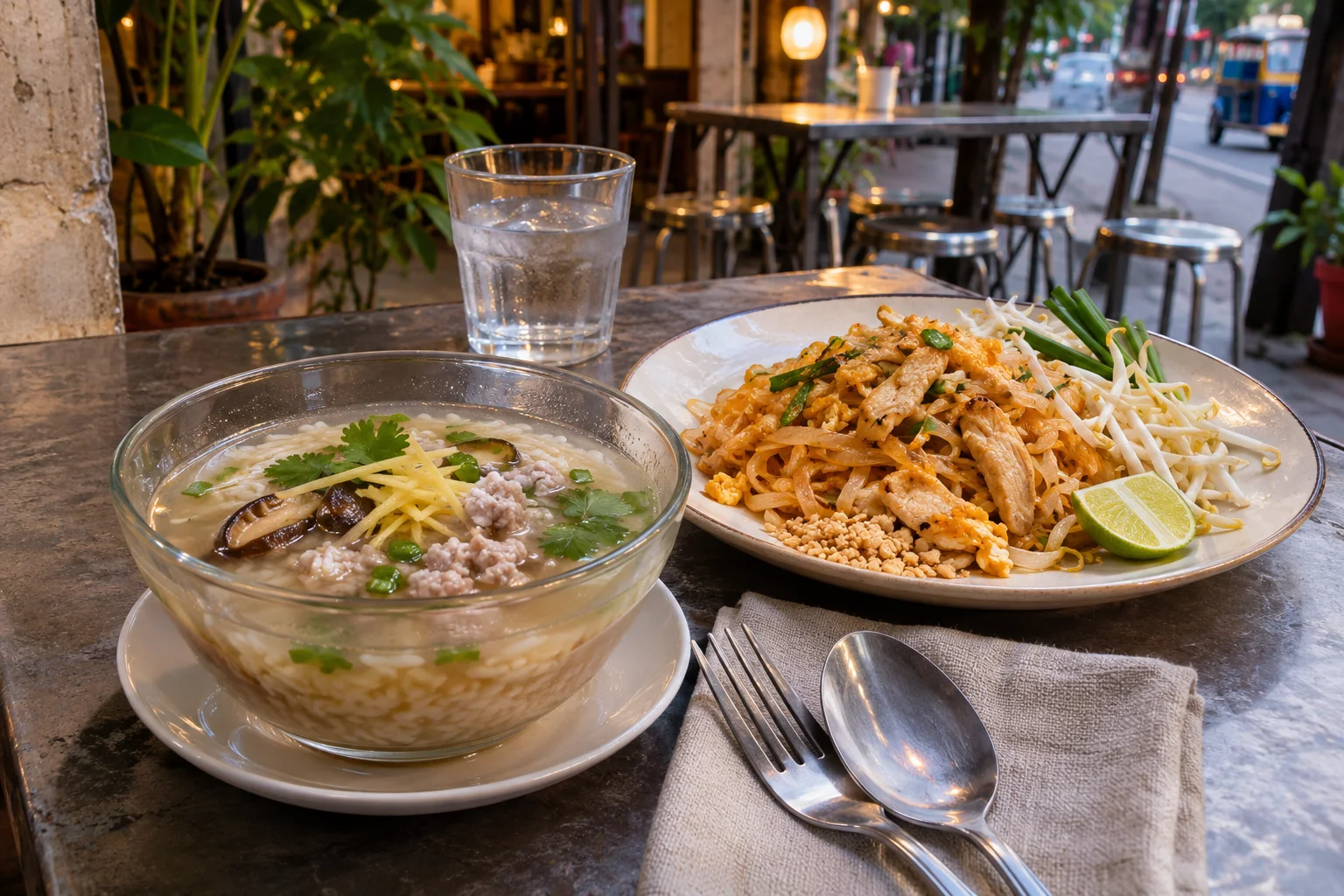
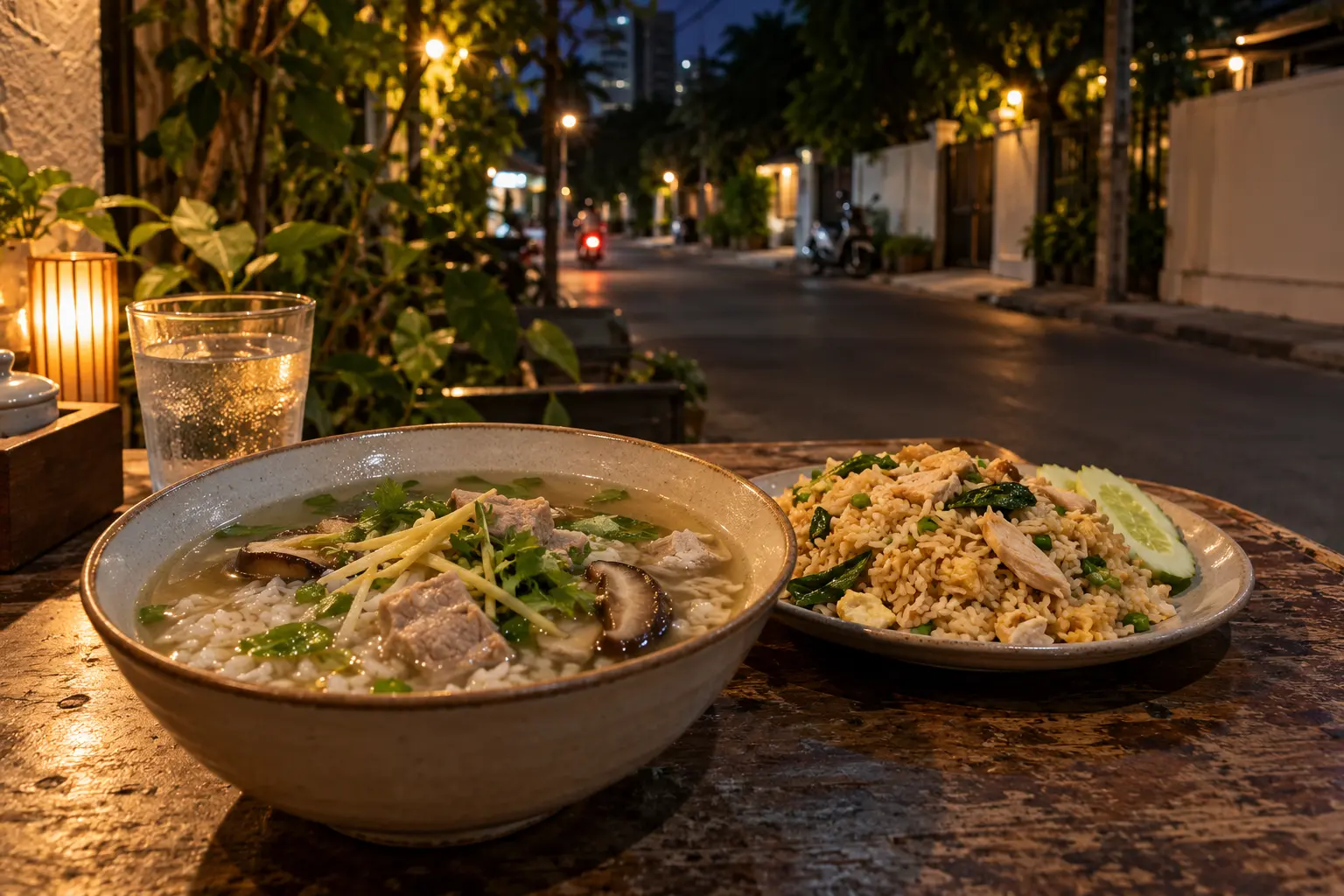
All three images are AI-generated editorial illustrations created for this guide. They are not documentary photographs of THAM, its kitchen, venue or exact menu servings.
- Bangkok-style wok cooking — AI-generated editorial illustration commissioned for THAM; not a venue or kitchen photograph.
- Thai stir-fry mise en place — AI-generated editorial illustration commissioned for THAM; not a proprietary recipe photograph.
- Three Thai wok dishes — AI-generated editorial illustration commissioned for THAM; not exact menu servings.