Good fried rice makes a modest set of ingredients feel like a complete meal. The grains separate, the egg adds softness, and small pieces of chicken make their way into each spoonful. Khao pad is familiar enough to order without hesitation, but cooking it at home teaches useful lessons about preparation, pan space and seasoning. The most helpful equipment is not an enormous flame. It is a clear plan before the pan gets hot.
Understand the name, choose your version
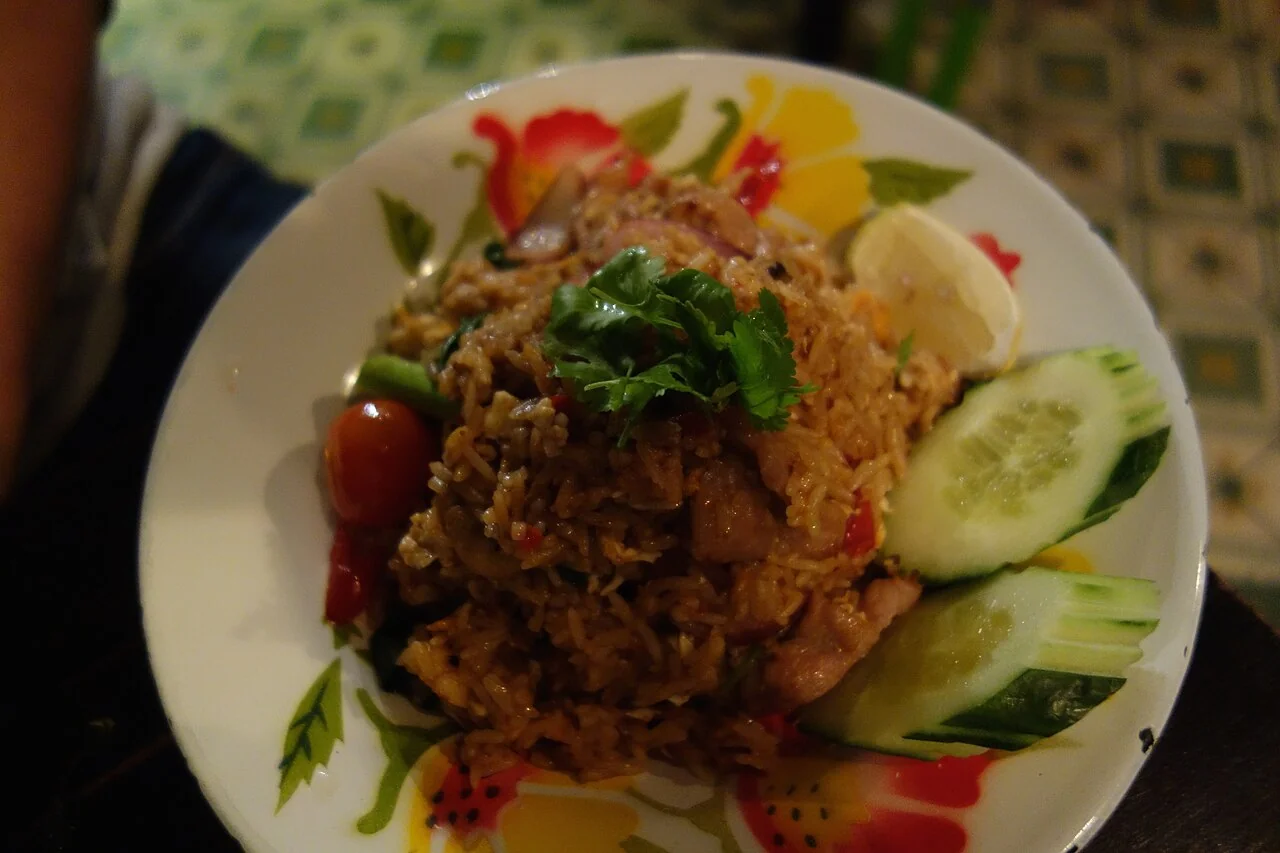
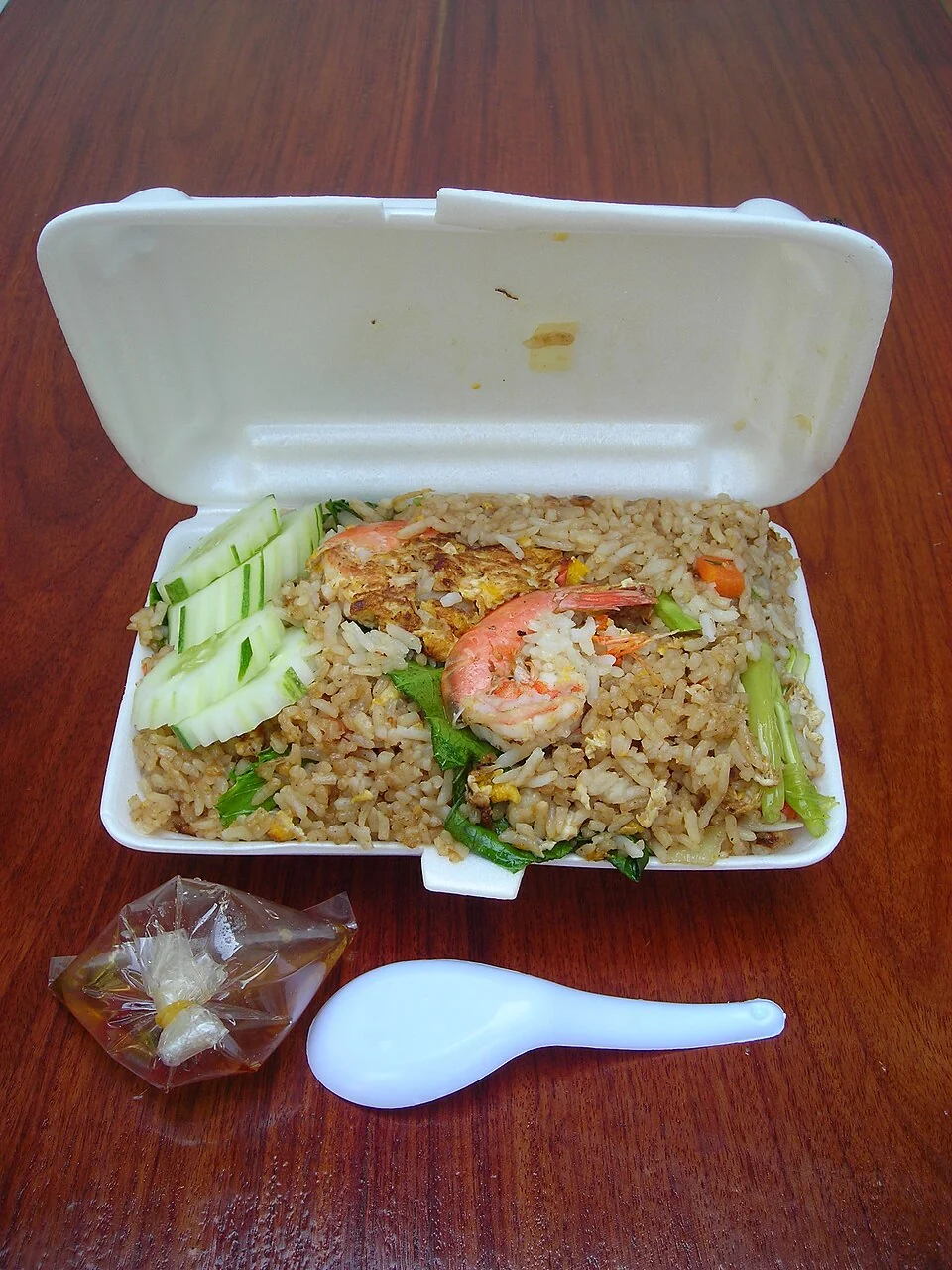
Khao pad, ข้าวผัด, means fried rice; gai, ไก่, specifies chicken. Menus may offer other proteins, and vegetables vary between cooks. There is no need to treat one photograph’s peas, onion or greens as a compulsory formula. THAM’s chicken version combines rice, chicken, egg, onion and soy sauce, while the home recipe below follows its own simple ingredient list.
Begin by deciding what you want to cook rather than adding every leftover in the fridge. A few ingredients cut to manageable sizes are easier to cook evenly. The aim is a plate that tastes coherent, with enough room for the rice itself to remain noticeable.
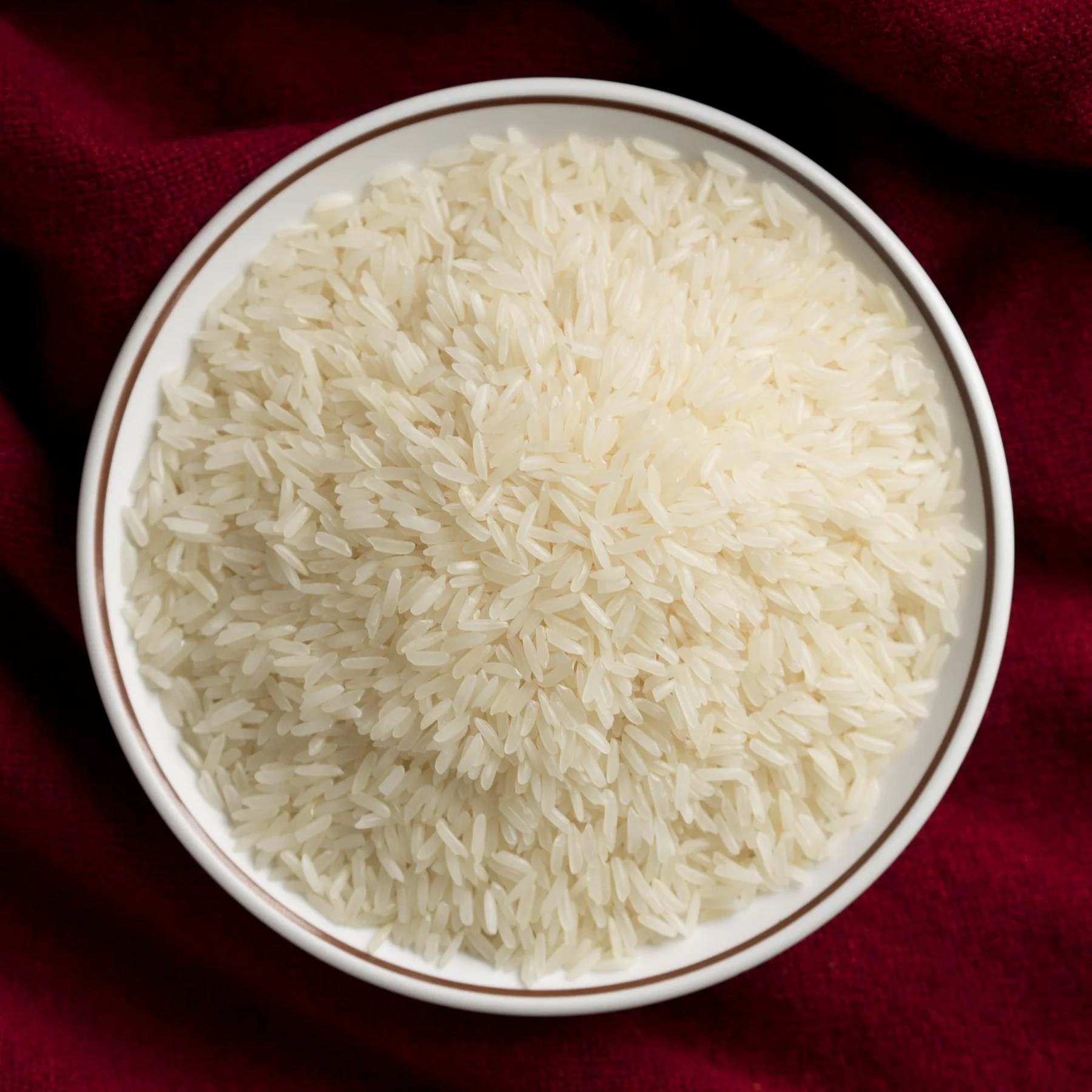
Rice preparation starts before frying
Cooked rice that separates easily is useful for stir-frying. Chilled rice can be convenient, but “day-old” is not a magic ingredient or permission to leave a pot on the counter overnight. The Food Standards Agency advises cooling cooked rice quickly, ideally within one hour, refrigerating it and using it within twenty-four hours. Divide it into small portions to help it cool.
Reheat rice only once, until steaming throughout. If you do not know how a leftover batch was stored, do not use frying as a rescue method. Reheating cannot reliably undo the consequences of poor storage. Plan your rice deliberately, just as you plan the chicken and seasonings.
A home pan needs breathing room
Have everything chopped and the sauce measured before cooking. Break up clumps of cold rice with a utensil so you do not have to crush them while the egg and garlic are already in the pan. Cook the chicken first, check it is done and move it to a clean plate. That frees space for the remaining ingredients.
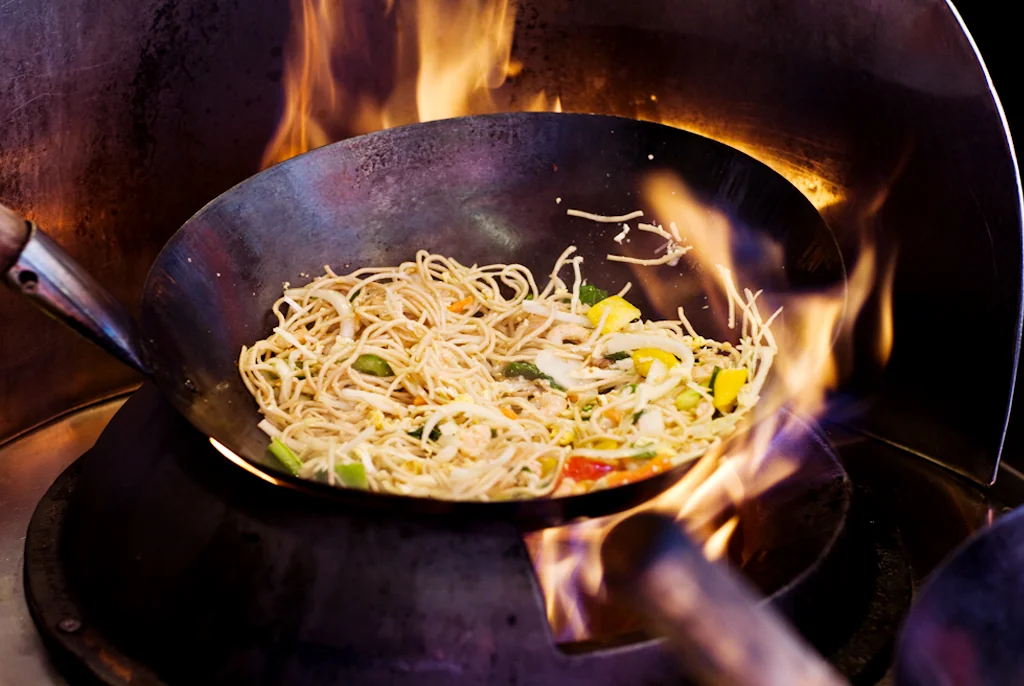
If your pan becomes crowded, make two batches. A wide frying pan can be useful; you do not need to copy a street cook’s dramatic wok flame. The photograph of noodles being tossed in a wok illustrates that cooking environment, not this chicken-rice recipe.
Prepare first. Give the pan some space.
Season enough, then taste
Soy sauce and fish sauce both contribute salt, so measure them rather than pouring freely. The amounts below provide a starting point for this batch. Brands and personal preferences vary. Taste once everything is cooked, then decide whether the dish needs another small adjustment instead of adding more seasoning automatically.
Cucumber and lime offer a fresh contrast on the side. Try a squeeze of lime over a small section first. You can compare that bite with the rest of the plate and decide what you prefer. This turns a table condiment into a useful choice rather than a habit.
Serve while the details are distinct
Finish the cooking, bring the plate to the table and enjoy it promptly. Look for rice, egg and chicken working together without losing their individual textures. The following original home adaptation serves two and is separate from THAM’s restaurant recipe. Use a thermometer for the chicken, handle the rice carefully and keep the first attempt simple enough to repeat with confidence.
MAKE IT AT HOME
Your next chicken Khao Pad.
An original home-kitchen adaptation, not THAM’s restaurant recipe.
Gather
- 400 g safely chilled cooked jasmine rice; 200 g boneless chicken, diced
- 2 eggs; ½ small onion and 2 garlic cloves, chopped
- 2 tbsp neutral oil; 2 spring onions, sliced
- 1 tbsp light soy sauce; 1 tsp fish sauce; ½ tsp sugar; white pepper to taste
- Cucumber slices and lime wedges, to serve
Cook
- Break up the cold rice with a utensil. Mix soy sauce, fish sauce and sugar in a small bowl. Keep the chopped ingredients ready beside the stove.
- Heat half the oil in a large pan. Cook the chicken thoroughly, checking 74°C / 165°F at its centre with a thermometer. Move it to a clean plate.
- Add the remaining oil, onion and garlic. Stir until the onion softens, then add the eggs and scramble until set.
- Add rice and the mixed seasonings. Stir-fry, separating the grains, until steaming hot throughout. Return the chicken and its cooked juices, then continue until everything is hot; reheated leftovers should reach 74°C / 165°F.
- Fold through spring onion and white pepper. Serve immediately with cucumber and lime. If your pan is crowded, make two batches rather than compressing the ingredients.
An original home adaptation, not kitchen-tested. Use rice cooled quickly, refrigerated and kept no longer than 24 hours. Frying counts as its reheat: reheat only once. Keep raw chicken and its utensils separate from cooked food.
KEEP YOUR CURIOSITY HUNGRY
Cook your own version at home, or take a seat for Chicken Khao Pad at THAM.
Explore the THAM menuRead further
Photography & credits
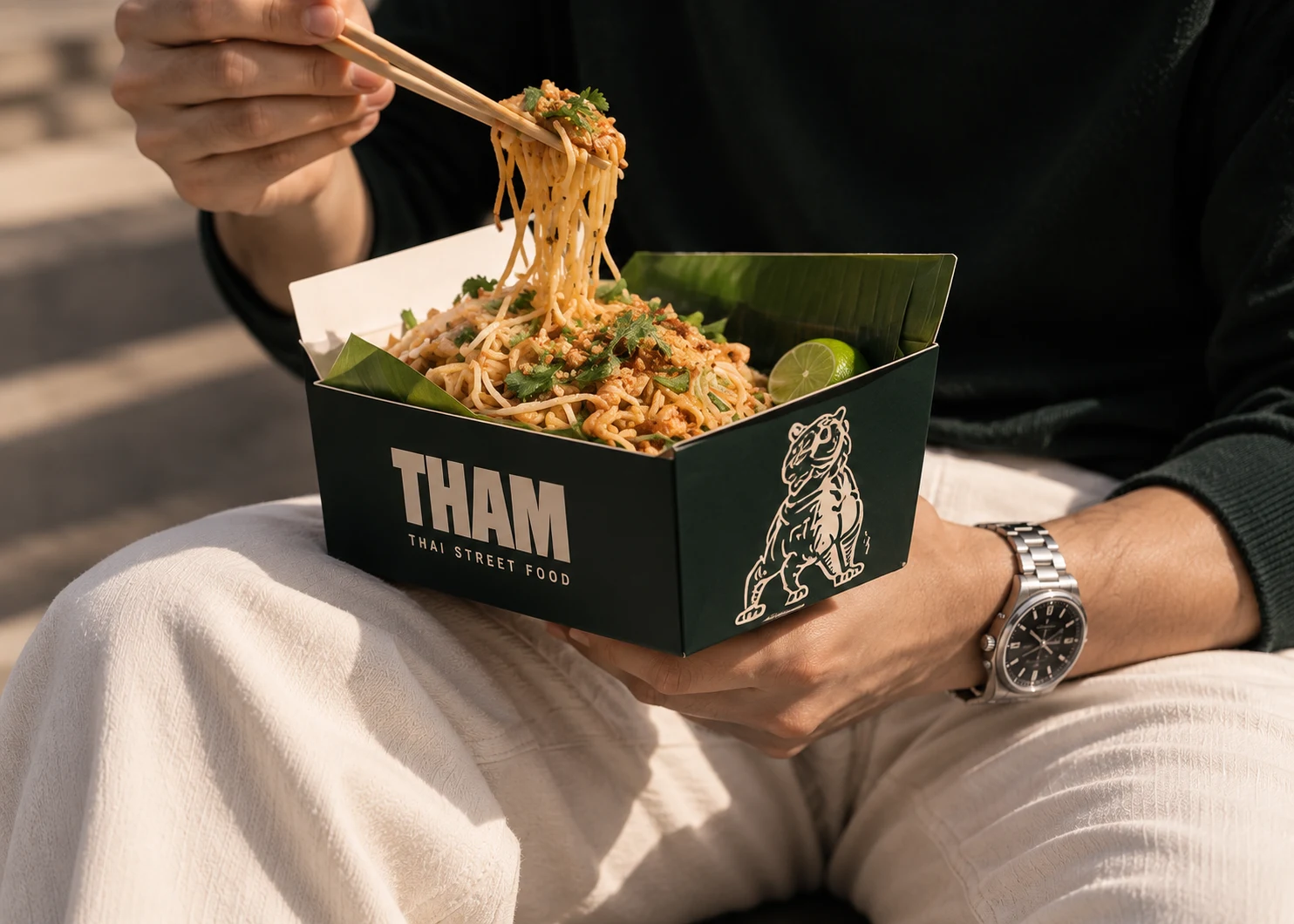
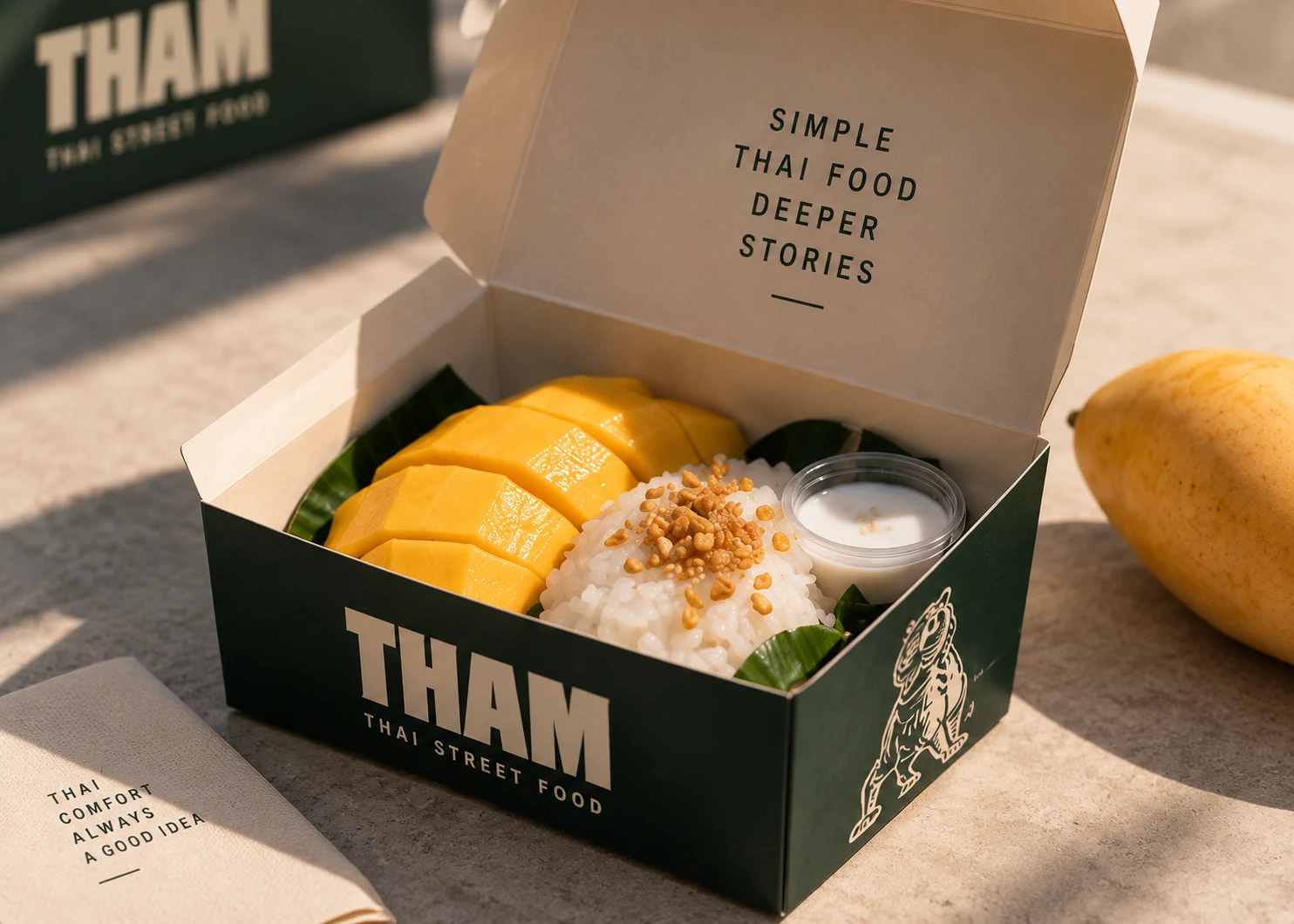
Editorial photographs illustrate Thai food and culture. THAM lifestyle images are creative brand imagery, including AI-generated scenes; they do not document the restaurant, its location or exact servings.
- Thai fried rice (13982558765).jpg — pelican from Tokyo, Japan. CC BY-SA 2.0. Resized and compressed for the web.
- 2014 uncooked Thai jasmine rice.jpg — Takeaway. CC BY-SA 4.0. Resized and compressed for the web.
- Wok cooking.jpg — Wok to Walk International, S.L.. CC BY-SA 4.0. Resized and compressed for the web.
- Khao Phat Kung.jpg — User:Mattes. Public domain. Resized and compressed for the web.