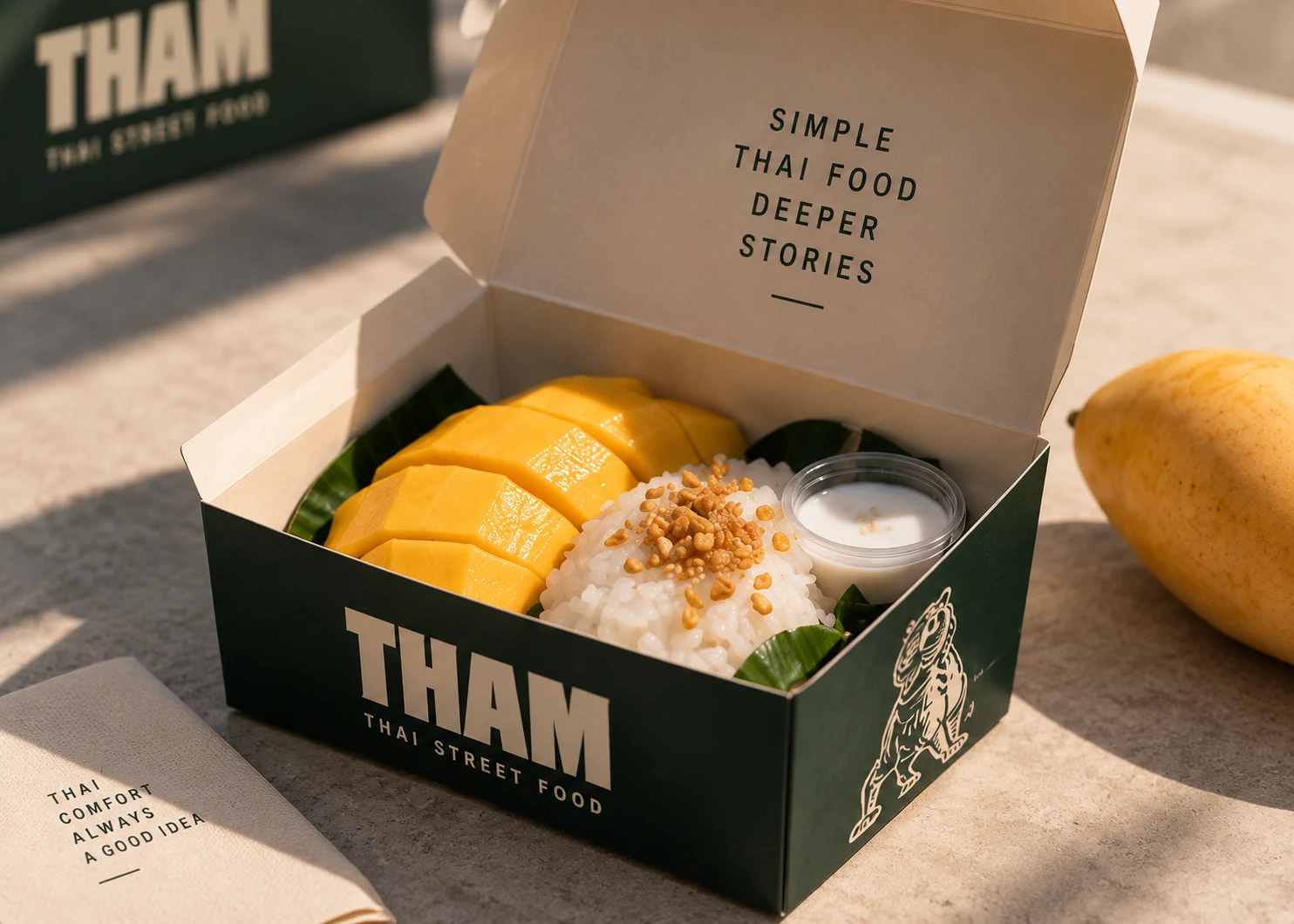
Mango sticky rice looks almost too simple to explain: golden fruit, pale rice and coconut sauce. Its appeal lives in the details between those three elements. The mango needs to be ripe, the rice tender but distinct, and the coconut topping lightly salty as well as rich. Get those relationships right and there is very little need to decorate the plate. The ingredients already have plenty to say.
Start with the right rice
Thai glutinous rice, also called sticky rice, is the ingredient to look for. Ordinary jasmine rice will not become the same thing because you add coconut milk. Check the package before beginning, especially if the shop carries several white rice varieties. The word “glutinous” describes the sticky character; it is not, by itself, an allergen guarantee for a complete prepared dessert.
In this home adaptation, the rice is soaked and steamed, then seasoned while hot. Give the soaking time a place in your plan. This is a relaxed dessert when you begin early and a frustrating one if you discover the rice needs preparation just as your guests arrive.
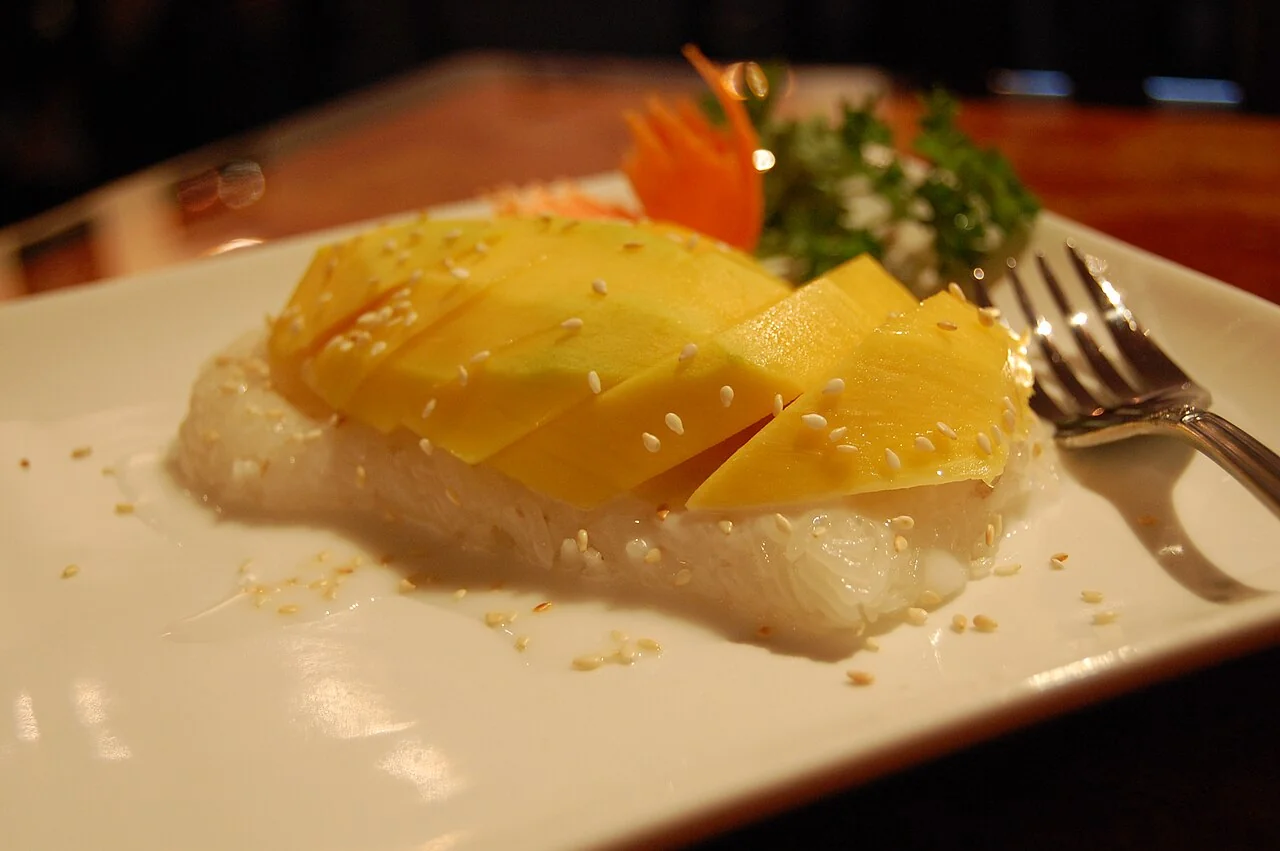
Let the mango be mango
A ripe, sweet mango gives the dessert a different experience from the sour or unripe mango used in other dishes and snacks. Nam dok mai is one sweet variety associated with Thailand. Varieties, growing regions and availability differ; mango sticky rice is a hot-season favourite, but there is no single calendar that explains every fruit you encounter.
Choose fruit for flavour and ripeness rather than a perfect arrangement on the plate. Slice it close to serving and taste a piece before deciding how much sauce to add. The fruit should still be recognisable in the finished bite, with coconut supporting its sweetness rather than hiding it.
Why a little salt belongs in dessert
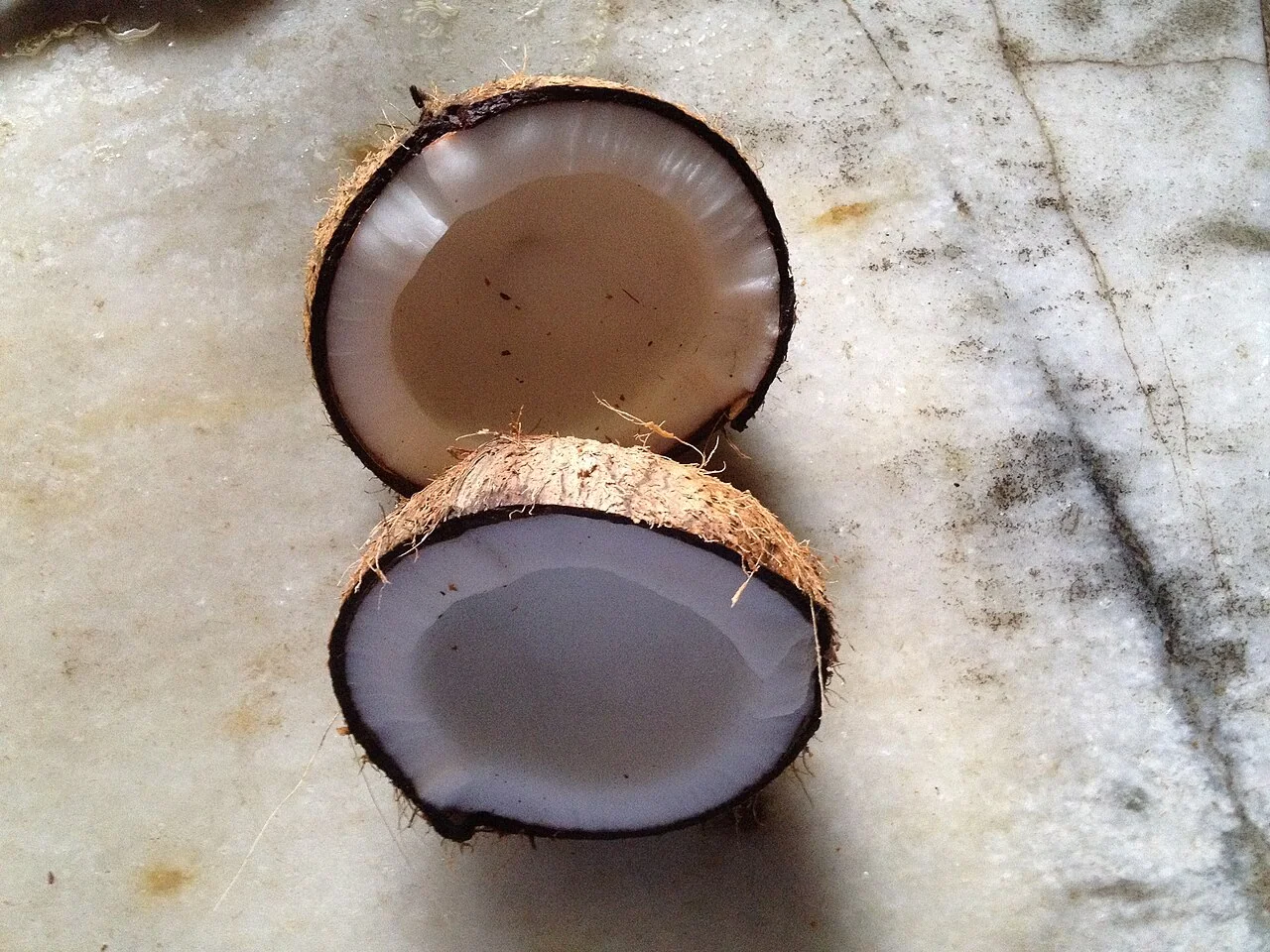
The coconut element can play two roles: seasoning absorbed by the warm rice and a sauce spooned over the finished plate. A little salt makes the sweet elements more distinct. Taste the topping and imagine it alongside fruit and rice before deciding it needs more sugar. On its own, it may seem deliberately less sweet than you expected.
The simplest tasting experiment is also the most useful. Try mango alone, then rice alone, then a spoonful containing both with sauce. You will notice how a few ingredients create a much fuller mouthful together. Optional toasted mung beans can add a little crunch, but the dessert does not need a complicated garnish to feel complete.
Three elements. A whole lot of happiness.
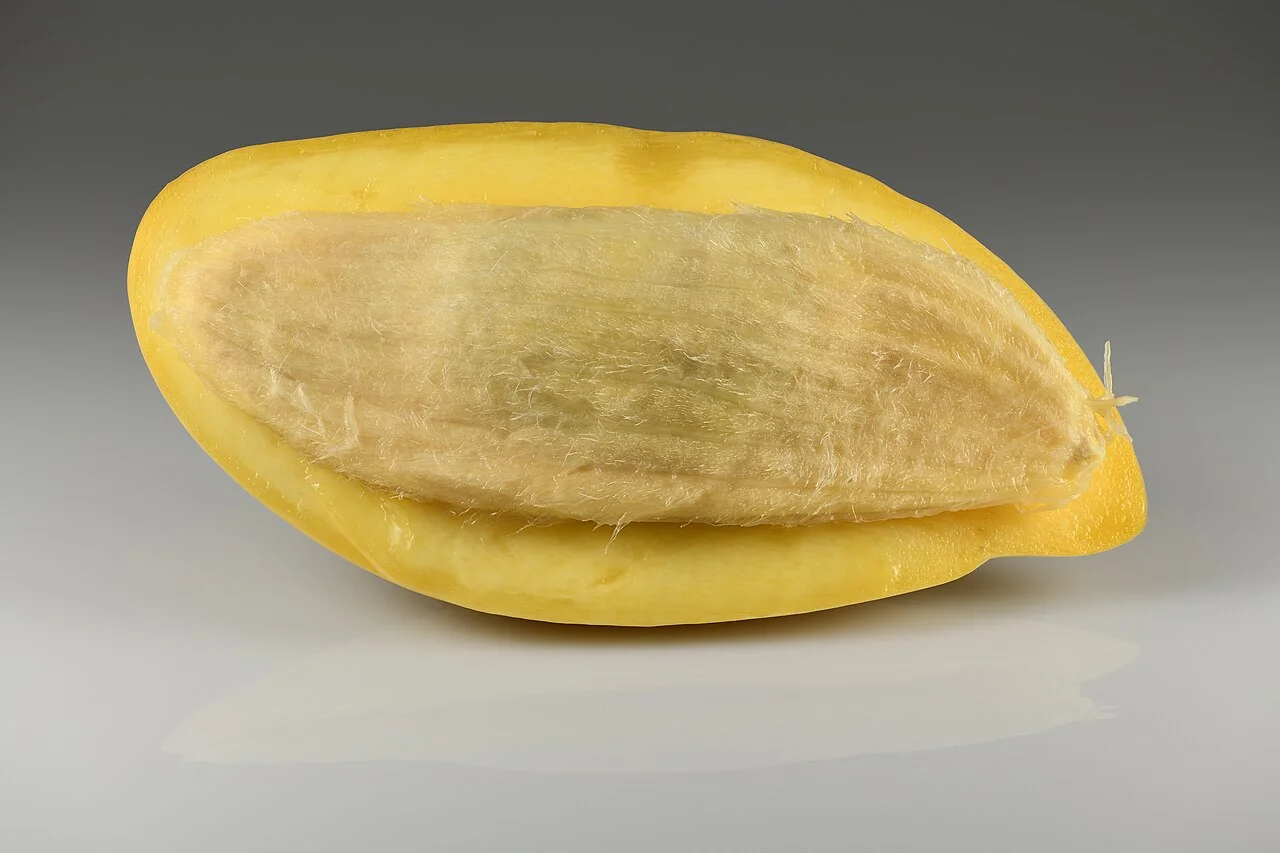
A dessert with a landscape behind it
TAT’s account of mango sticky rice in Amphawa connects the dish with communities growing mangoes and coconuts. That is a reminder to look beyond the finished plate towards the ingredients and the people preparing them. It does not mean every serving uses fruit from the same place, or that a restaurant’s sourcing can be inferred from the dish’s name.
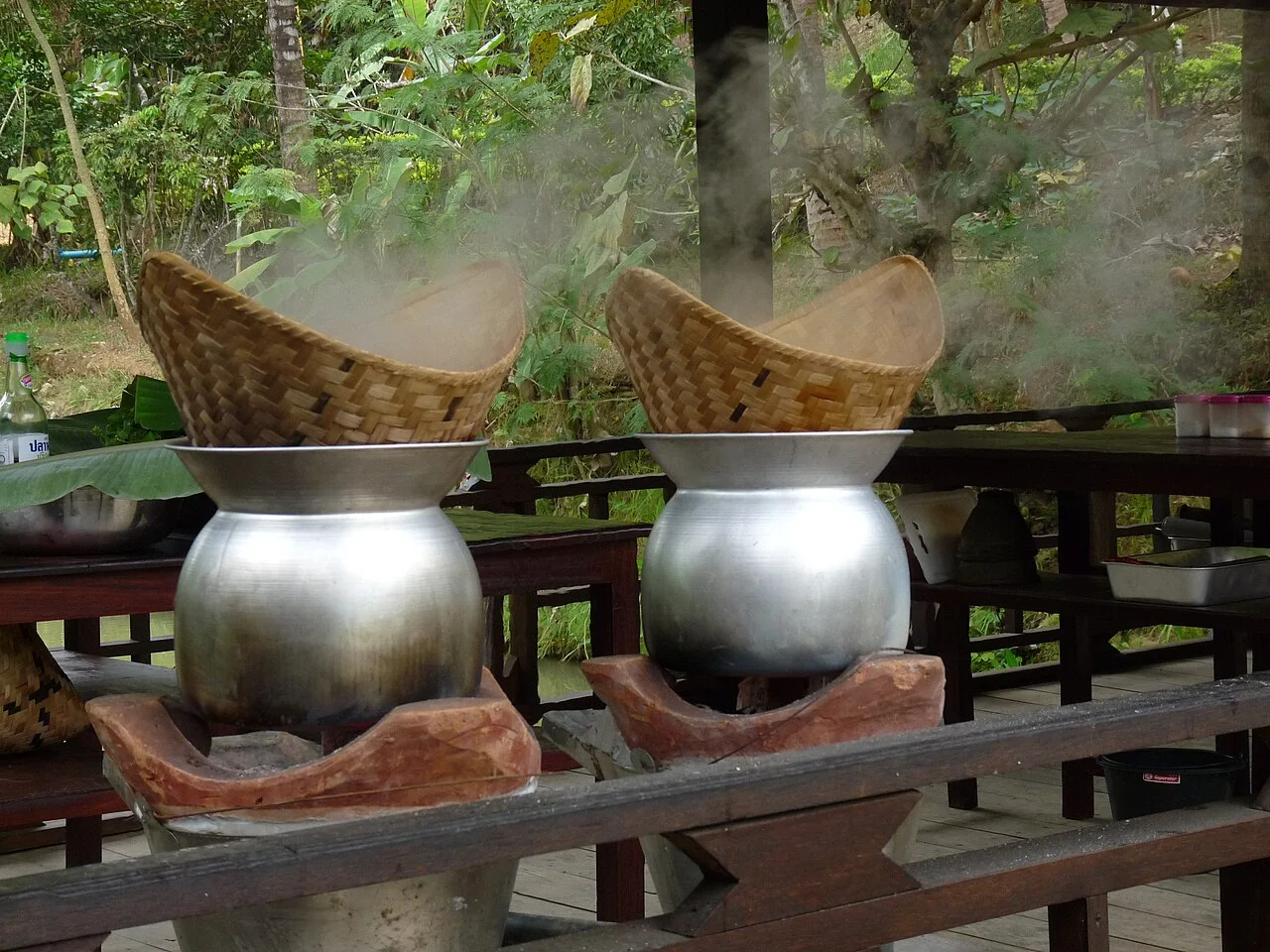
The photographs here include sticky-rice steaming baskets in Luang Prabang, Laos, showing a technique shared across borders. Their location is identified deliberately: a beautiful food photograph should help explain a subject without pretending to document a different place.
Make a little, enjoy it fresh
Four modest portions make a useful first attempt. Steam until the rice is tender, allow time for the coconut seasoning to absorb and serve without an elaborate delay. The recipe below is an original home adaptation, not THAM’s kitchen formula. Equipment and rice vary, so judge tenderness as well as the clock. Handle leftovers as carefully as any other cooked rice.
MAKE IT AT HOME
Golden mango, coconut rice.
An original home-kitchen adaptation, not THAM’s restaurant recipe.
Gather
- 200 g Thai glutinous rice
- 300 ml full-fat coconut milk; 60 g sugar
- ½ tsp fine salt, divided; 1 tsp rice flour mixed with 1 tbsp water
- 2 ripe mangoes; toasted split mung beans, optional
Cook
- Rinse the rice, cover generously with water and soak for at least four hours. Drain. Put it in a clean cloth-lined steamer over simmering water, without submerging the rice.
- Steam for approximately 20–30 minutes, checking the water beneath the steamer. Taste a grain: it should be tender throughout with no hard centre. Time varies with the rice and steamer.
- Warm 160 ml coconut milk with the sugar and ¼ tsp salt. Fold gently into the hot cooked rice. Cover and allow about twenty minutes for the liquid to absorb.
- For the topping, warm the remaining coconut milk and salt. Stir in the rice-flour slurry and heat, stirring, until lightly thickened. Slice the mango just before serving.
- Plate small portions of rice beside the mango. Spoon over a little coconut topping, adding toasted mung beans if you wish. Serve promptly.
This home adaptation has not been kitchen-tested. For leftovers, cool rice rapidly, ideally within one hour, refrigerate and use within 24 hours. Reheat only once until steaming throughout. Do not leave rice out while waiting for later servings.
KEEP YOUR CURIOSITY HUNGRY
A home project for another day. For today, Mango Sticky Rice is waiting on the dessert menu.
Explore the THAM menuRead further
Photography & credits
Editorial photographs illustrate Thai food and culture. THAM lifestyle images are creative brand imagery, including AI-generated scenes; they do not document the restaurant, its location or exact servings.
- Mango sticky rice, the THAM lifestyle collection — THAM — supplied creative brand imagery.
- Khaoniao mamuang - 2008-06-22 -001.jpg — stu_spivack. CC BY-SA 2.0. Resized and compressed for the web.
- Mango fruit Nam Dok Mai - cross section.jpg — Ivar Leidus. CC BY-SA 4.0. Resized and compressed for the web.
- Coconut halves.JPG — Clockery. CC BY 3.0. Resized and compressed for the web.
- Steaming rice.jpg — Feral Arts. CC BY 2.0. Resized and compressed for the web.