Say it: ka-nom too-ay Approximate English sounds
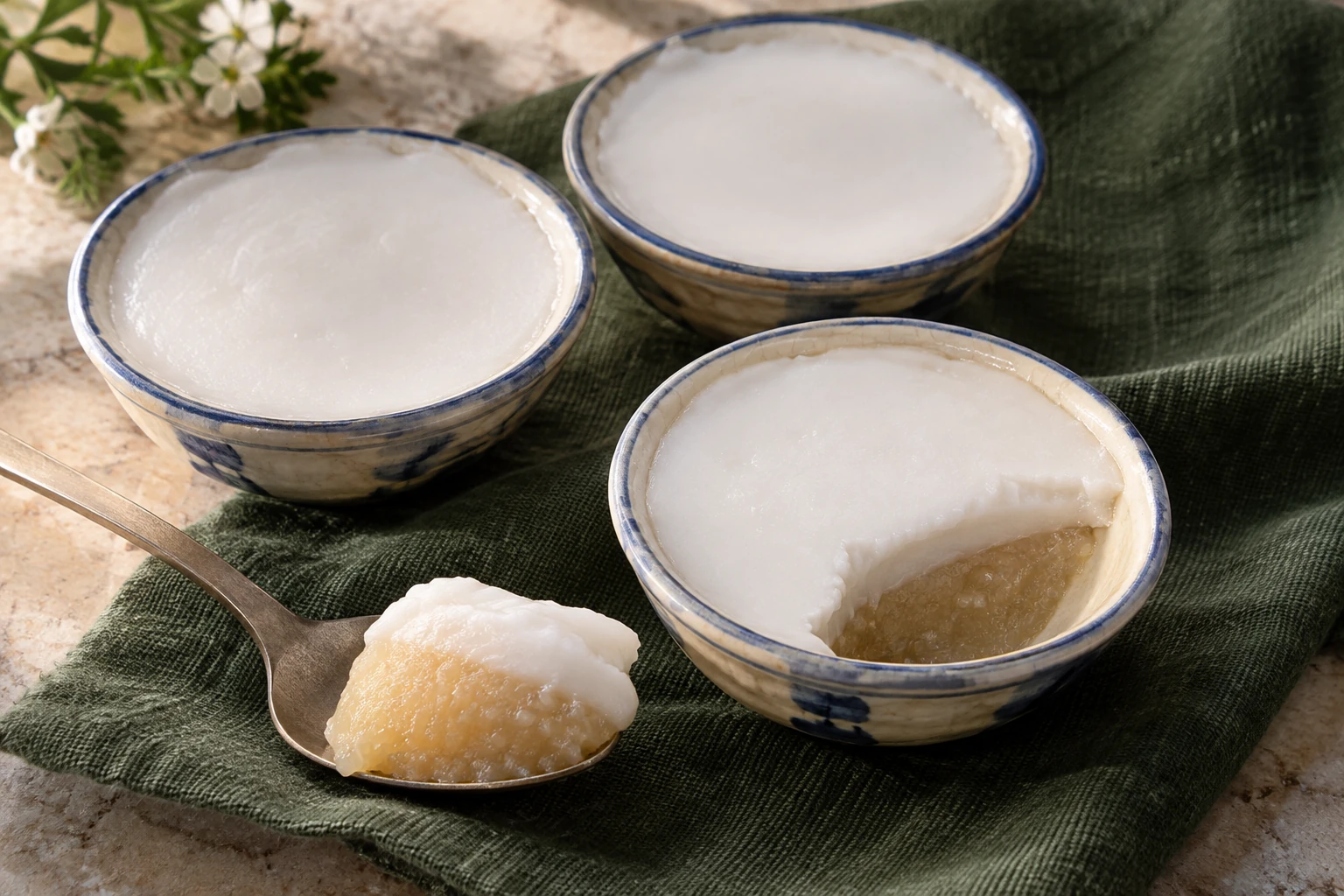
Khanom Tuay is a small dessert with a particularly clear idea: sweetness below, gently salted coconut above. Served in little cups, it asks you to take both layers in the same spoonful. The Thai name ขนมถ้วย points directly to that presentation, with tuay meaning cup. It can look modest beside a colourful mango dessert, yet its soft texture and balanced finish explain why it deserves its own place on the table. THAM serves three small cups for 60 THB. Here is a closer look at the ingredients, steaming technique, variations and everyday food culture behind them.
What exactly is Khanom Tuay?
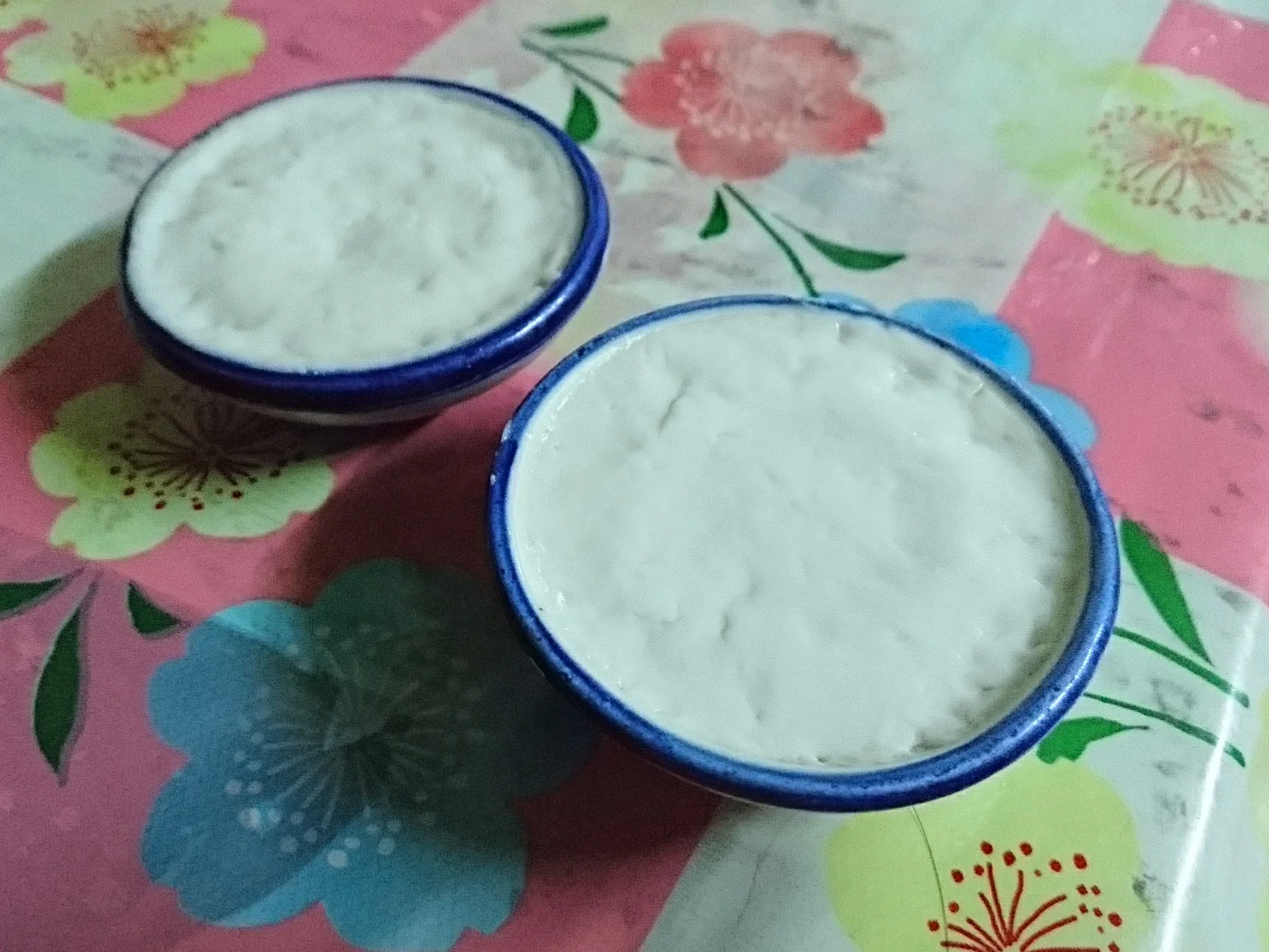
Khanom Tuay is a steamed, layered Thai coconut dessert. Its lower layer is sweet and softly set; the pale coconut topping provides a more savoury counterpoint. English descriptions often use pudding or custard to help newcomers imagine the texture. Those comparisons are useful, but they do not necessarily imply the eggs or dairy found in some European custards.
The High Heel Gourmet's Thai coconut rice custard recipe explains the two parts separately and notes several spellings of the name. Kanom tuay, khanom thuai and similar transliterations can refer to the same dessert. The useful clues are the small cup and the layered coconut preparation. When reading a menu, look at the description as well as the spelling. A familiar-looking word alone is not always enough to identify a Thai sweet, especially when another syllable has been added to its name.
Its history lives in everyday food culture
Not every traditional dessert has a documented inventor or a reliable creation date. The sources used here establish Khanom Tuay as a continuing Thai preparation, but do not justify assigning it a specific royal origin or declaring one province its birthplace. Its everyday presence is a more useful starting point than an attractive but unsupported legend.
Praew's Hungry in Thailand account places the dessert in the context of noodle shops, where small coconut cups make a sweet counterpart to a savoury meal. Individual cooks also preserve and adapt it through published recipes: Im Aiw Wattanakorn's palm-sugar version and the High Heel Gourmet's detailed method use different flour combinations while retaining the layered idea. That continuity is part of food history too. Recipes handed around, practised and adjusted can tell us how a dish remains recognisable, even when they cannot tell us exactly where the first cup was steamed.
The lower layer: sweetness with structure
Rice flour supplies an important part of the base's structure. Published recipes may combine it with tapioca, arrowroot or mung bean starch, depending on the texture the cook wants. These are not interchangeable instructions to add every flour available. They are examples of different formulations, each with its own proportions and method.
Im Aiw Wattanakorn's recipe combines rice flour and tapioca flour with thinner coconut milk and palm sugar. The High Heel Gourmet uses another starch combination. Comparing those two preparations helps explain why one cup may feel more yielding while another has a slightly firmer bite. For a home attempt, choose one complete recipe and keep its flour combination intact. Buying several starches without knowing their role can make a seemingly simple dessert unnecessarily confusing. Label the bowls before adding liquid so the sweet base does not get mixed up with the topping.
The dessert reveals itself when the sweet base and coconut top share one spoon.
The upper layer: coconut with a savoury edge
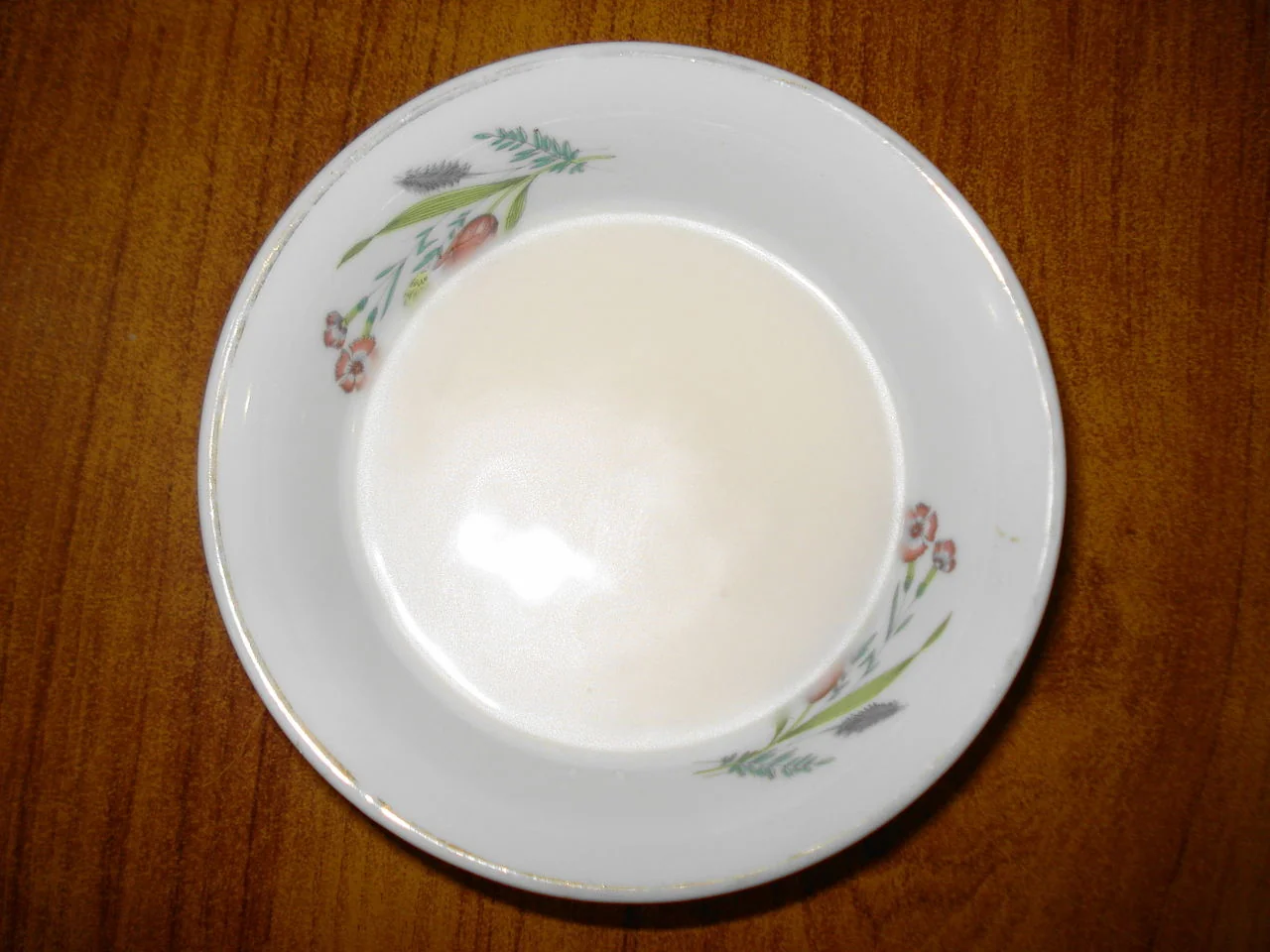
The topping is usually paler and richer in coconut character. Rice flour helps it set, while salt creates contrast with the sweetness underneath. In the High Heel Gourmet's method, coconut cream, salt and rice flour form this separate layer. The point is not to make a salty dessert all the way through; it is to let two flavours meet in the spoon.
Think of the topping as part of the architecture, not an optional sauce. A drizzle can run across a plate, whereas this layer should remain connected to the base. For tasting, first take a very small amount of the top alone, then a spoonful reaching the bottom. The change in balance is the dessert's central pleasure. At home, measure carefully and use the specific coconut product called for. A thin drinking beverage is not an automatic substitute for a rich cooking ingredient.
Palm sugar, pandan and differences between recipes
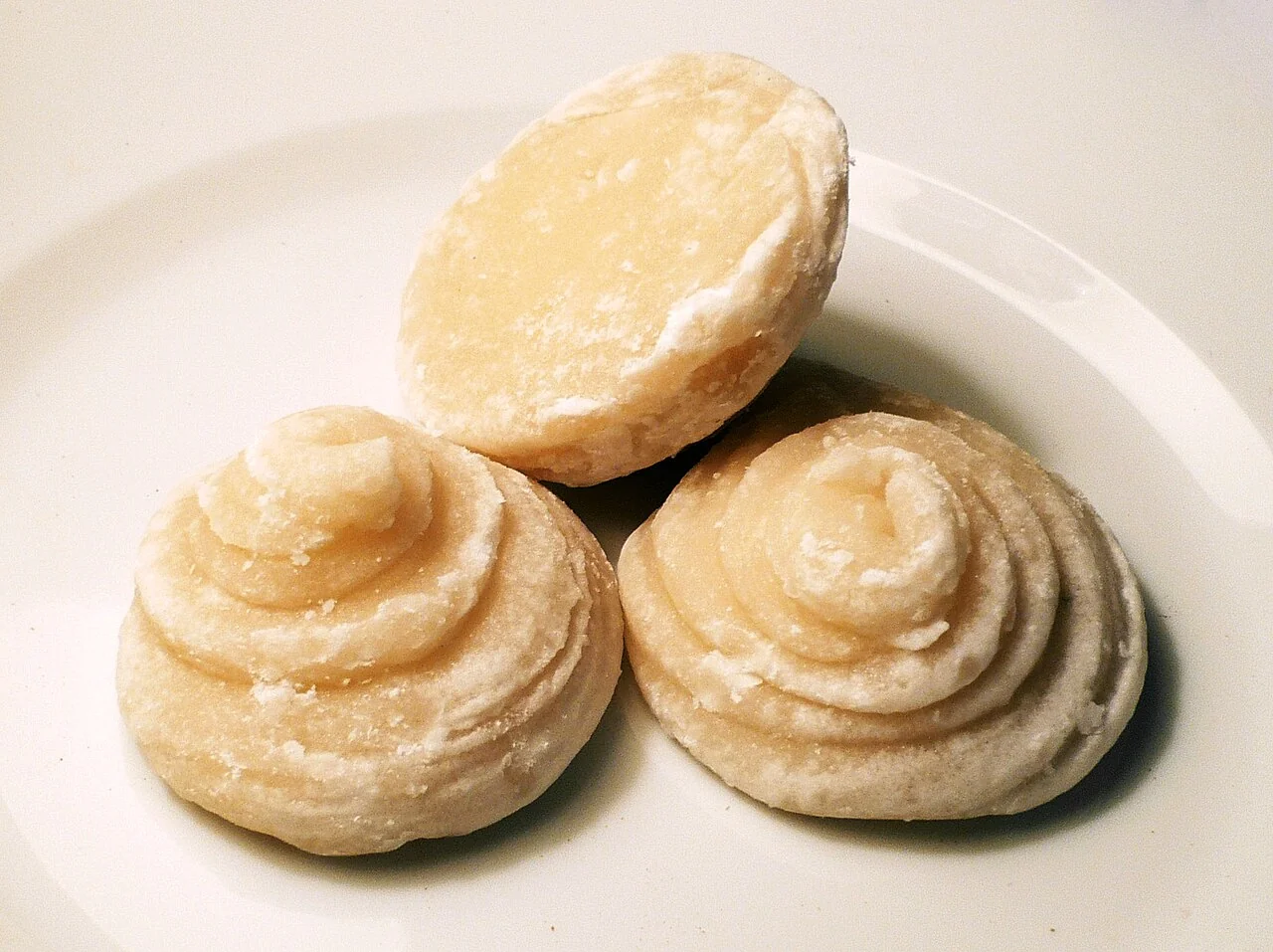
Palm sugar can give the lower layer a warm, rounded character and a beige or brownish tone. Pandan appears in some recipes, contributing its own aroma and sometimes colour. Neither a green base nor a darker base should be treated as proof that all versions must look that way. Preparation choices can remain visible in the finished cup.
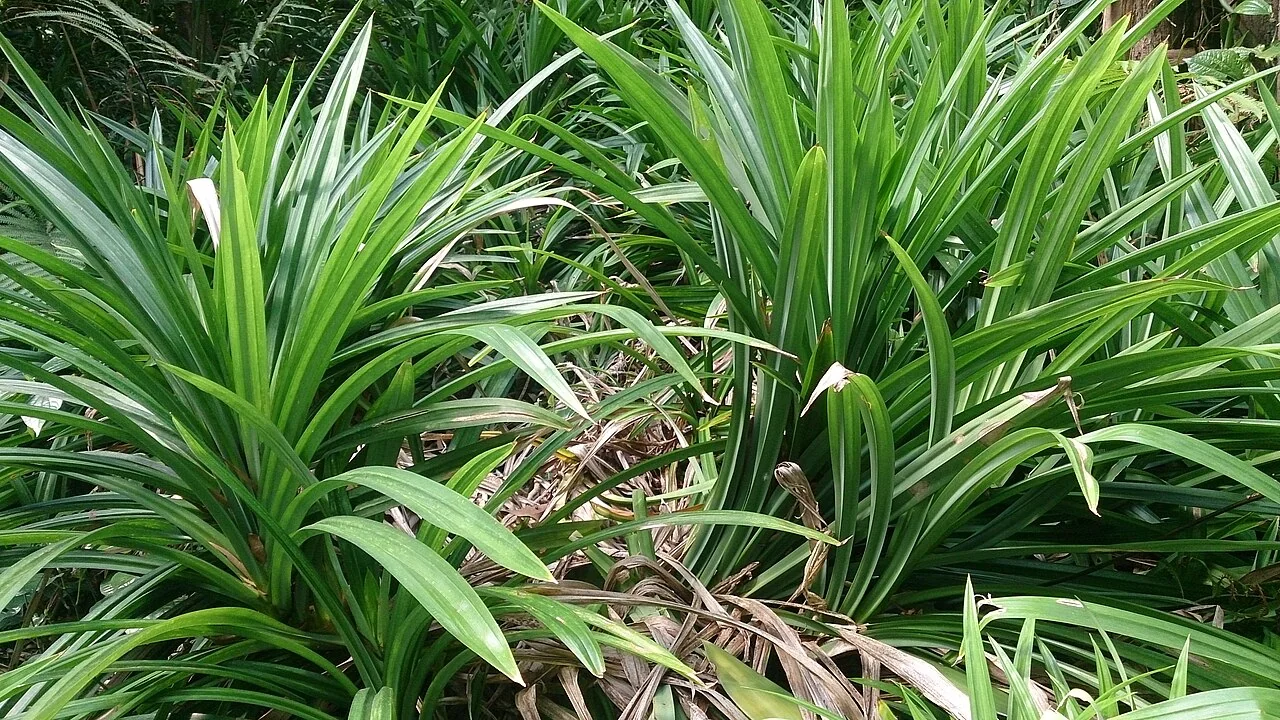
The High Heel Gourmet includes pandan in its batter, while other published versions put the emphasis on palm sugar. For visitors, these differences make tasting more interesting: ask what gives a particular cup its fragrance rather than assuming it contains vanilla. For home cooks, compare ingredient lists before buying an extract or changing sugars. A strong flavouring can become the main thing you taste. THAM describes its dessert through the sweet base and gently salty coconut top; this guide does not add unconfirmed flavourings to that description.
How the two layers are steamed
The general method uses two batters and two cooking stages. Small heatproof cups are warmed in a steamer, the sweet mixture goes in first, and the coconut topping is added after the lower portion has had time to set. Im Aiw Wattanakorn's instructions also call for stirring the mixtures before filling, so the ingredients are distributed evenly.
The sequence deserves more attention than the apparent simplicity of the ingredient list. Prepare both mixtures before beginning, arrange the cups securely and leave room to lift them safely. Use a tested recipe for quantities and timings: a deep ramekin and a shallow traditional cup will not behave identically. These are general principles of Khanom Tuay preparation, not THAM's proprietary method. For a first batch, making a manageable number of cups is more useful than filling every shelf of a large steamer and losing track of the stages.
Texture: softly set rather than rubbery
A good way to judge the dessert is to ask how it behaves under a spoon. The layers should offer enough structure to be taken together while still feeling tender. It is a different pleasure from an airy cake, a brittle biscuit or an elastic jelly. That distinction is easy to miss when every unfamiliar sweet is translated simply as pudding.
Cooking affects the topping's appearance. The High Heel Gourmet warns that over-steaming its particular formula can cause the coconut layer to separate and crack. Treat that as a reason to follow the chosen method, not as a rule that every small surface mark means a dessert is poor. In a home kitchen, note cup size, batch size and timing together. If you adjust only one variable next time, you have a much better chance of understanding why the texture changed.
Similar names and neighbouring desserts
Khanom Tuay Foo is a different sweet. The Thailand Foundation's guide to auspicious desserts describes it as a rice-flour muffin, with the expanded, flowering appearance associated with its name. The extra word therefore matters: it does not simply identify a larger version of a coconut pudding cup.
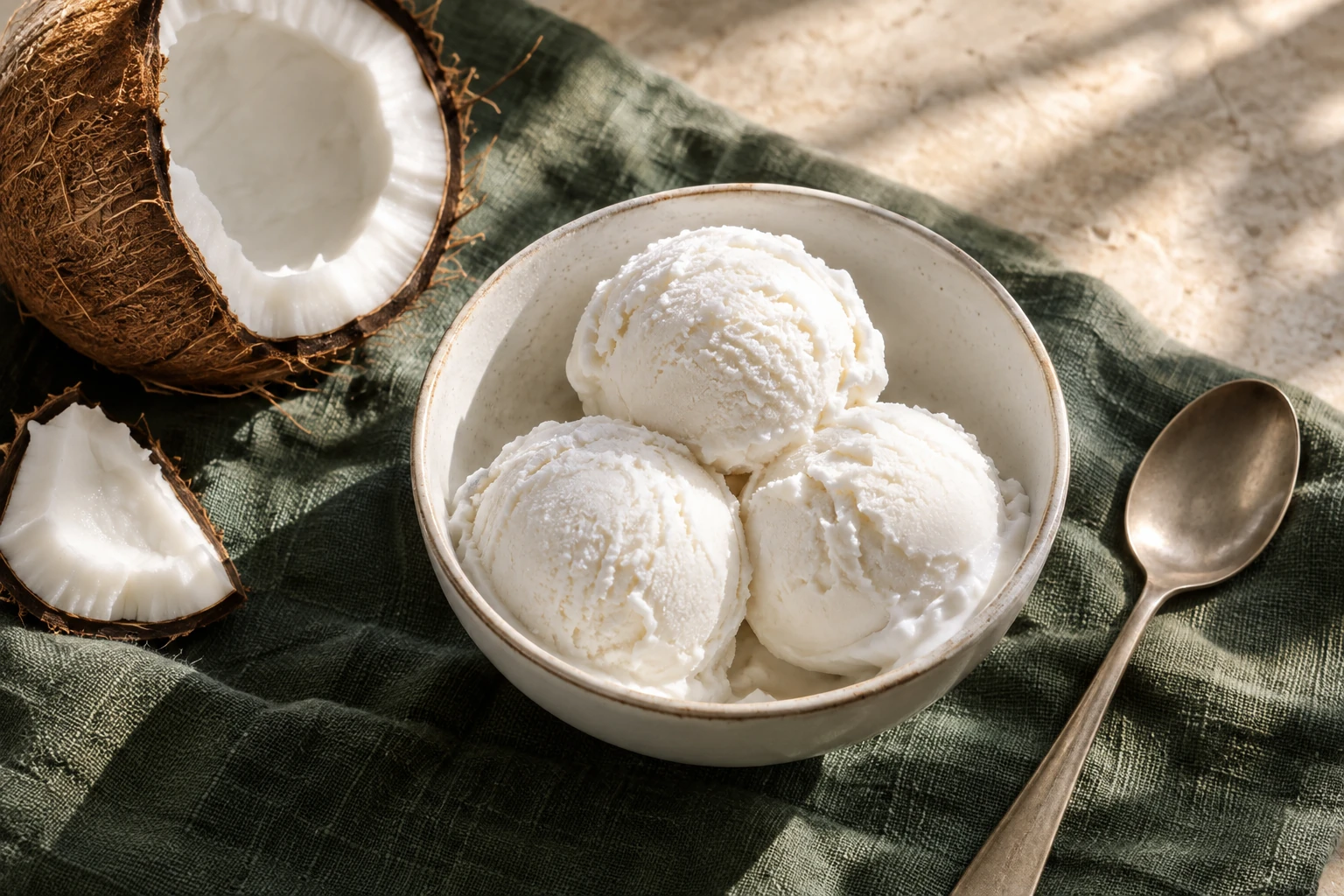
For comparison, Khanom Krok belongs to another coconut-dessert tradition, recognised for its small pan-cooked shape rather than the layered steaming method discussed here. Mango sticky rice and coconut ice cream give two further contrasts available on THAM's dessert menu. Learning these distinctions makes ordering easier without requiring a complete vocabulary lesson. Start with cooking method and texture: steamed layers, rice grains with fruit, or a frozen scoop. Those three questions can tell you more about what will arrive than the broad category of Thai coconut dessert.
Eating the cups at THAM
THAM's Khanom Tuay comes as three small cups at 60 THB. Use your spoon to include both layers in each bite. There are no add-ons listed for this dessert; if you would like more, you can order a second portion. Ask the team about any dietary requirements rather than inferring the full recipe from the word coconut.
Three cups also make a neat invitation to slow down. You can notice the top in one bite, the base in another, then bring them together. If sharing several desserts, compare the cup's gentle saltiness with the fresh fruit in Mango Sticky Rice or the cold finish of Coconut Ice Cream. It is a small tasting exercise with a clear reward: familiar ingredients become distinct dishes through proportion, texture and cooking. Khanom Tuay is an excellent reminder that a dessert does not need size or elaborate decoration to hold your attention.
KEEP YOUR CURIOSITY HUNGRY
Order a trio of cups, then compare their soft layers with THAM’s other coconut desserts.
Explore the THAM menuRead further
Photography & credits
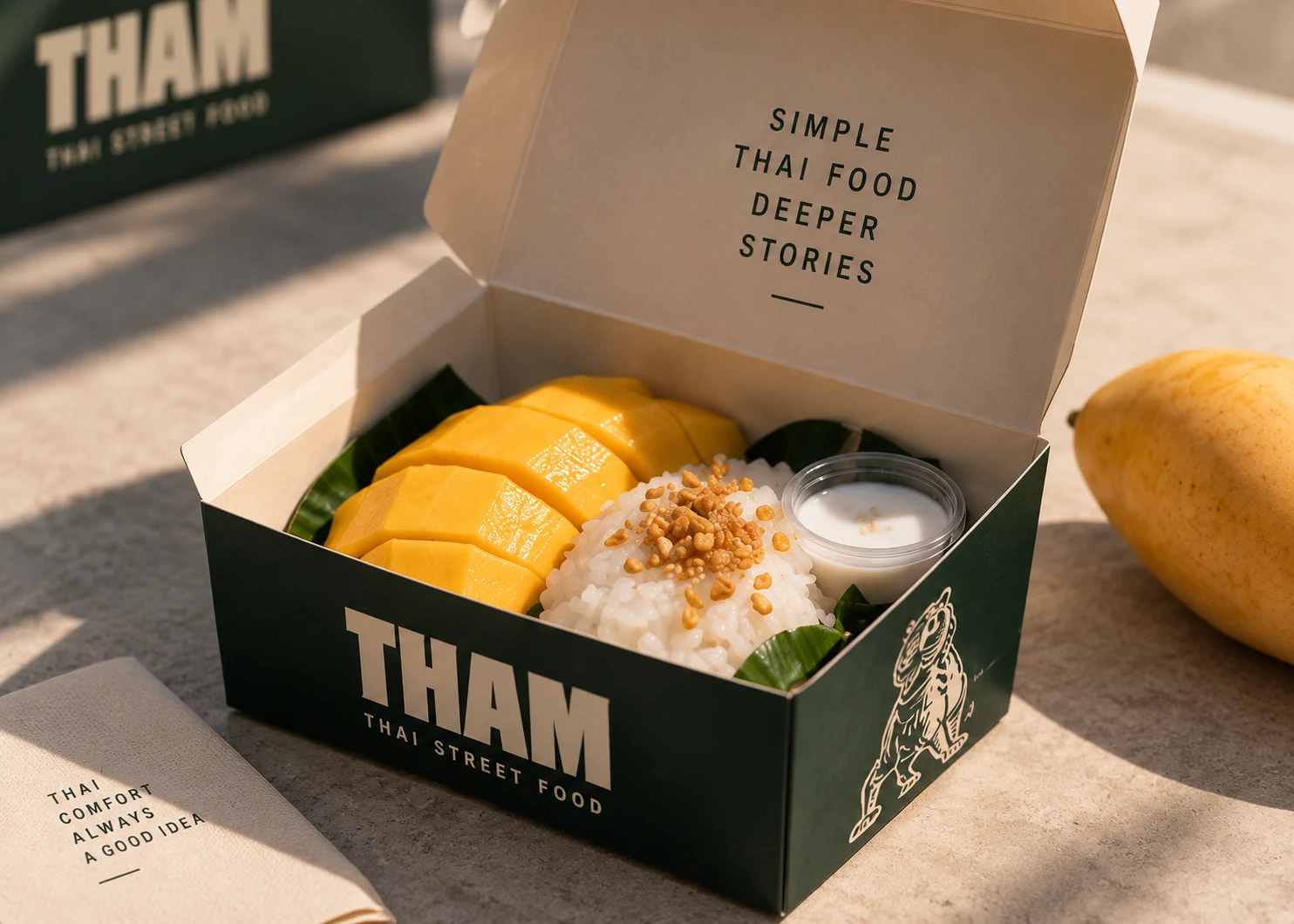
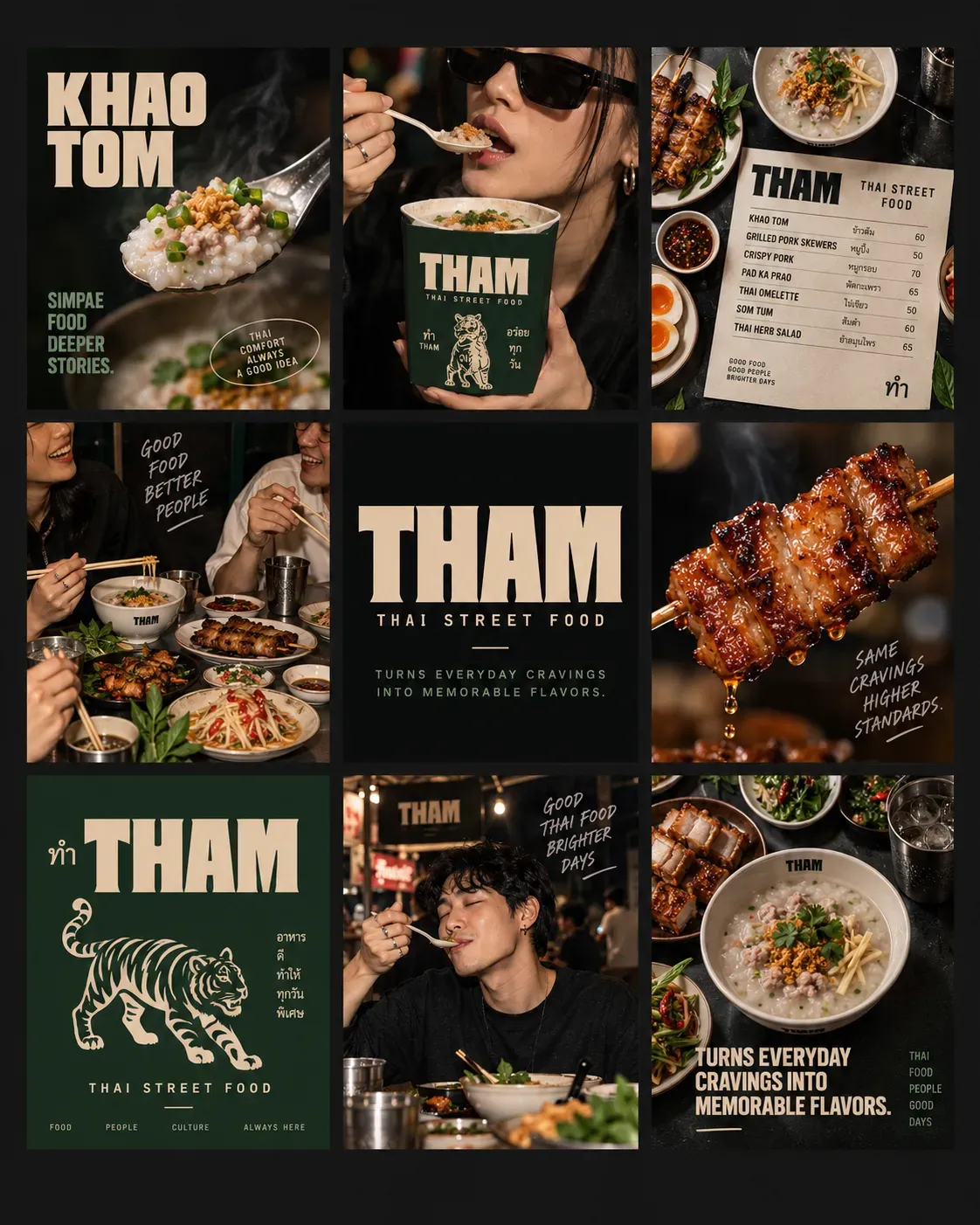
Editorial photographs illustrate Thai food and culture. THAM lifestyle images are creative brand imagery, including AI-generated scenes; they do not document the restaurant, its location or exact servings.
- Khanom Tuay — THAM — AI-generated food illustration.
- Coconut Milk.JPG — Miansari66. CC0. Resized and compressed for the web.
- Palmsugar.jpg — Badagnani. CC BY 3.0. Resized and compressed for the web.
- Pandan Leaf (Pandanus amaryllifolius).jpg — Mokkie. CC BY-SA 3.0. Resized and compressed for the web.
- Khanom thuay.jpg — Paul_012. CC BY-SA 3.0. Resized and compressed for the web.