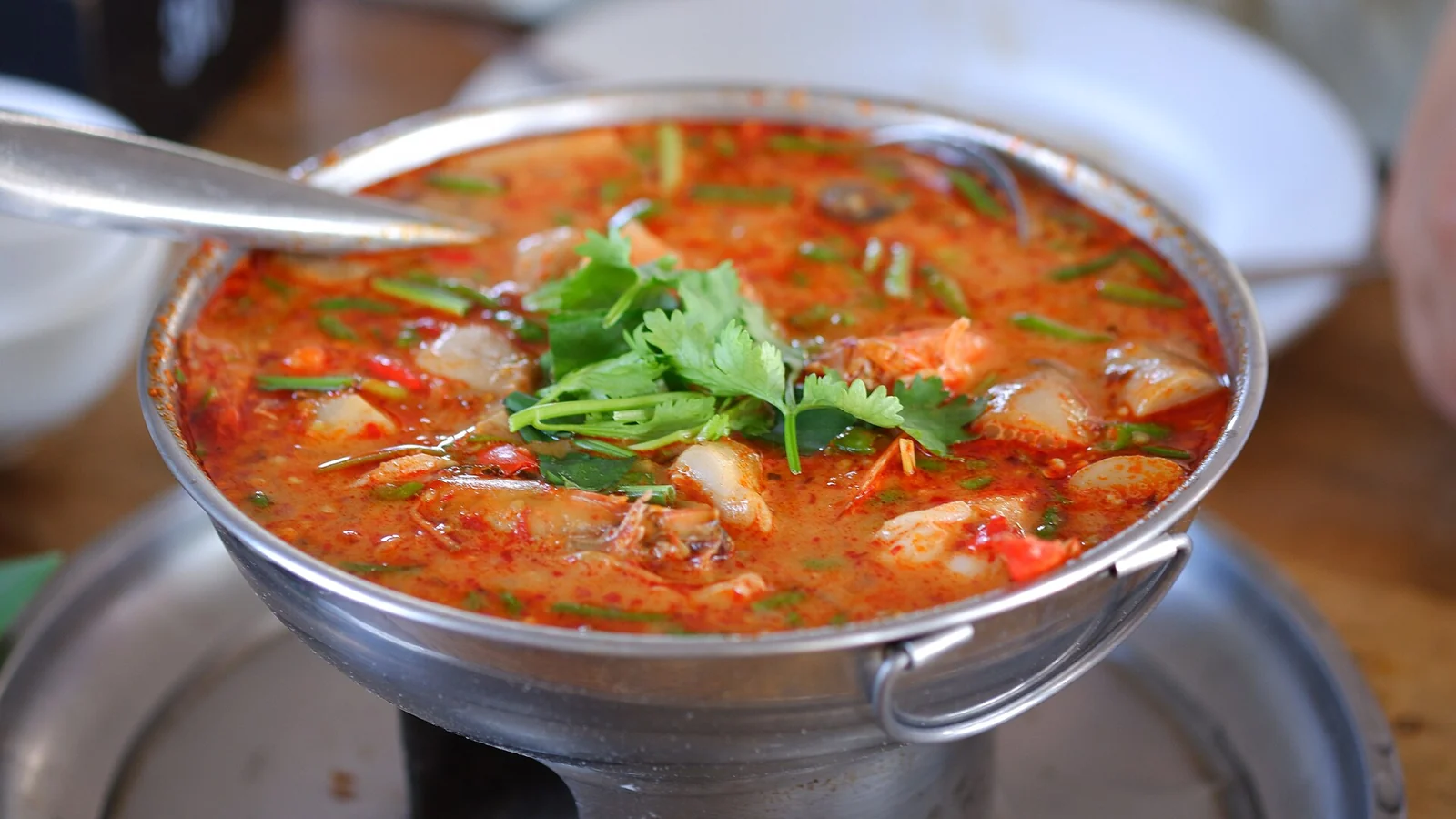
Before the first spoonful of Tom Yum, there is the aroma: citrus-like leaves, lemongrass and the distinctive character of galangal. Then the broth arrives, bright and savoury, with prawns and other ingredients giving it substance. This is a soup whose name has travelled widely, yet a few useful distinctions make it much easier to understand. Clear or creamy? Fragrant or sour? And what exactly did UNESCO recognise?
A name that points towards the bowl
Tom yum describes a family of soups commonly known for hot and sour flavours. Goong, also written kung, means prawns or shrimp. The Thai name ต้มยำกุ้ง gives you the familiar prawn version. English spellings vary, so Tom Yum Goong and Tomyum Kung need not indicate different dishes. Read the ingredients and preparation details alongside the name when choosing a bowl.
At THAM, Tom Yum with prawns combines prawns, lemongrass, galangal, straw mushrooms and lime. It comes without rice, with jasmine rice available as an extra. As with every THAM dish, it is non-spicy by default; ask if you would like chilli. That house policy is separate from the broader tradition of hot-and-sour soup you will find in other kitchens.
The aromatic pieces have a purpose
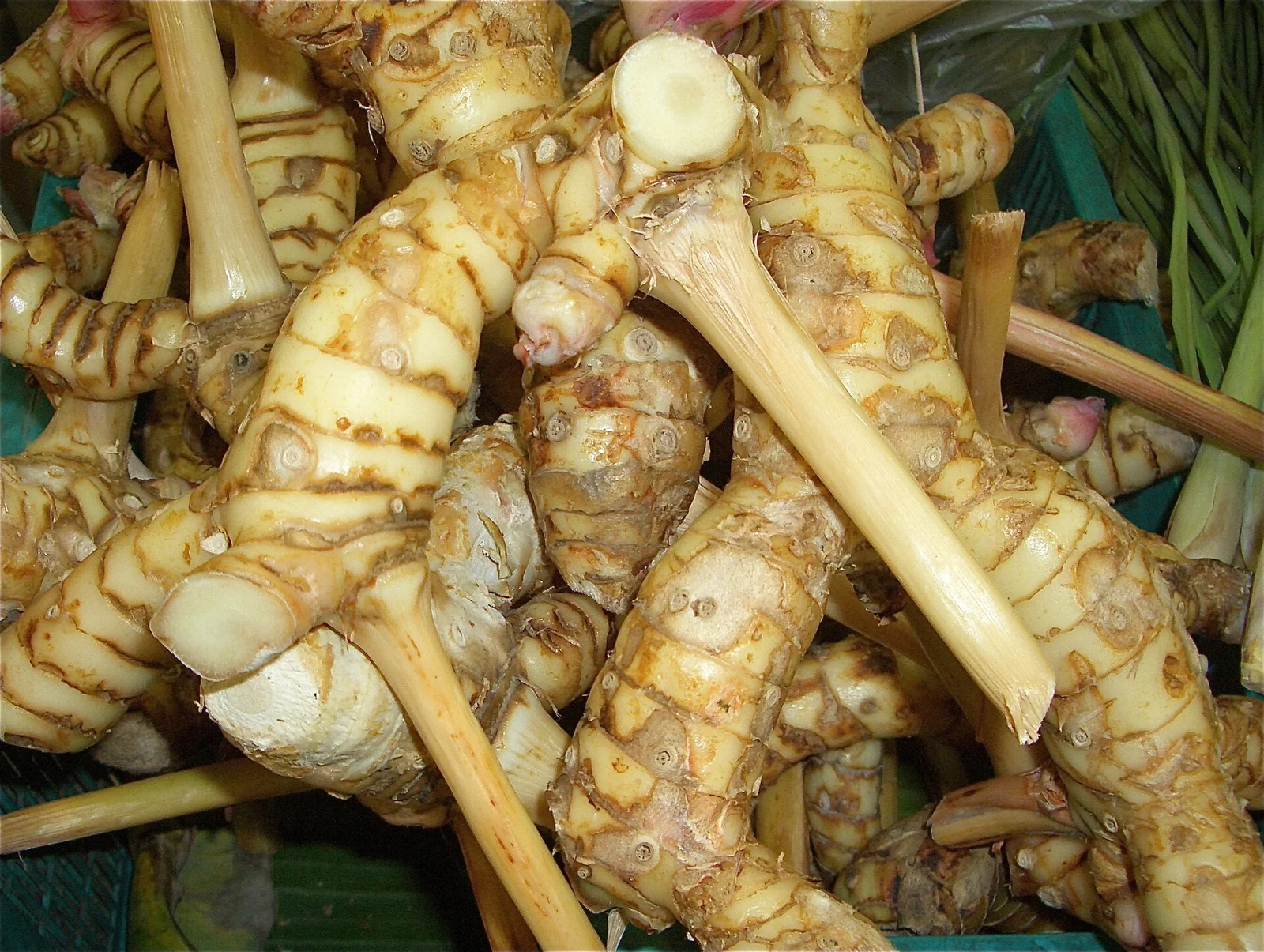
Lemongrass, galangal and makrut lime leaves help create the aromatic base in many Tom Yum preparations. Their fragrance and the sourness of lime juice are different contributions. A soup can smell intensely citrus-like before any final squeeze of lime. Noticing that difference is a useful first step towards understanding why a bowl tastes layered rather than simply “lemony”.
Large pieces of stalk, root-like rhizome or leaf are often there to infuse the broth. They do not all need to be eaten. Leave tough aromatic pieces aside and enjoy the flavour they have given the liquid. Fresh chopped herbs used as a finishing touch are a different matter. If you are unsure, ask; plenty of first-time diners have had the same question.
Clear and creamy are different directions
Nam sai, น้ำใส, describes the clear version, while nam khon, น้ำข้น, refers to a richer, creamy preparation. Creamy does not automatically mean coconut milk. Thai cook Pailin Chongchitnant’s shrimp version uses unsweetened evaporated milk, with coconut milk as an alternative. Sweetened condensed milk is a different product and should not be confused with it when shopping for a recipe.
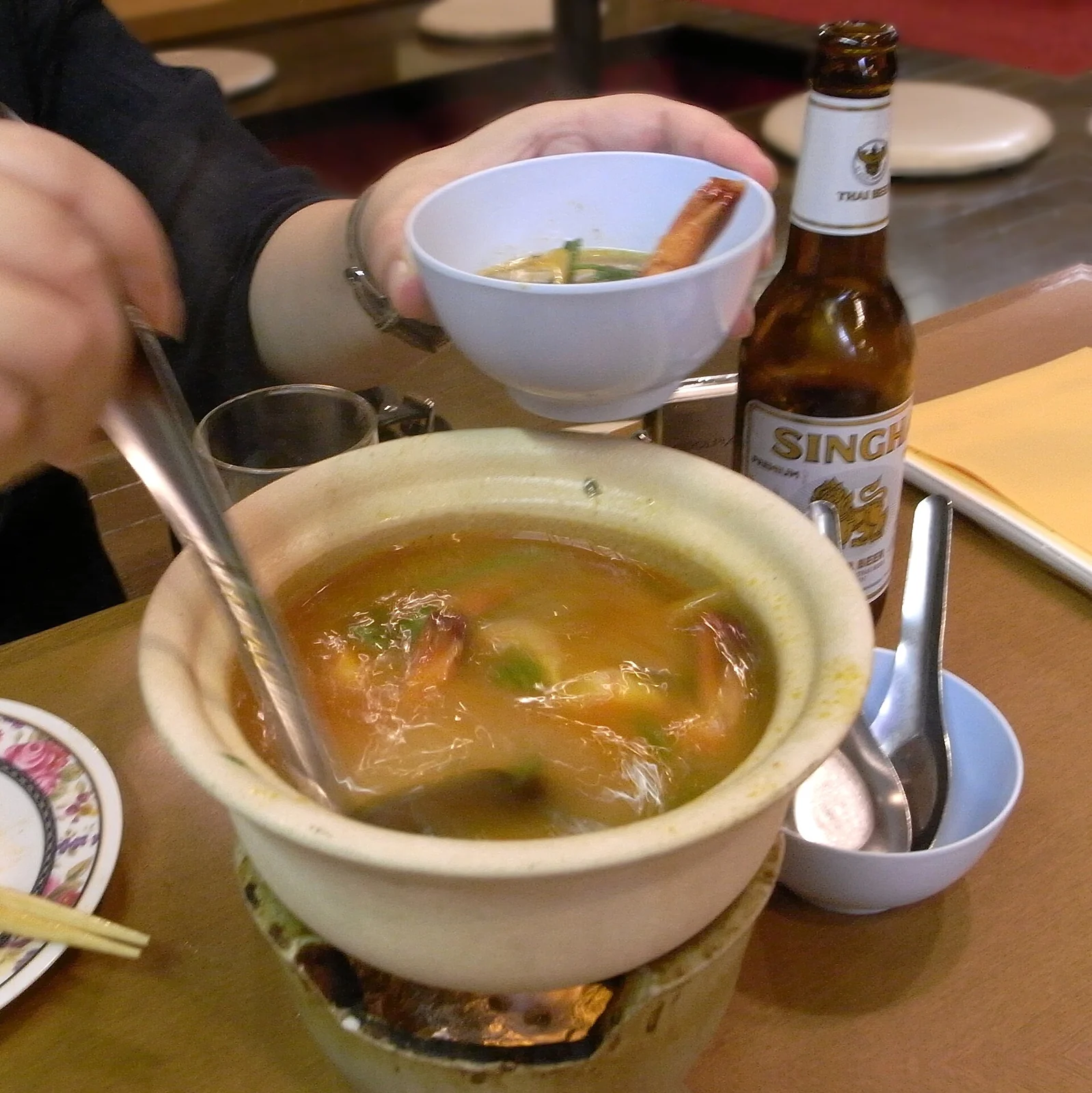
These terms help when ordering, but they still leave room for the kitchen’s own approach. Ask what makes a particular bowl creamy if ingredients matter to you. A familiar orange colour cannot provide the answer by itself. The photographs in this story show different examples of the soup rather than documenting THAM’s exact recipe or making a promise about its creamy ingredients.
A familiar bowl. A living story.
Living heritage, recognised in 2024
In 2024, Tomyum Kung was inscribed on UNESCO’s Representative List of the Intangible Cultural Heritage of Humanity. The recognition concerns a living cultural practice. It is not a World Heritage Site designation, an award for a restaurant or a certification that one commercial recipe is the correct version. The distinction matters because the story is about people and knowledge as well as food.
UNESCO’s description connects the dish with Buddhist riverside communities of Thailand’s Central Plains and knowledge of locally available prawns and herbs. It also describes skills passed through families, gatherings, restaurants and education. Think of the recognition as an invitation to notice how cooking knowledge moves between people, rather than a reason to freeze a much-loved soup into a single unchanging formula.
Taste the broth before changing it
For a first bowl, sip the broth before adding condiments. Then try it with a prawn, a mushroom and, if you ordered some, a little rice. Different combinations bring different parts of the soup forward. Rice can create a quieter interval between more concentrated spoonfuls. You may find that nothing needs adding once you have understood the cook’s starting point.
At home, follow a recipe that explains when to add its ingredients, especially the lime and any milk. Prawns need careful cooking, while aromatic pieces need time to flavour the liquid. A large quantity of one ingredient will not compensate for missing another ingredient’s role. Start with a clear method, then make one considered adjustment at a time so you can learn from the result.

Ask better questions, discover more soup
Instead of asking only whether a bowl is spicy, ask whether it is clear or creamy, what protein it contains and whether rice comes alongside. Mention allergies before ordering: prawns, fish sauce and any creamy additions may all matter. An evocative dish name is useful, but the kitchen is the source for what actually goes into your serving.
The next time Tom Yum arrives, take a moment with the aroma. Recognise an ingredient you have learned, let the broth introduce itself and enjoy the way the flavours change through the bowl. It can be a famous Thai dish, a living cultural tradition and simply a very satisfying dinner at the same time. None of those pleasures needs to compete with the others.
KEEP YOUR CURIOSITY HUNGRY
Choose Tom Yum with prawns at THAM, and add jasmine rice if you would like it alongside.
Explore the THAM menuRead further
Photography & credits
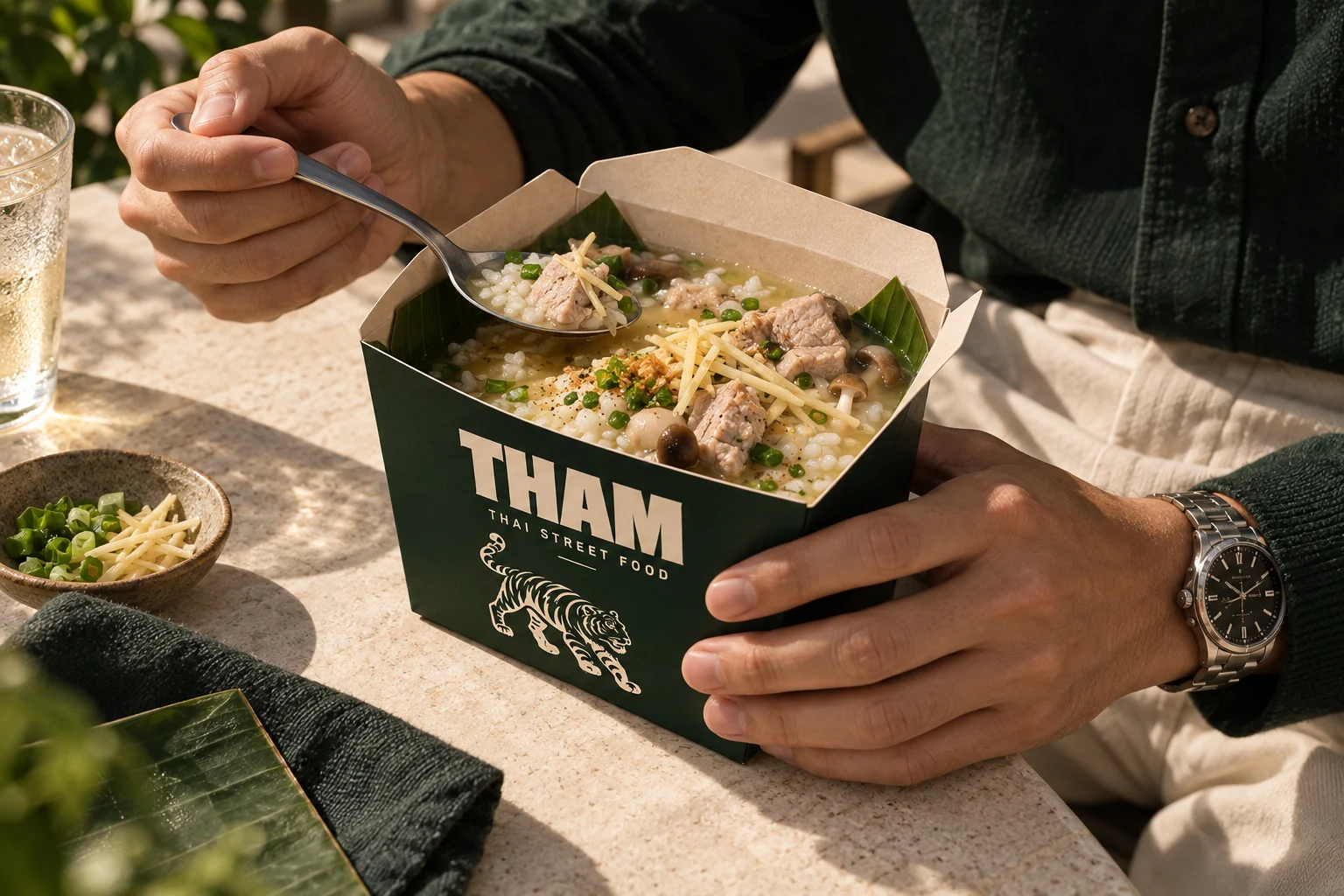
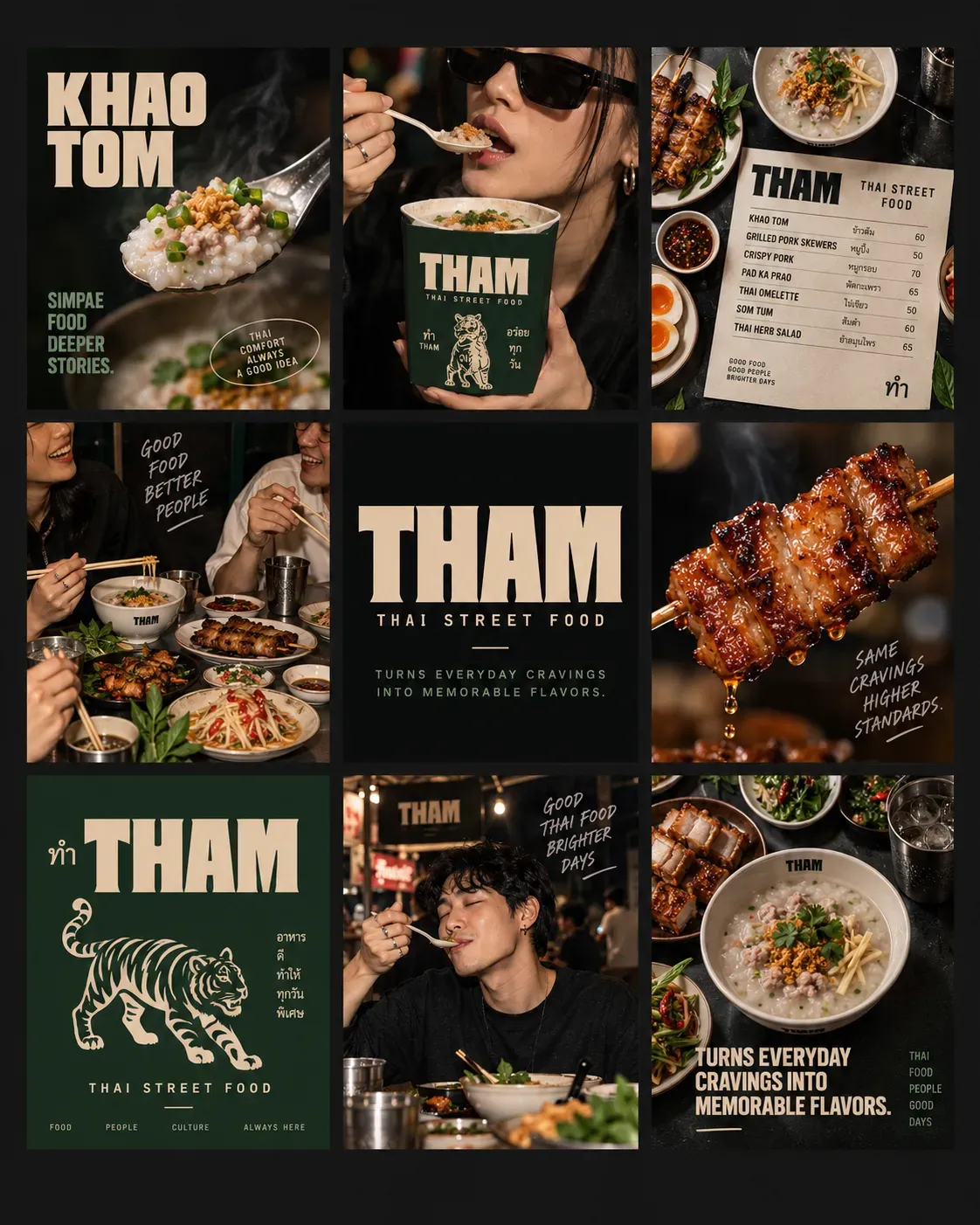
Editorial photographs illustrate Thai food and culture. THAM lifestyle images are creative brand imagery, including AI-generated scenes; they do not document the restaurant, its location or exact servings.
- Tom yum goong prawn soup — Vee Satayamas. CC BY 2.0. Resized and compressed for the web.
- Fresh greater galangal rhizome — Susan Slater. CC BY-SA 4.0. Resized and compressed for the web.
- Tom yum goong in a hot pot — kisocci. CC BY-SA 2.0. Resized and compressed for the web.
- Fresh lemongrass leaves — Obsidian Soul. CC BY-SA 3.0. Resized and compressed for the web.