Three curry colours can look like a simple ordering system: green, red and a warm brown Massaman. Colour is a useful introduction, but it cannot tell you everything about fragrance, texture or heat. A better way to explore Thai curries is to follow the paste, notice the coconut milk and ask what each bowl is trying to bring together. There is much more here than a traffic light for chilli tolerance.
Begin with the paste
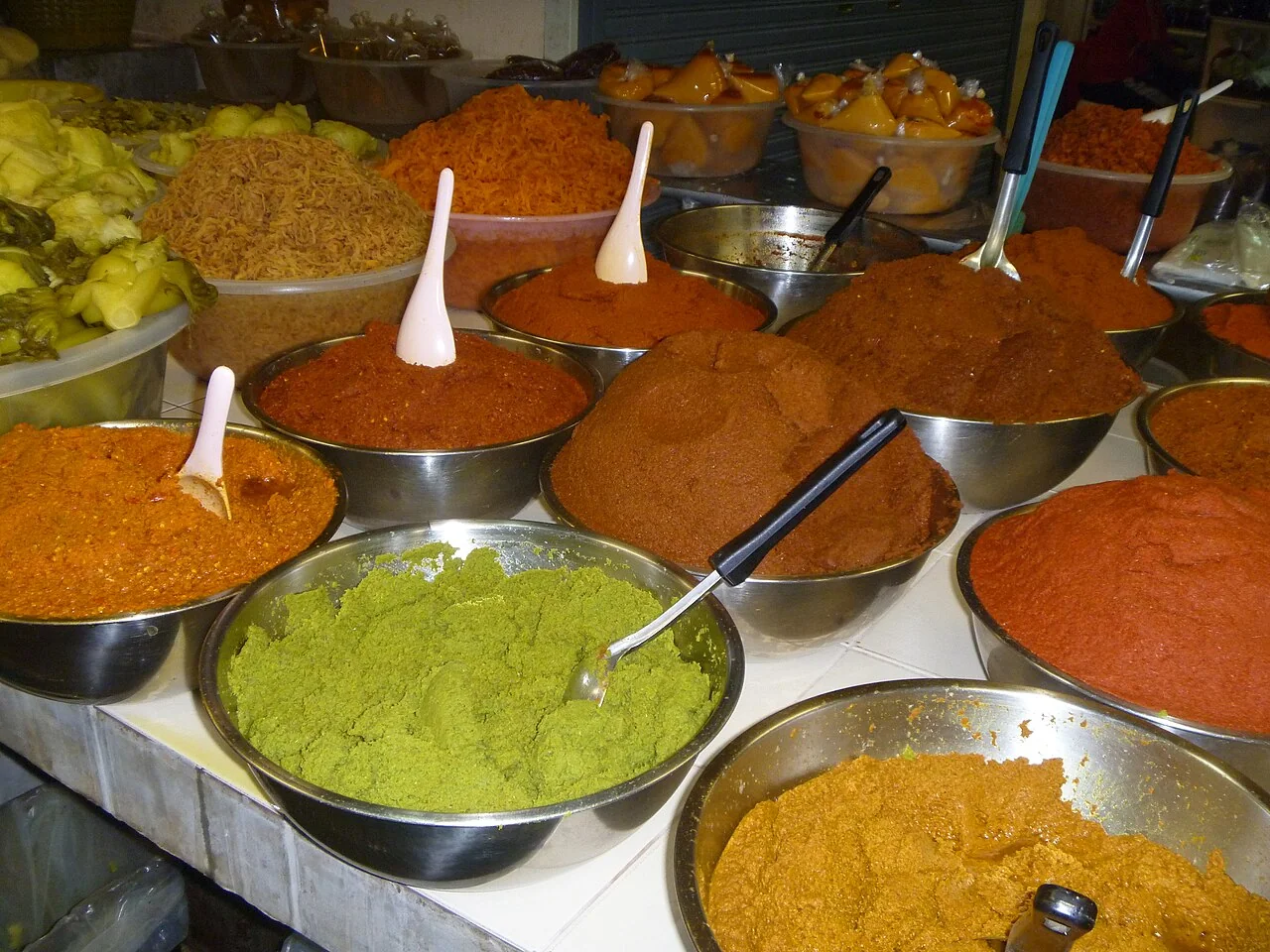
A curry paste concentrates a collection of ingredients into the starting point for the dish. Green curry is distinguished by fresh green chillies; red curry paste uses dried red chillies. Aromatics and seasonings supply much of the character around that colour. The exact mixture and the cook’s approach matter, so two bowls bearing the same name need not taste identical.
At a market, bowls of paste make those differences wonderfully visible. At home, a packaged paste makes them accessible, but its label still deserves attention. It may contain shrimp paste or other ingredients relevant to your diet. Read its suggested quantity and start with the recipe you are following. A spoonful from one brand does not necessarily behave like a spoonful from another.
Green curry: more than its colour
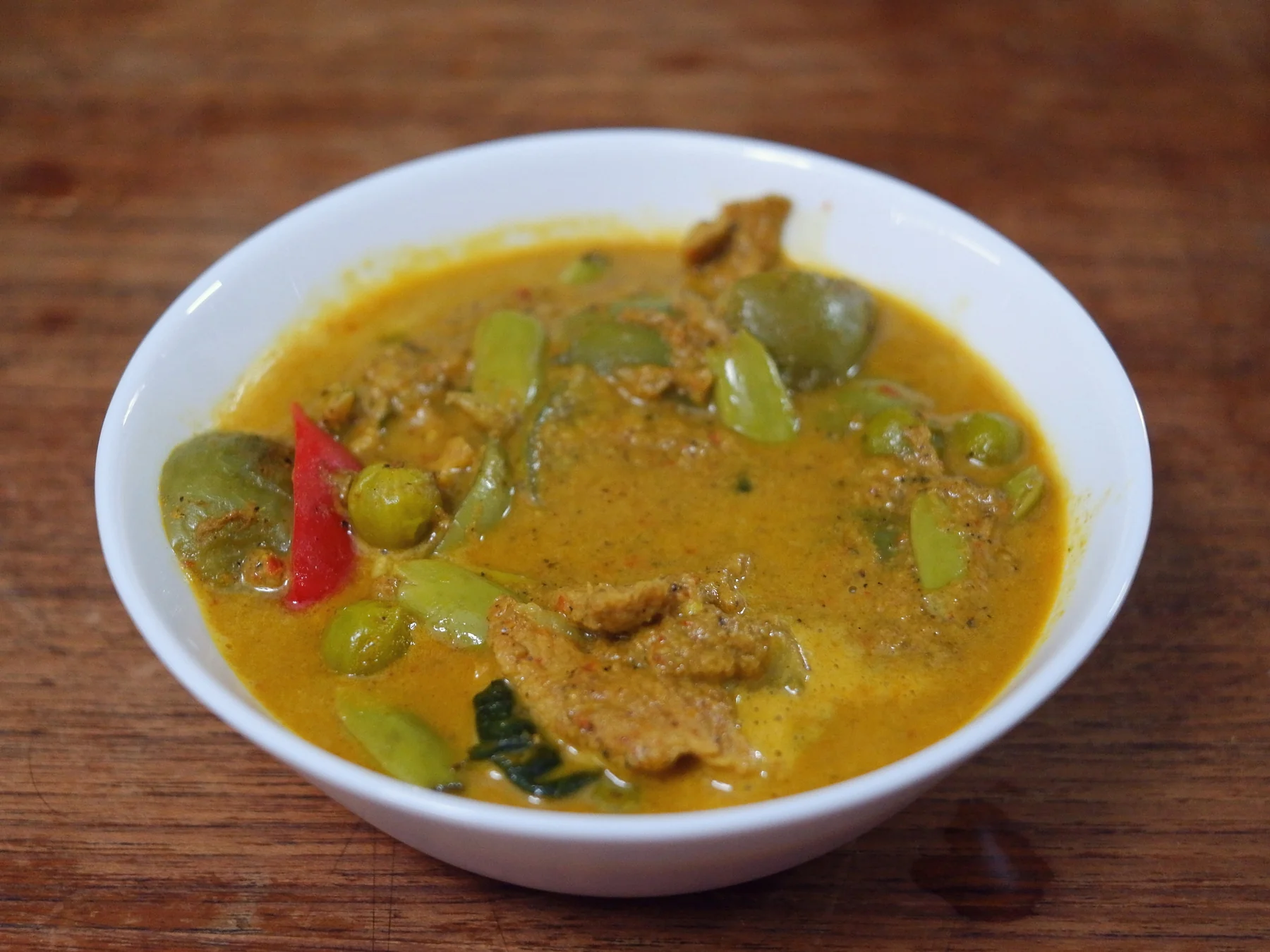
Kaeng khiao wan, แกงเขียวหวาน, is commonly made with coconut milk, a protein and Thai basil. Rice is a familiar partner, and khanom chin rice noodles offer another way to serve it. The green paste is an introduction to the flavour, not an instruction to expect one fixed level of heat. Chilli varieties and quantities can change the experience substantially.
When tasting a green curry, pause before folding everything into the rice. Try the sauce, then a vegetable or piece of protein, and finally the combination. Notice whether a fragrant leaf changes the next bite. This simple order of tasting helps you see the curry as several textures held together by a sauce, rather than treating the sauce as the only thing worth describing.
Red curry and room for variation
A red curry can carry chicken, vegetables and coconut milk in a paste built from dried chillies and aromatics. Pailin Chongchitnant’s chicken-and-squash version illustrates how a vegetable can bring its own sweetness and texture. There is no need to assume every red curry must contain that particular combination. A useful name can describe a family of preparations while leaving a cook room to choose.
For a home meal, consider the relationship between the sauce and the pieces within it. Soft vegetables, firm vegetables and different cuts of meat do not all finish cooking together. Choose a recipe that explains the sequence, rather than putting everything in the pan at once. Understanding that sequence will teach you more than buying a larger collection of curry pastes.
The colour is only the beginning of the story.
Massaman follows another aromatic path
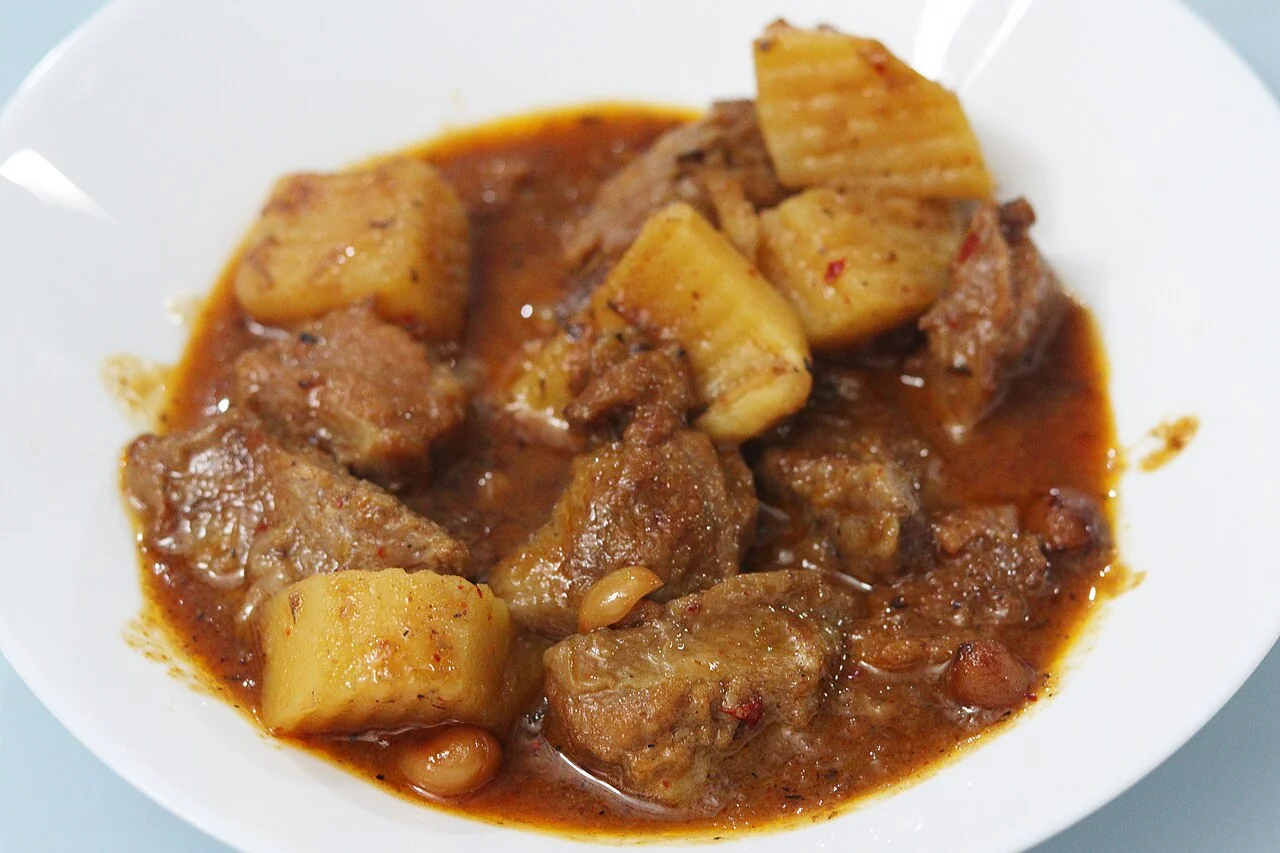
Massaman often brings together meat, potatoes, onions and peanuts, with a more prominent dry-spice character. Cinnamon, cloves and cumin help illustrate how different its aromatic direction can be. Its Muslim culinary associations are well established, while accounts differ over the precise routes of influence. “Shaped by Muslim culinary exchange” is a more careful description than assigning it one inventor or one unquestioned journey.
THAM serves Chicken Massaman with curry paste, coconut milk, potatoes and peanuts, with rice included. The wider food story includes other proteins, including the photographed example from Bang Kapi. When you see a familiar name in a new setting, read the details. The pleasure is in discovering how the bowl in front of you fits the family without assuming every version is the same.
Coconut milk is an ingredient, not a guarantee
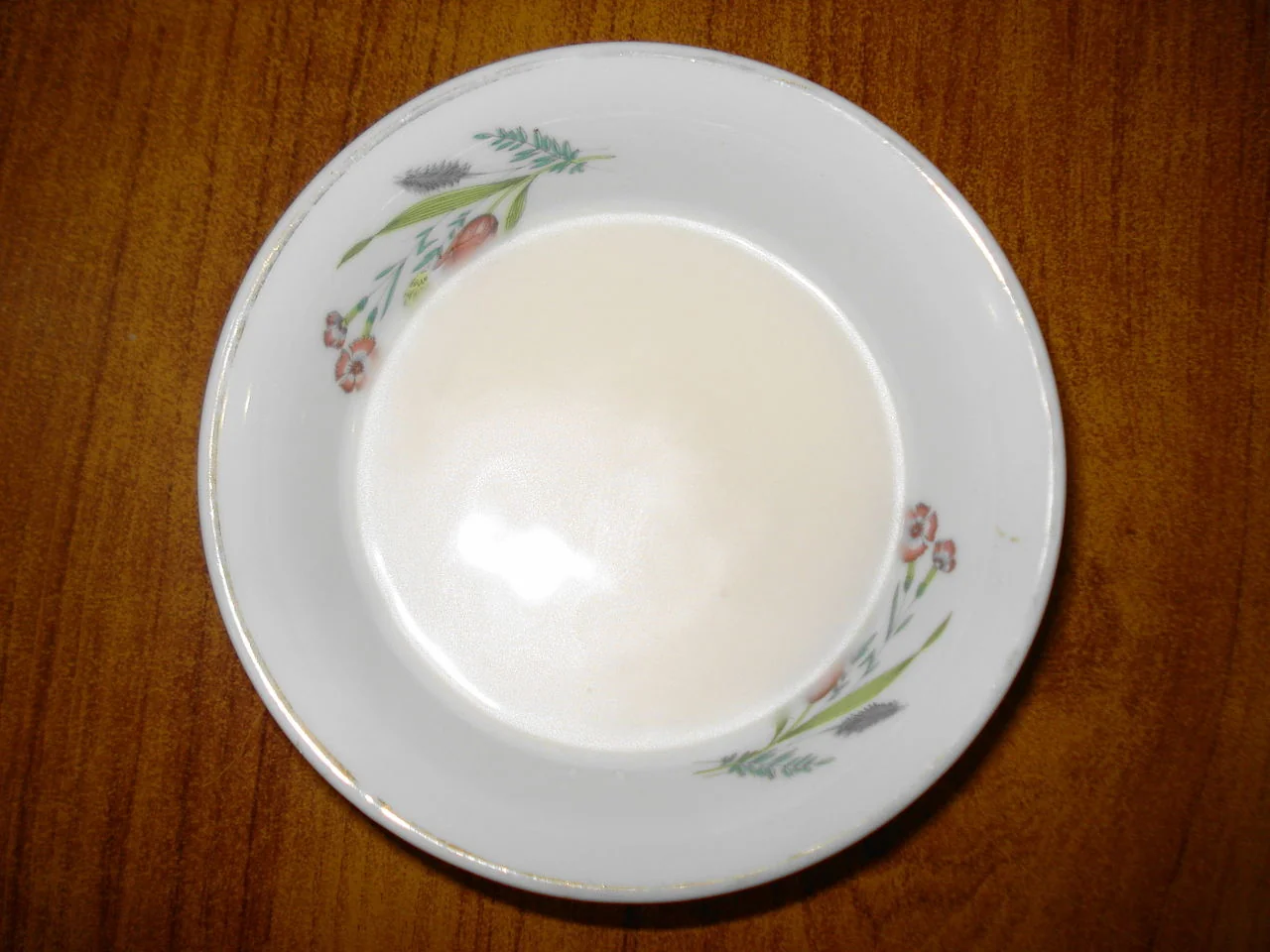
Coconut milk gives many familiar curries richness and body, but Thai curry is a wider category than coconut-based dishes alone. Even within creamy curries, coconut milk does not guarantee mildness. Heat depends on the paste, chillies and proportions. Colour is equally unreliable as a universal ranking. Ask about the actual dish when deciding what suits you.
At THAM, all dishes are non-spicy by default; tell the team if you want chilli. In another restaurant, ask before ordering rather than carrying that policy with you. Also remember that a vegetable curry may contain fish sauce or shrimp paste, and Massaman commonly includes peanuts. A short conversation about your needs is more useful than guessing from a photograph or an English title.
Let the meal create the contrast
Instead of ordering several rich bowls simply to compare colours, consider what would make a satisfying meal. Rice gives curry a quiet base. A broth or a different texture can change the rhythm between spoonfuls. Shared dining lets you try small portions without needing to turn every dish into an individual challenge. There is room to be curious and still order thoughtfully.
Keep a note of the element you would like to taste again: basil, a particular spice, tender potato or the way the sauce met the rice. That memory is more personal than a ranking of red versus green. On the next visit, follow it. Learning Thai food through ingredients and textures opens many more doors than choosing by colour alone.
KEEP YOUR CURIOSITY HUNGRY
Explore our Chicken Massaman with coconut milk, potatoes and peanuts, served with rice.
Explore the THAM menuRead further
Photography & credits
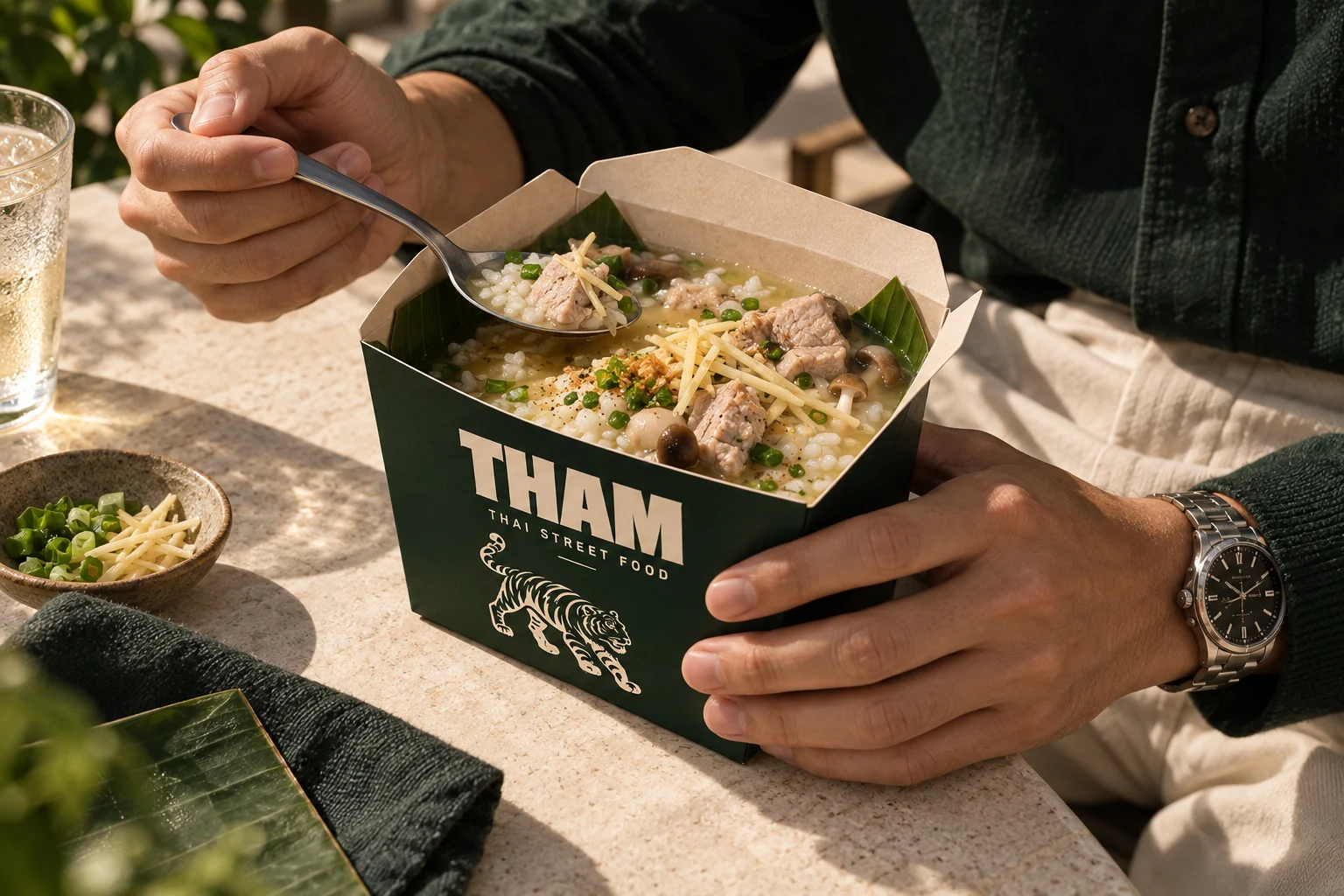
Editorial photographs illustrate Thai food and culture. THAM lifestyle images are creative brand imagery, including AI-generated scenes; they do not document the restaurant, its location or exact servings.
- Massaman curry, Bang Kapi, Bangkok.jpg — Vee Satayamas. CC BY-SA 4.0. Resized and compressed for the web.
- Curry Pastes (5311654507).jpg — Ryan Snyder. CC BY 2.0. Resized and compressed for the web.
- Green curry (42296614864).jpg — Vee Satayamas from Bangkok, Thailand. CC BY 2.0. Resized and compressed for the web.
- Coconut Milk.JPG — Miansari66. CC0. Resized and compressed for the web.