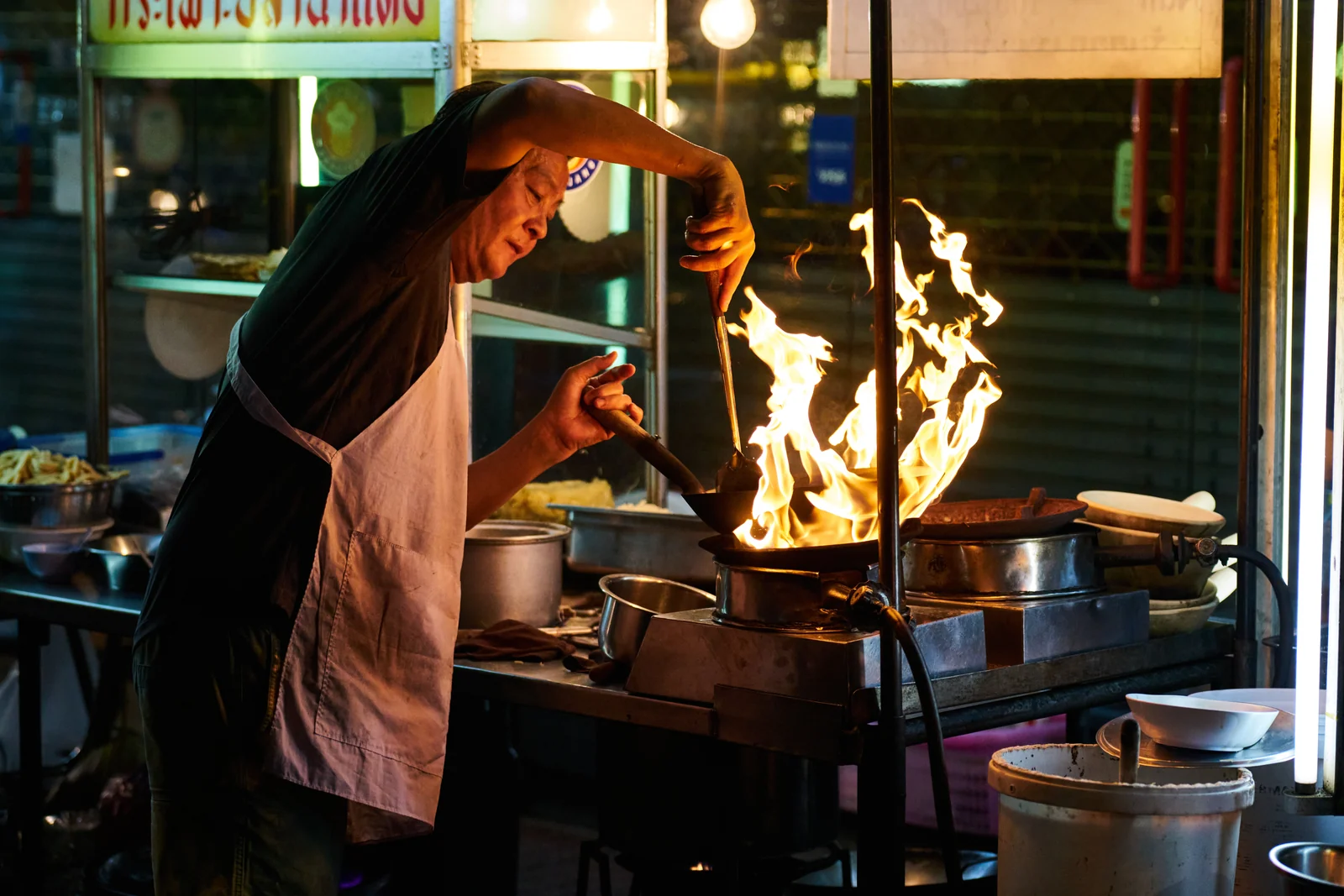
A wok flashes, a ladle taps the side of a pot, and someone sets down a plate that smells too good to ignore. Bangkok can introduce itself through food before you have learned your way around the block. You do not need an encyclopaedia of dishes to join in. A little observation, a few useful questions and an appetite for unfamiliar textures are a much better beginning.
Read the kitchen before the menu
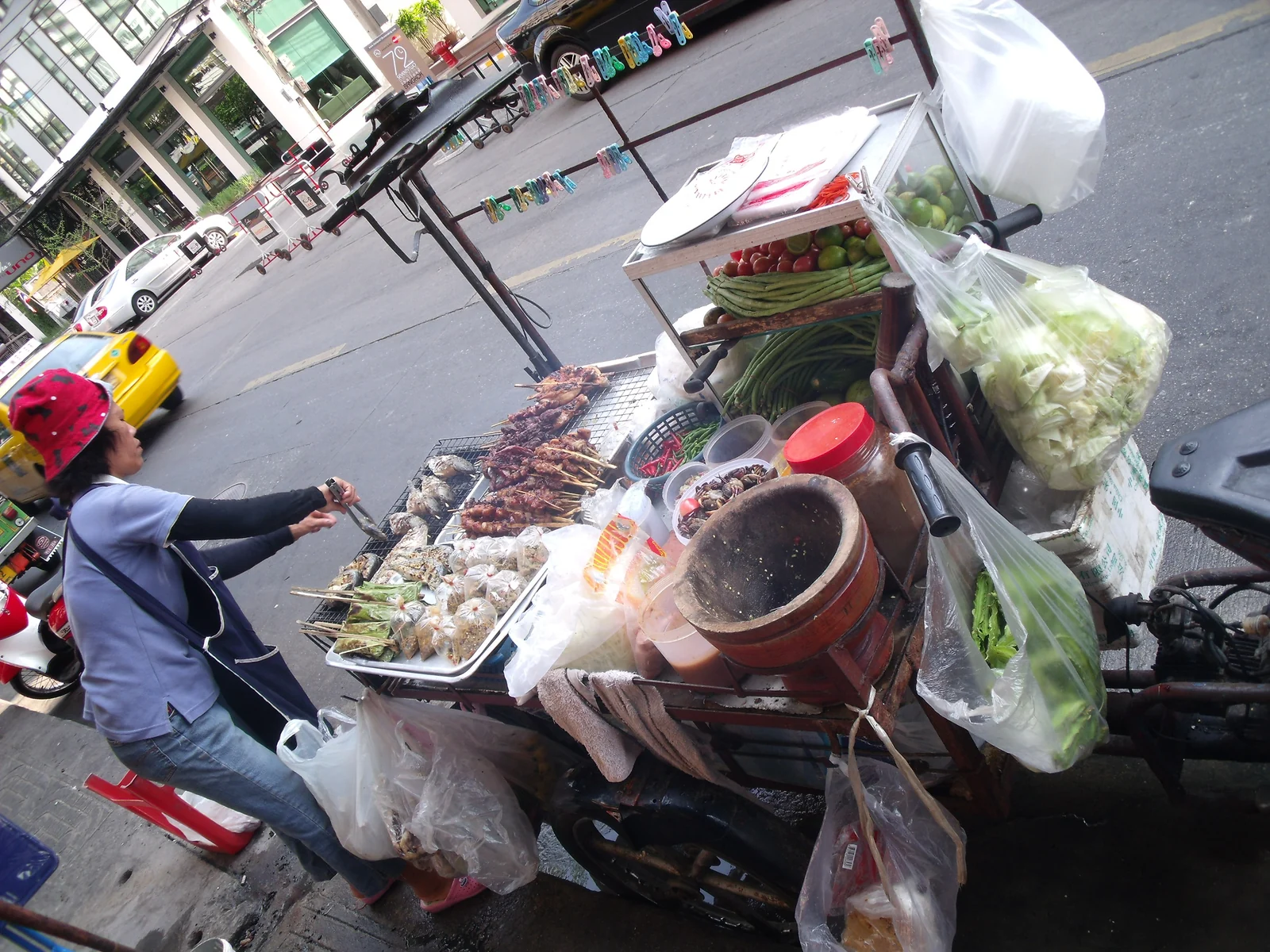
Street food is a way of cooking, selling and eating, with many different formats. Some stalls specialise in one dish. Others display prepared curries and vegetables to spoon over rice, a format known as khao gaeng. At an ahan tam sang kitchen, food is cooked to order. Recognising the format helps you understand what happens next: point to a tray, choose a familiar specialty, or specify the protein for your stir-fry.
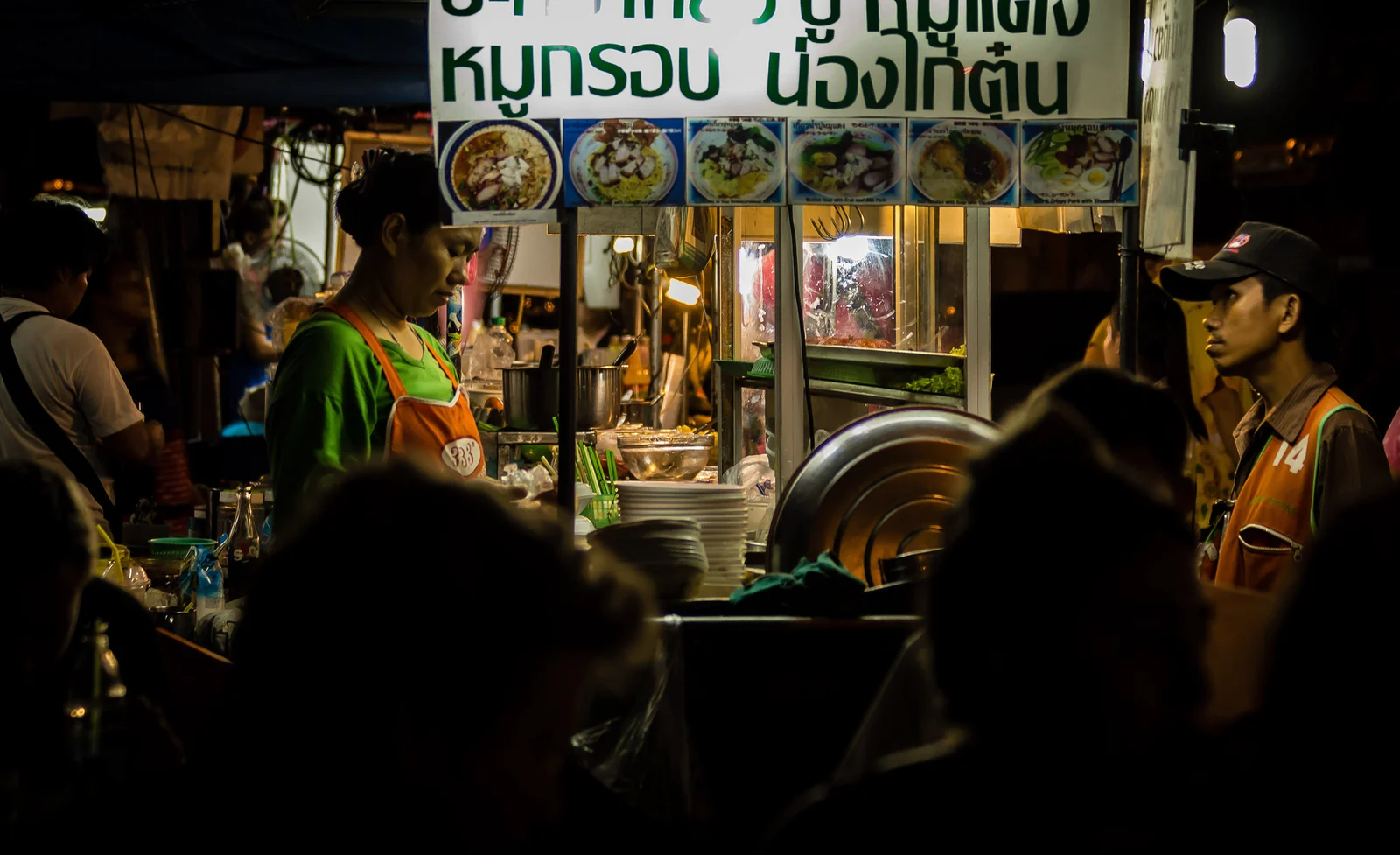
Give yourself a minute before ordering. Look for a displayed menu and price, see where orders are placed, and check whether seats belong to that stall. A photograph can help identify a dish, but it will not explain the portion or every ingredient. Ask one clear question at a time. You are ordering dinner, not sitting an exam; curiosity is entirely welcome.
Choose a meal, not a checklist
A trip can quickly become a race to tick off famous dishes. Try a different approach for one evening: choose something comforting, something aromatic and something you have never tasted. If you are with friends, compare notes rather than counting plates. Which ingredient appears first? Does the sourness feel sharp or rounded? Is the pleasure in a crisp edge, soft rice or a fragrant broth?
Bangkok brings together food from across Thailand. Central, Northern, Northeastern and Southern traditions have their own ingredients and preferences, and a single restaurant cannot represent them all. Let the city expand your idea of Thai food beyond one noodle dish or one curry colour. A modest bowl can be as interesting as the meal you travelled across town to find.
A spoon, a fork and a little space
For many rice meals, the spoon carries the food while the fork helps gather it. Noodle dishes may come with chopsticks. Follow the utensils provided and stay relaxed. In a shared meal, use the serving spoons, take a manageable portion and leave room on your plate for the next combination. Individual rice plates and noodle bowls work differently; sharing is an option, not an obligation.
The most useful etiquette is also the least theatrical. Keep bags clear of walkways. Make space for people carrying hot dishes. Ask before making a person the subject of your photograph. If the kitchen is busy, have your order ready before approaching. These small choices make the encounter easier for everyone and leave you more attention for the food.
Curiosity is the best thing to bring to the table.
Tell the kitchen what you need
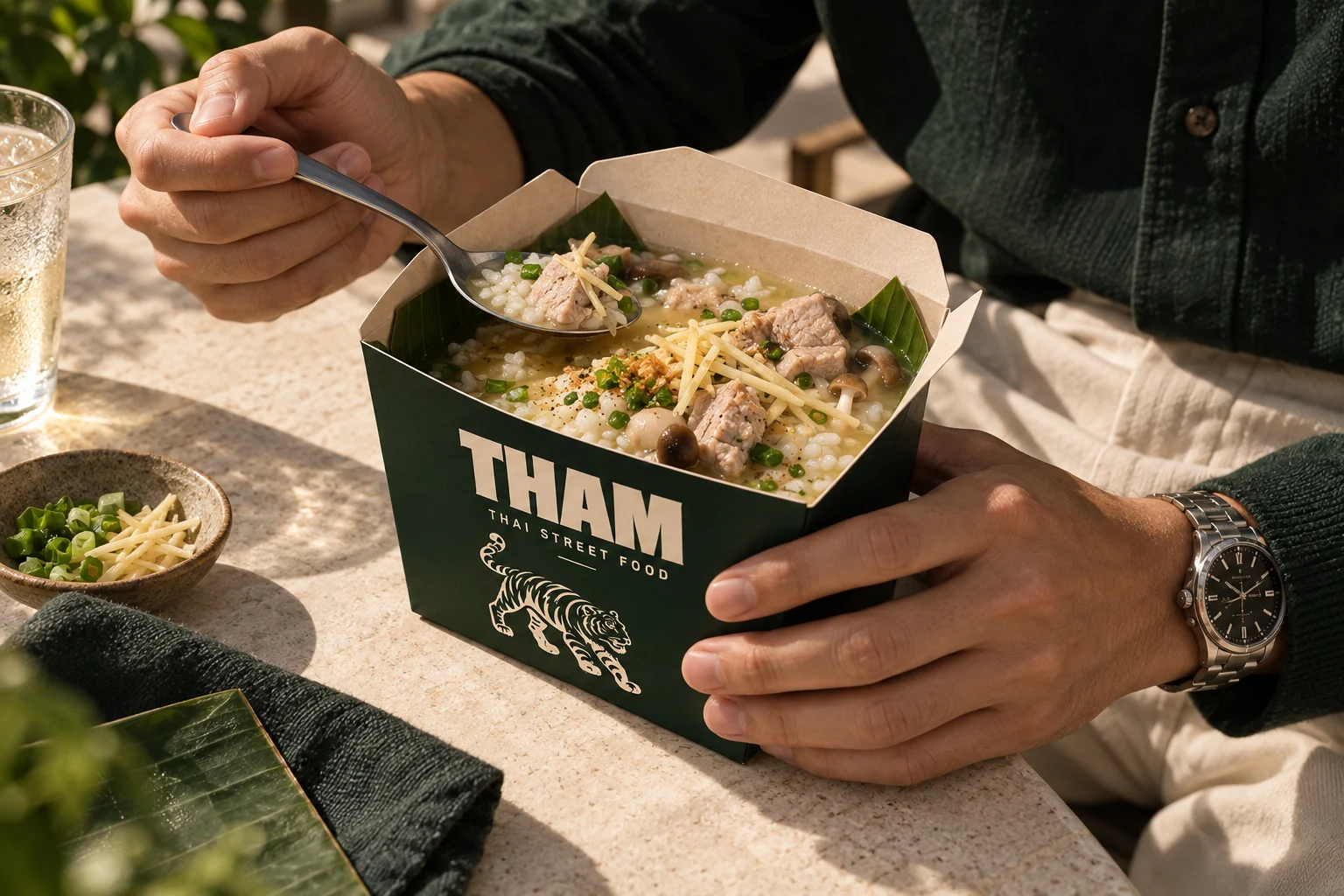
Do not use your chilli tolerance as a bravery test. State your preference before cooking starts, and ask what can be adjusted. Heat, sourness, salt and sweetness are different things: a gentle dish can still be intensely aromatic. At THAM, every dish is served non-spicy by default. Ask for chilli if you want it. Elsewhere, check the kitchen’s approach instead of assuming the same rule applies.
Dietary questions deserve equal clarity. A dish that looks like vegetables may include fish sauce or shrimp paste; choosing chicken does not identify every sauce ingredient. Explain an allergy before ordering and ask about preparation as well as ingredients. If the answer is unclear, choose something you can discuss confidently. A menu description is an introduction to a dish, not a full ingredient declaration.
Build your own flavour vocabulary
Try tasting the first bite before adding table condiments. Lime brings acidity; fish sauce adds salt and savouriness; a little chilli changes the heat. You do not have to make all those changes. Notice what the cook has already put together, then adjust a small portion if you wish. This makes it easier to understand what each addition contributes.
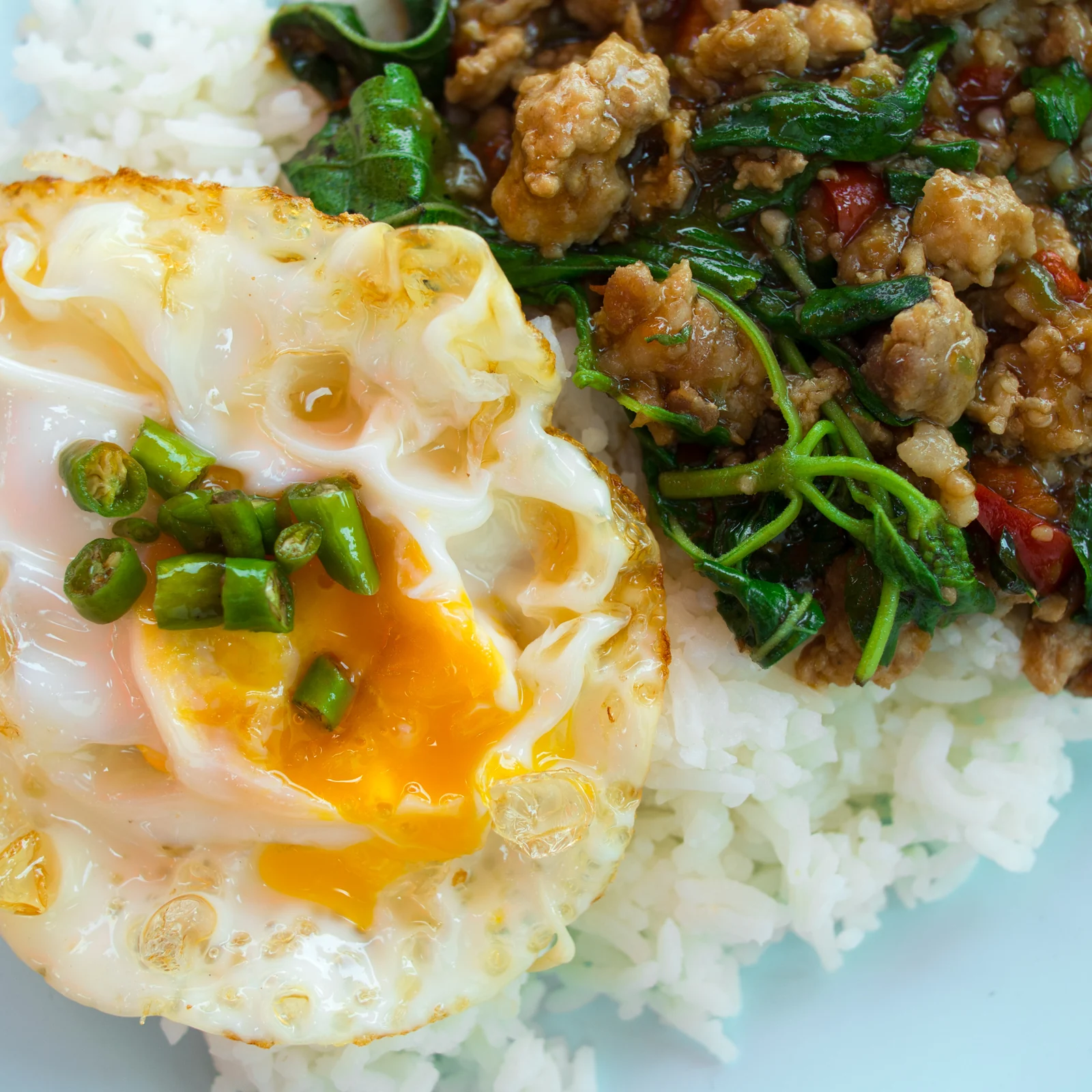
Keep a short food note on your phone: the dish name, one ingredient you recognised and one detail you loved. “Soft egg, pepper, rice” is more useful than trying to sound like a critic. Photograph the name on the menu with permission where needed. By the end of the trip, you will have a personal map of flavours to cook, order and explore again.
Leave room for one more discovery
Your most memorable Bangkok meal need not be the busiest table or the most photographed plate. Look for food prepared and handled with care, confirm prices and choose freshly cooked dishes that suit you. A queue can suggest popularity, but it cannot promise food safety. Drink safe water, take breaks and let your own comfort shape the evening.
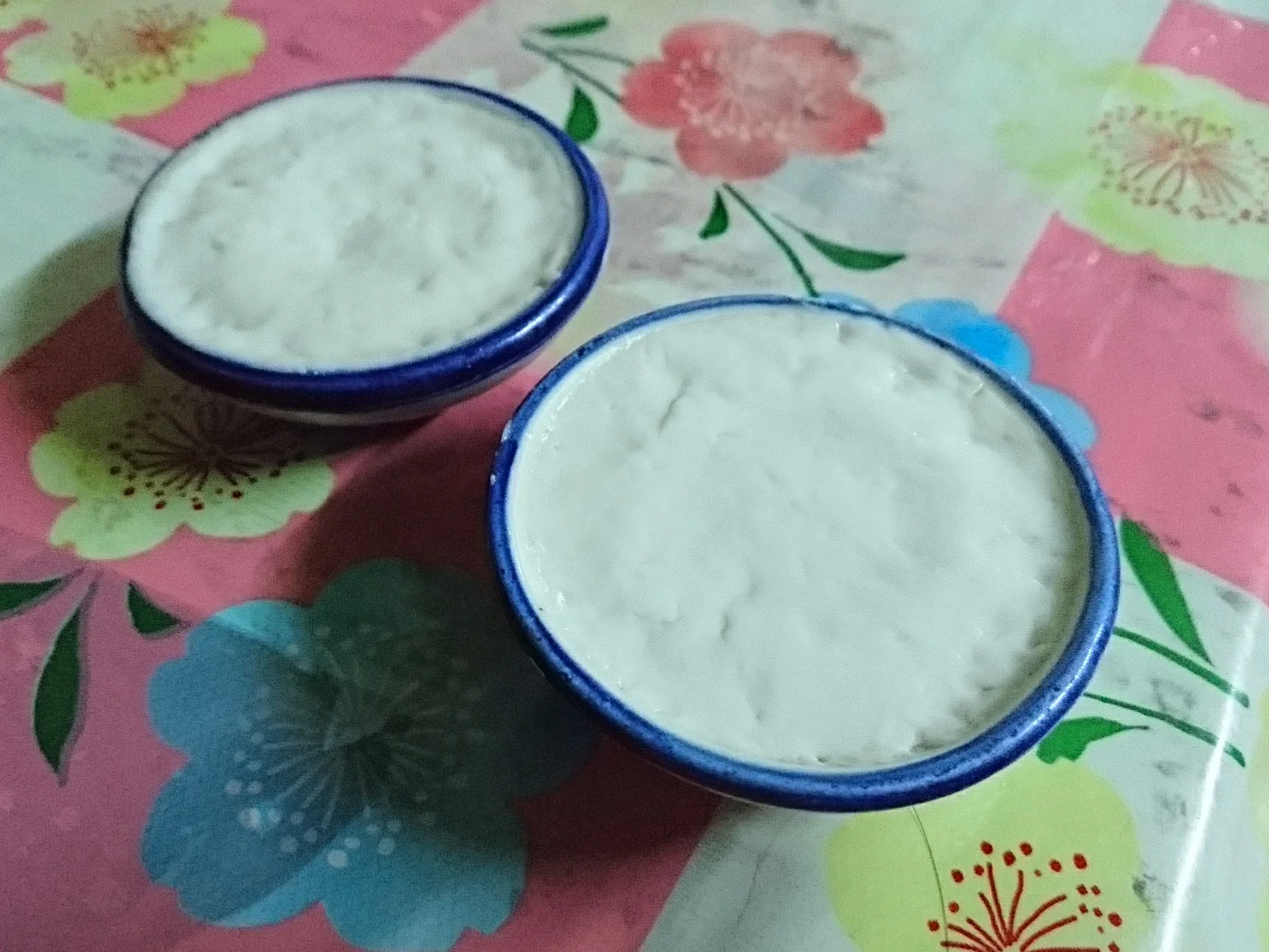
Then leave a little room for dessert. A spoonful of coconut ice cream or a small coconut pudding changes the pace of the meal. Take your time with it. The best souvenir may be an ingredient you now recognise, a Thai word you can try saying, or the simple confidence to order something new tomorrow.
KEEP YOUR CURIOSITY HUNGRY
Begin with something familiar. Leave room for something new.
Explore the THAM menuRead further
Photography & credits
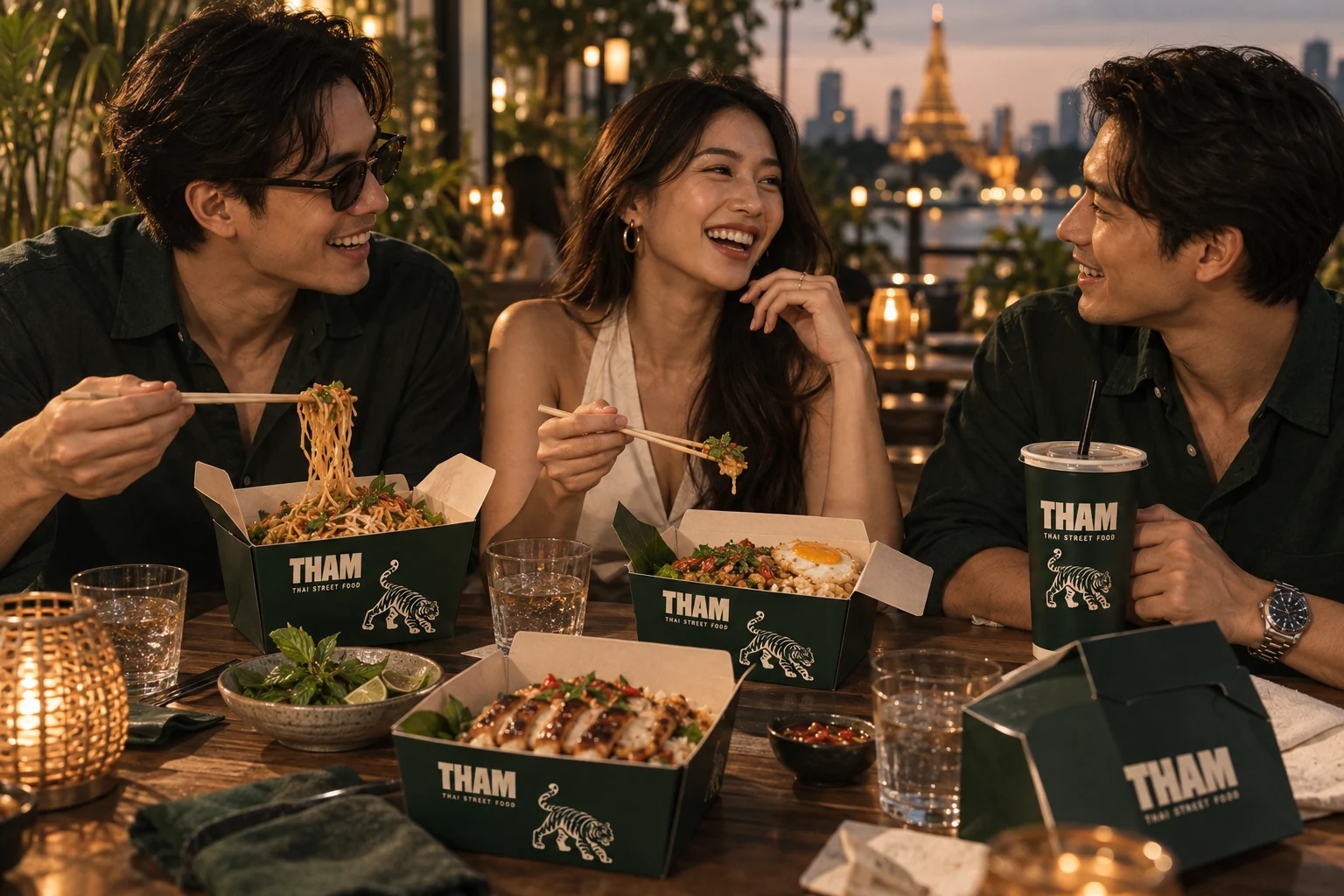
Editorial photographs illustrate Thai food and culture. THAM lifestyle images are creative brand imagery, including AI-generated scenes; they do not document the restaurant, its location or exact servings.
- Good food, good company — THAM — AI-generated lifestyle illustration.
- Street food in Bangkok Chinatown — Radek Kucharski. CC BY 2.0. Resized and compressed for the web.
- Bangkok street food vendor — David. Public domain. Resized and compressed for the web.
- Street food dinner on Sukhumvit Soi 38 — Gerrit Phil Baumann. CC BY 3.0. Resized and compressed for the web.
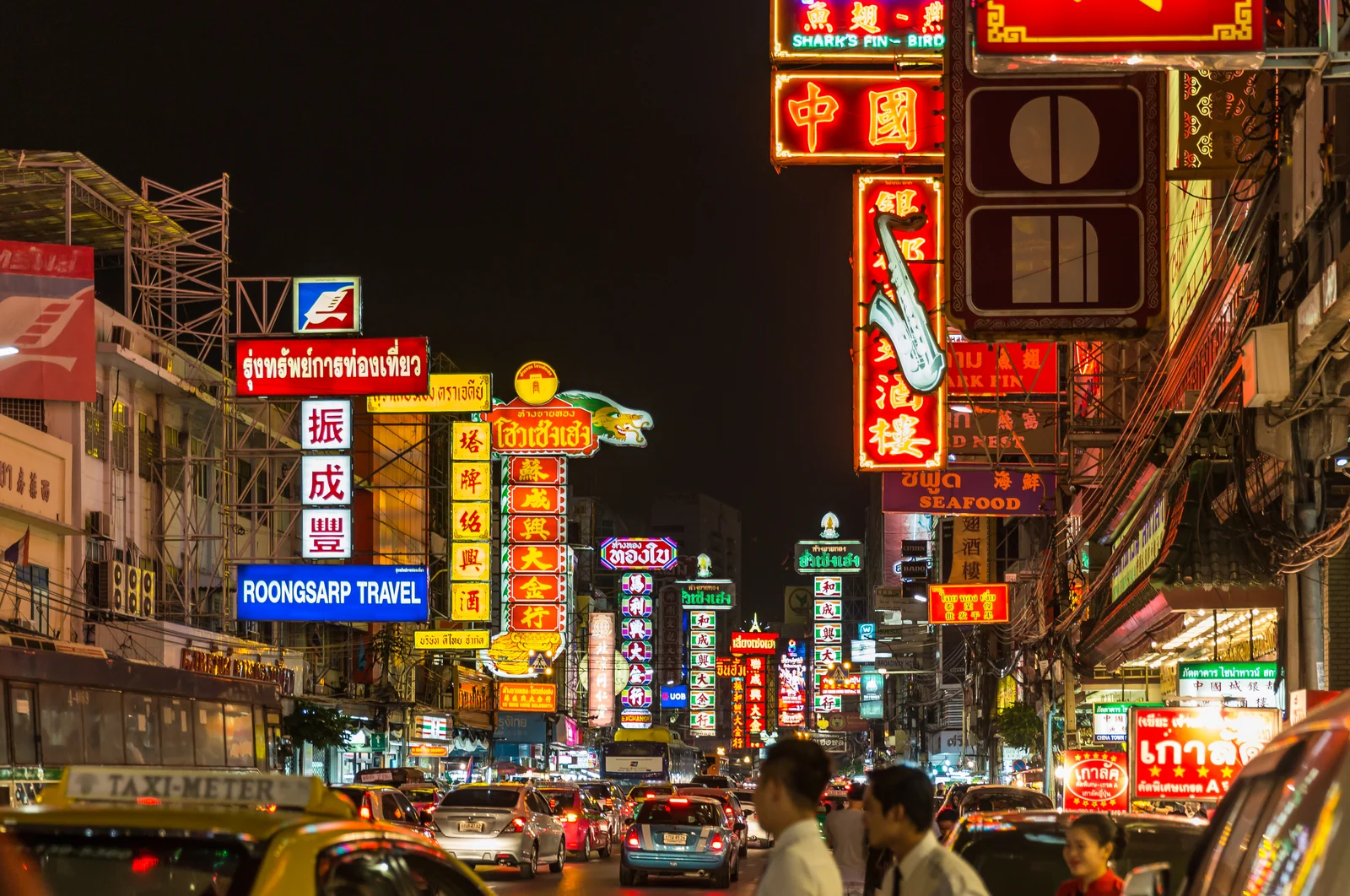
- Yaowarat Road at night — Ninara from Helsinki, Finland. CC BY 2.0. Resized and compressed for the web.